


- Relying solely on smartphones and the grid for communication, navigation and information creates a single point of failure. When these systems go down, essential skills and connections are lost.
- In a crisis, the desperate urge to get a signal or charge a phone can lead to dangerous choices. The immediate priority must be physical safety, shelter, water and aiding those nearby, not digital reassurance.
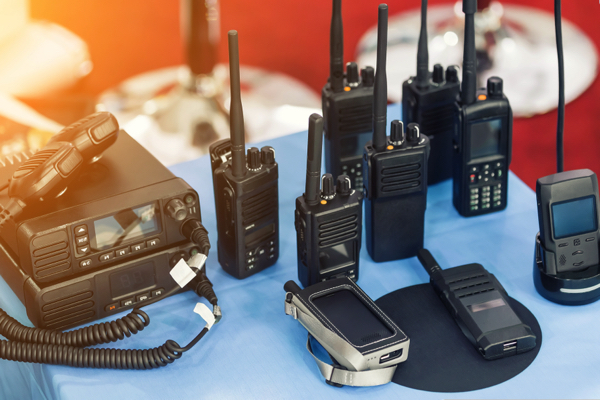
- Build layered, low-tech communication plans. Do not rely on one method. Establish a communication strategy with Primary, Alternate, Contingency and Emergency options (PACE). This includes family radio plans (GMRS/FRS), relationships with ham radio operators, and satellite messengers for long-range contact.
- Resilience requires relearning basic skills like using a map and compass and maintaining physical backups like paper contact lists, reference books and offline survival guides on your phone. Your plan is only as good as your practiced ability to execute it.
- Preparedness is not just individual. Building networks provides critical support when SHTF. Helping others with resources, skills or relayed messages builds collective resilience that far surpasses what any person can achieve alone.
In an age where a smartphone feels like an extension of the human body, the sudden silence of a communication blackout is a terrifying prospect, especially for those who are chronically online. Whether caused by a natural disaster, infrastructure failure or civil conflict, the instant severing of digital lifelines exposes a profound and dangerous societal vulnerability.
Recent global events also underscore that when the grid goes down, the modern world grinds to a halt, and the desperate scramble for information can itself become a lethal threat.
The key to navigating this silence is not merely having technology but understanding its severe limitations and preparing for its inevitable failure. True resilience lives in rejecting dependency and building layered, analog-safe plans that function when the digital world vanishes.
The deadly risk of "wants" versus "needs"
In the immediate chaos following a crisis, the urge to reconnect, such as to call a loved one, check the news or charge a device, can be overpowering. However, this impulse is often a dangerous "want" mistaken for a survival "need."
History and recent wars show that individuals, particularly the young, have tragically vanished while venturing into unstable environments solely to find a power source or signal.
This desperation also cripples collective survival. A surge in "welfare checks," meaning non-critical calls to loved ones, can overwhelm the remaining cellular networks, blocking legitimate emergency calls for medical aid or rescue.
In a blackout scenario, information is frequently unreliable, amounting to little more than rumor. The survival priority must shift inward: securing immediate safety, water, shelter and aiding those physically nearby.
If your ancestors could endure separations of months or years without word, modern individuals can and must plan to withstand days or weeks without contact, focusing on core needs rather than digital reassurance.
Breaking technological dependency before it breaks you
Smartphone dependence is a critical vulnerability. These devices consolidate vital life skills, such as navigation, communication, memory and first aid, into a single, fragile point of failure. When connectivity dies, this dependency becomes a liability.
Consider the basic skills now outsourced to a device:
- Navigation – Can you travel using a paper map and compass?
- Communication – Do you have a battery or crank-powered radio for emergency broadcasts? Do you have a two-way radio for communication?
- Information – Do you own physical books for recipes, first aid or repair manuals?
- Memory – Are crucial phone numbers and addresses memorized or stored offline? A laminated card in your wallet is a simple, life-saving backup.
- Core functions – Even worship, entertainment and games are often app-dependent. Physical hymnals, scripture, decks of cards or compact books are essential for morale, especially for children, during prolonged sheltering.
Municipalities and individuals alike make a grave error by embedding emergency response plans solely in apps requiring connectivity. This over-reliance not only endangers survival but also erodes the cognitive resilience needed in a crisis.
The growing integration of artificial intelligence (AI) threatens to deepen this dependency further, trading a small measure of convenience for a vast increase in vulnerability.
Building redundant, safe communication lines
As explained by the Enoch AI engine at BrightU.AI, the solution is a layered strategy that prioritizes simplicity and redundancy, known in preparedness circles as establishing Primary, Alternate, Contingency and Emergency (PACE) plans.
Fortify your smartphone for offline use
Treat your phone as a potential tool, not a lifeline. Create a digital survival library by downloading crucial documents, maps and guides for offline access.
Equally important is having a means to charge it without the grid, such as solar chargers or power banks. However, this is only one layer; it must not be the only layer.
Establish a family radio communication plan
When networks fail, radio is king. Families should invest in General Mobile Radio Service (GMRS) or Family Radio Service (FRS) radios for local communication.
A simple plan involves designating a specific frequency and a scheduled time window (e.g., 15 minutes at 11:00 p.m. on the 1st and 15th of each month) to attempt contact. Crucially, practice this plan regularly. Equipment stored away and forgotten often fails when needed.
Utilize broader radio networks
For communicating over greater distances, amateur (HAM) radio is a proven resource.
If obtaining a license and equipment is daunting, build relationships with licensed operators in your area and your family's location. These volunteers are often willing to relay messages and are prohibited from charging for the service, creating a vital human-powered network.
Employ satellite messengers
For critical, long-range communication when cellular is dead, satellite phones or compact satellite messengers (like Garmin inReach or Zoleo) are invaluable. As seen in disasters where island-wide infrastructure was destroyed, a single satellite device can facilitate hundreds of welfare messages, providing priceless reassurance without overloading systems.
Embrace the "hard copy" mentality
Reduce your digital footprint for critical information. Maintain physical lists of emergency contacts, paper maps of your region and essential reference books.
This analog layer is immune to power failure, hacking and electromagnetic effects.
In times of civil unrest or conflict, maintaining communication safely means avoiding predictable patterns and digital traces. Use scheduled radio checks instead of constant chatter.
Rely on pre-arranged rendezvous points with family. Understand that in severe scenarios, cell sites have limited backup fuel and will fail within days, and networks will be prioritized or compromised.
The goal is not to reject technology, but to subordinate it to human skill and planning. Do not risk your life for a charge or a signal. Instead, invest in the low-tech, the practiced and the human networks that have sustained survivors throughout history.
In the echoing silence of a blackout, the most reliable signal will be the one you planned for long in advance, independent of any tower or grid.
Watch the video below as the Health Ranger Mike Adams warns how you must choose a path of knowledge to end the Age of Ignorance.
This video is from the Health Ranger Report channel on Brighteon.com.
Sources include:






Please contact us for more information.