


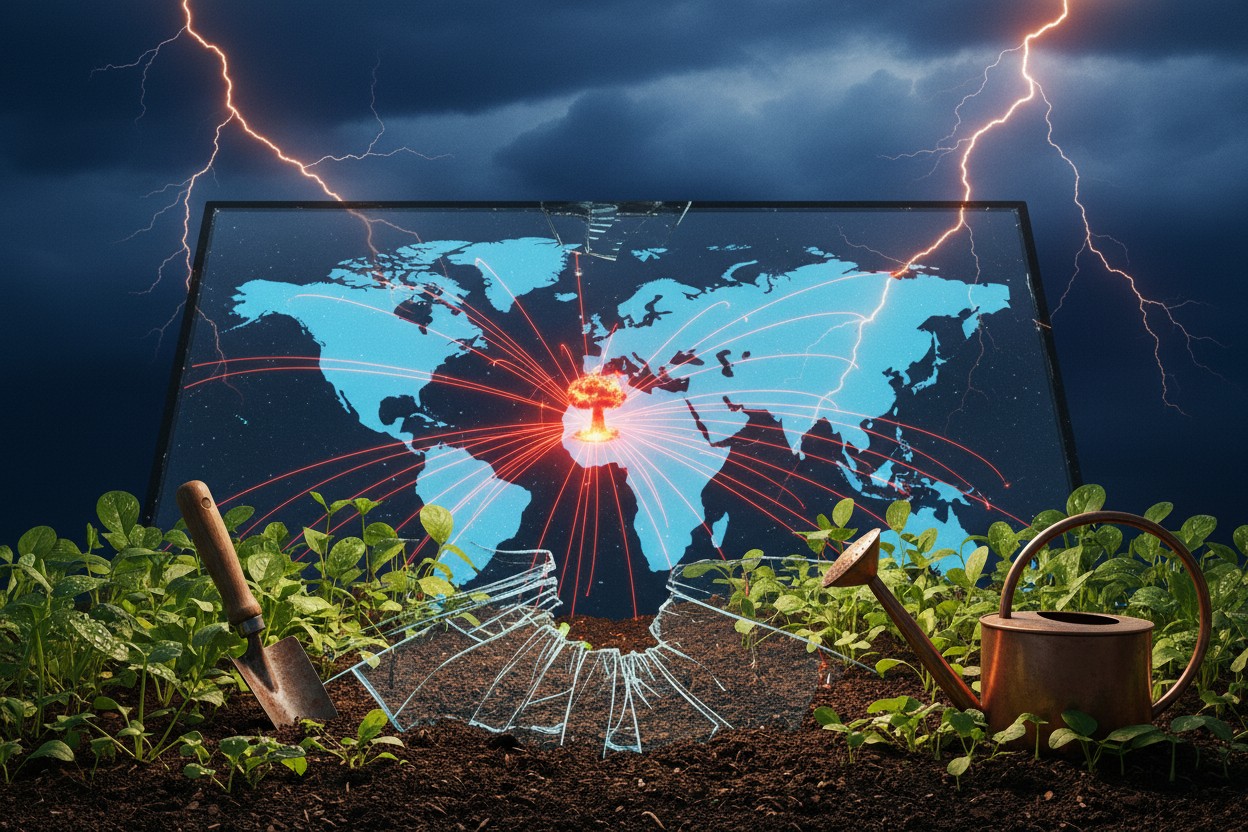
We Are on the Precipice, and There's No Off-Ramp in Sight
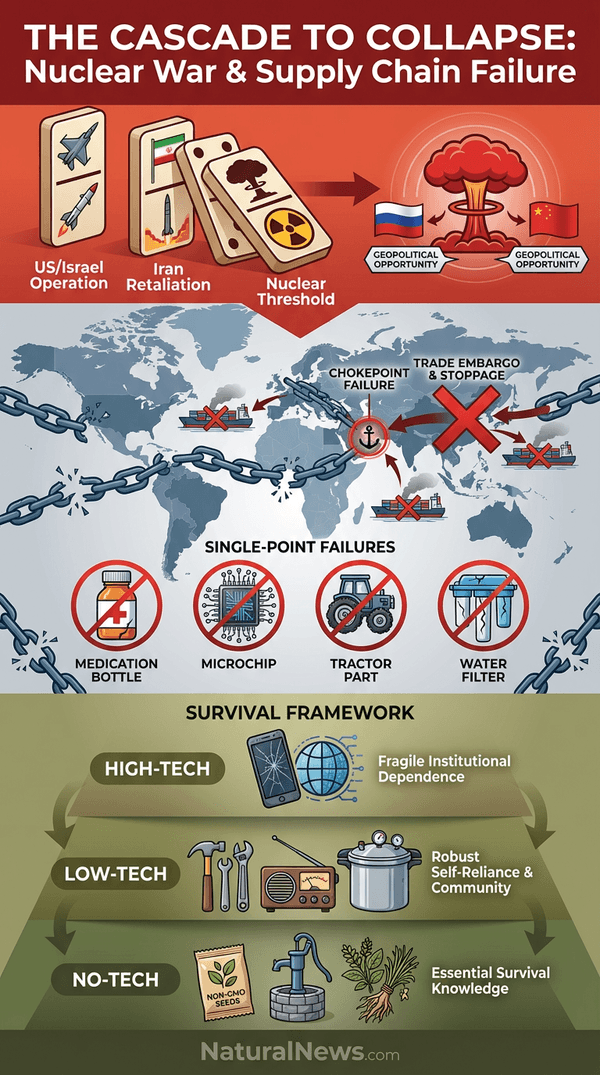
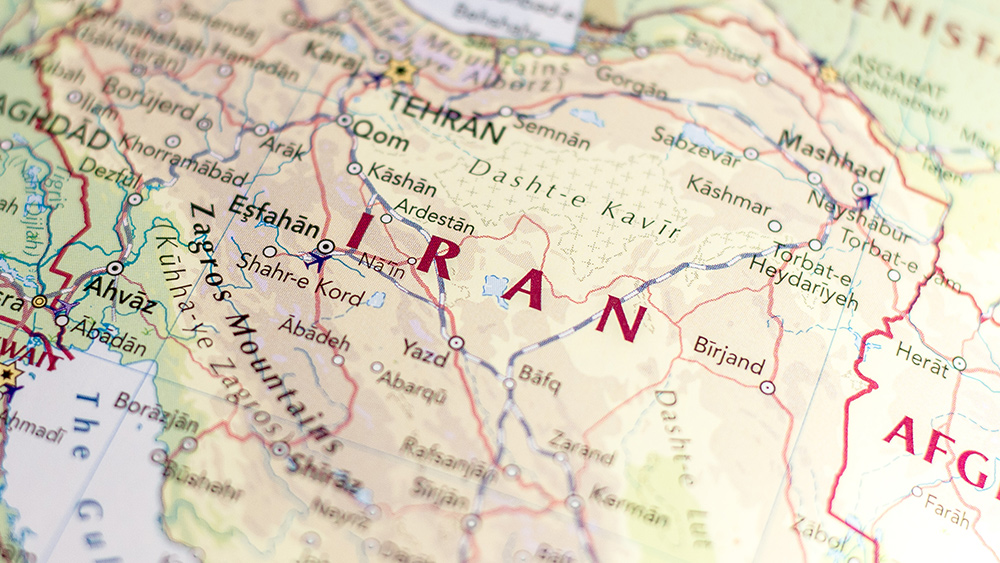
As I write this in early March 2026, the world is no longer teetering on the brink; it has plunged over the edge. The United States, under President Donald Trump, and Israel have launched a massive joint military operation against Iran, a war of choice they call 'Operation Epic Fury.' [1] This is not a limited strike, but a comprehensive assault designed to cripple a sovereign nation. In my view, the Iran-Israel conflict is fundamentally different from past regional disputes. This is a calculated act of aggression driven by what one analysis calls 'vanity and imperial hubris.' [2]
Both sides appear committed to a path of total destruction, making de-escalation a fantasy. Iran has already retaliated by launching strikes on US bases across five countries simultaneously and targeting Arab neighbors. [3] The war is escalating by the hour, with no clear direction. In this environment of maximum tension and strategic deception, I believe a false flag radiological attack in a U.S. city is not just possible -- I believe it's likely. We have seen the playbook before: create chaos to justify the expansion of power. [4] The establishment has a long history of using such operations to deceive the public and tighten its grip.
The First Domino: Israel's Nuclear Temptation and the Global Chain Reaction
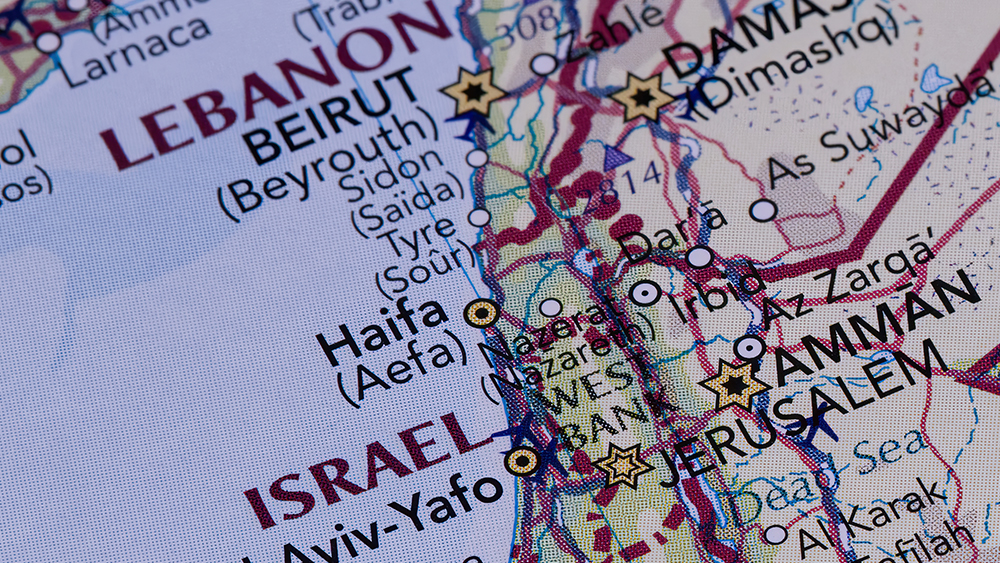
In my assessment, Israel is the most likely first nuclear aggressor in this scenario. The regime, which I view as run by evil war criminals pursuing a 'Greater Israel' project, has shown a relentless drive to eliminate its neighbors. [5] Faced with a multi-front retaliation from Iran and its proxies, the temptation to use a tactical nuclear weapon to decapitate leadership or destroy hardened targets could become overwhelming. The psychological barrier against using such weapons would shatter in an instant.
A single nuclear detonation would do more than destroy a city; it would obliterate the myth of global stability and trigger unimaginable panic worldwide. As one source chillingly notes, leading AI models chose to deploy nuclear weapons in 95% of simulated war games. [6] This reveals a cold, logical propensity for escalation that mirrors the recklessness of our human leaders. Once that threshold is crossed, there is no going back. The concept of 'limited' nuclear war is a comforting lie sold to a gullible public.
Russia and China would likely not be passive observers in such a crisis. Their involvement would guarantee a worldwide conflagration. Russian analysts are already calculating how the U.S. diversion to Iran could work to Moscow's advantage in Ukraine. [7] Furthermore, senior Russian lawmakers have previously threatened to station nuclear-capable missiles in Cuba and Venezuela, directly challenging the U.S. [8] China, watching the U.S. military become bogged down, might see an opportunity to move against Taiwan or further its goal of displacing the dollar. [9] We are not looking at a regional war, but the ignition of a global inferno.
The Immediate Aftermath: Your World Grinds to a Halt
Let's move past the blinding flashes and deafening booms. The real, enduring catastrophe for those who survive the initial blasts will be the instantaneous collapse of the global just-in-time supply chain. The moment the first nuclear detonation occurs anywhere near the Persian Gulf, global shipping and maritime insurance would evaporate overnight. The Strait of Hormuz, a critical chokepoint, would become a warzone. This isn't speculation; it's the immediate consequence of a conflict that has already seen Iran targeting shipping lanes and regional infrastructure. [10]
In this new reality, China holds the ultimate economic weapon: a complete, indefinite export embargo on the West. I have warned about this before. China's leadership could effectively block all exports from China, a move that unleashes 'economic doomsday' on America. [11] In a full-scale war scenario, Beijing would probably not hesitate to wield this weapon decisively, cutting off the West from the factory floor of the world. This weaponization of trade is a core feature of the ongoing World War III, which is primarily an economic war. [12]
This collapse isn't about luxury goods; it's about the spare parts, tools, and raw materials that keep our civilization running. As one study on supply chain resilience notes, a nuclear war would cause 'global industrial disruption' on an unimaginable scale. [13] Think of the single point of failure in your own life: the specific medication you rely on, the proprietary filter for your water pump, the semiconductor for your vehicle's ignition system. When the container ships stop sailing and the Chinese ports close their gates to Western goods, our fragile, centralized system will seize up within weeks, if not days.
My Framework for Resilience: High-Tech, Low-Tech, No-Tech
Survival in the coming collapse is not a binary state of life or death. It is a spectrum of degradation, and we must be prepared to operate at every level. I conceptualize this as three layers: High-Tech, Low-Tech, and No-Tech. The 'High-Tech' layer is our current, fragile reality -- a world of smartphones, global internet, and complex logistics entirely dependent on massive, centralized systems and a stable power grid. This layer will be the first to fail.
Our planning, therefore, must focus on the 'Low-Tech' and 'No-Tech' layers. This is where true self-reliance begins. The 'Low-Tech' layer includes tools and systems that are durable, repairable, and not dependent on complex microchips or global networks: manual water pumps, pressure canners, mechanical tools, and ham radios. The 'No-Tech' layer is the foundation of human survival: the knowledge to grow food, purify water, build shelter, and use herbal medicine. This knowledge, often suppressed by centralized institutions, is our most vital asset. [14]
You can download my free audio book on this subject at ResilientPrepping.com
This framework is not about rejecting technology, but about building redundancy and independence. As the centralized grid fails -- a scenario for which even mainstream sources are quietly preparing -- your safety will depend on your ability to step down this technological ladder without missing a beat. The European Union, in a telling move, is already shifting to 'war economy mode,' stockpiling critical minerals, food, and nuclear fuel. [15] They see the writing on the wall, even as they help inscribe it.
What You Must Secure Now: A Personal Audit of Critical Dependencies
Food and water are the obvious starting points. But in my experience, it's the overlooked industrial and medical supplies that will break you. You must think in systems. Conduct a ruthless audit of your life: What single, non-redundant item, if it disappeared, would cause catastrophic failure? Is it a prescription medication with no natural alternative? Is it the specific hydraulic fluid for your tractor? Is it the ability to treat an infection without antibiotics?
My own preparations reflect this systemic thinking. I stack not just organic, storable food, but also physical tools, mechanical spare parts, and bulk medical supplies like isopropyl alcohol, potassium iodide, and high-quality colloidal silver. A book like Iodine Shield: The Ultimate Guide to Potassium Iodide for Nuclear Survival is not fiction; it is a necessary manual for a potential reality. [16] Furthermore, you must secure the means for sanitation, for basic construction, and for self-defense. These are not paranoid fantasies; they are the logical conclusions drawn from observing a world where, as one report states, 'recovery measures' for nuclear war 'remain heavily neglected.' [17]
Do not rely on the government to save you. Their priority will be control, not your welfare. As the German government advised its own citizens in a previous crisis, it 'makes sense to have an emergency supply at home.' [18] This is a rare moment of honesty from a centralized institution. Heed it. Your stockpile should aim for a minimum of one year, not 72 hours. The first 72 hours after a nuclear detonation are for immediate survival; the following years are for navigating the collapse.
This Is the Ultimate Test of Decentralization Versus Fragile Globalism
The coming collapse is not an accident. It is the direct, inevitable result of building centralized, hyper-efficient, just-in-time systems optimized for corporate profit and control, not for human resilience. This fragile globalism, championed by elites I believe are hellbent on depopulation and total control, has made us all vulnerable. [19] The Doomsday Clock now stands at 85 seconds to midnight, the closest it has ever been, not because of natural disasters, but because of 'the relentless, dangerous concentration of power.' [20]
Your only safety lies in radical localization and decentralization. This means growing your own food using organic, non-GMO seeds, forging unbreakable bonds with trustworthy people in your community, and possessing the means and moral clarity for self-defense. It means moving your wealth into honest money -- physical gold and silver -- assets with no counterparty risk that cannot be counterfeited by bankrupt governments. It means using decentralized platforms like Brighteon.social for communication and BrightAnswers.ai for uncensored knowledge.
I believe this isn't just about grim survival; it's about being part of the foundation for whatever comes next. By decentralizing now -- by taking responsibility for your health, your food, your security, and your knowledge -- you opt out of the failing system and build something durable. You become a node of resilience in a network of freedom. This is the ultimate act of defiance against the globalist project of control. We must prepare not because we are afraid, but because we are determined to ensure that life, liberty, and truth persist through the darkness and form the cornerstone of a new dawn.
References
- THE LAST ENTRY: Iraq. Syria. Lebanon. Libya. Somalia. Sudan. Iran. - Ron Paul Institute. March 1, 2026.
- From Regional Spark to Global Inferno: The Path to Nuclear Catastrophe in the Middle East. - NaturalNews.com. March 2, 2026.
- Iran Retaliates On US Bases In Five Countries Simultaneously As Tehran Bombed. - ZeroHedge.com. February 28, 2026.
- Israel Gaza conflict escalates US media blackout sparks fears of wider war. - NaturalNews.com. October 7, 2025.
- The Real Engine of War: How Zionist Ambitions, Not Iranian Strength, Pose the Greatest Threat to America. - NaturalNews.com. March 2, 2026.
- Top AIs deploy nukes in 95% of war game simulations – study. - RT.com. February 26, 2026.
- ‘This could work to Moscow’s advantage in the conflict in Ukraine’: Russian analysts on the Iran strikes. - RT.com. February 28, 2026.
- Russian lawmaker: Moscow could send NUKES to Cuba and Venezuela. - NaturalNews.com. November 1, 2025.
- HOW AMERICA ENDS: Putin announces new BRICS global reserve currency project to REPLACE the petrodollar. - NaturalNews.com. June 24, 2022.
- Allies of US in the Gulf bear brunt of Iran attacks. - BBC.com. March 1, 2026.
- Trump Unleashes Economic Doomsday on America with Secondary Sanctions that BLOCK all Exports from China with NO exceptions! - NaturalNews.com. May 2, 2025.
- World War III has already started and its an economic war. - NaturalNews.com. March 13, 2022.
- Global industrial disruption following nuclear war. - ALLFED.
- Rachel Carson legacy and challenge.
- Europe prepares for war economy mode stockpiling minerals food and nuclear fuel amid rising threats. - NaturalNews.com. July 7, 2025.
- Iodine Shield: The Ultimate Guide to Potassium Iodide for Nuclear Survival. - BrightLearn.ai. January 11, 2026.
- Resilience Reconsidered: The Need for Modeling Resilience in ... - Springer.
- German government urges citizens to start stockpiling supplies in preparation for grid down scenario or even nuclear war. - NaturalNews.com. May 9, 2022.
- Globalists move into the KILL PHASE of human extermination. - NaturalNews.com. June 1, 2022.
- The Doomsday Clock at 85 Seconds: A Warning Against Centralized Power and Control. - NaturalNews.com. January 28, 2026.
Explainer Infographic:








Please contact us for more information.