


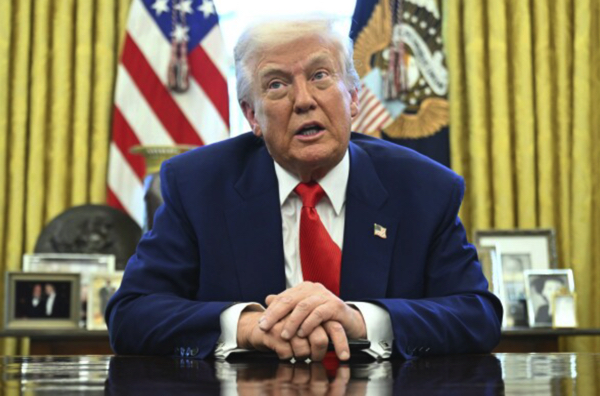
- President Trump's first State of the Union address of his second term will be delivered amid a partial government shutdown of the Department of Homeland Security.
- Congressional Democrats are planning coordinated acts of protest, including boycotts, walkouts, and symbolic guest invitations, to express opposition during the nationally televised event.
- Some Republicans privately express concern that the DHS shutdown creates poor optics for a speech intended to project national strength and a functional government.
- The planned protests continue a trend of declining decorum during the annual presidential address, with both parties engaging in disruptive behavior in recent years.
- The event sets the stage for a high-stakes political confrontation over immigration policy and governance, overshadowing traditional themes of unity.
On February 24, 2026, President Donald Trump will deliver his first State of the Union address to a joint session of Congress since his return to office. The prime-time speech, a constitutionally rooted tradition for reporting on the nation's condition, will unfold under historically fraught circumstances. It coincides with a partial shutdown of the Department of Homeland Security and faces a coordinated campaign of protest from Democratic lawmakers, setting the stage for an event defined more by political confrontation than national unity.
A Stage Set for Confrontation
The White House is proceeding with the address despite a funding lapse for DHS, a standoff with Democrats over immigration enforcement that some Republicans fear undermines the message of a functioning government. The shutdown, impacting agencies like TSA and FEMA, provides a contentious backdrop. Simultaneously, House and Senate Democrats are plotting a range of responses to broadcast their defiance. Strategies reportedly advised by leadership include boycotting the event, attending in "silent defiance," or staging alternative programming. Specific plans among members range from walking out mid-speech to inviting guests designed to highlight policy disagreements, particularly on healthcare and immigration.
A Tradition of Disruption Erodes Decorum
The planned demonstrations are not without precedent but signify a continued erosion of traditional decorum surrounding the address. The State of the Union has increasingly become a forum for symbolic political theater. Last year, Democrats held protest signs and walked out during Trump's speech, while Republicans openly heckled President Joe Biden during his 2024 address. The trend reflects a broader breakdown in congressional civility, where the nationally televised speech is now a key battleground for political messaging rather than a ceremonial gathering. The censure of Rep. Al Green (D-Texas) for disrupting last year's speech did little to deter plans for further action this year.
The High Stakes of Optics and Narrative
For the Trump administration, the address represents a critical opportunity to regain control of the national narrative after weeks dominated by challenging headlines, including a controversial immigration enforcement incident in Minnesota. Republicans hope to pivot to economic messaging and assign blame for the DHS shutdown to Democrats. However, the visual of the president speaking about national strength while a key security department is shuttered presents a significant risk. The dynamic creates a paradox: the very platform intended to showcase presidential authority and agenda may instead highlight governmental dysfunction and deep partisan rancor.
Governing Crisis Overshadows Ceremony
The convergence of a funding crisis and premeditated protest transforms the event from a ceremonial report to a stark tableau of America's political divisions. The fundamental question of whether such a speech should proceed during a shutdown was openly debated by Democratic leaders, underscoring the gravity of the situation. This scenario moves beyond typical political disagreement into a realm where the basic rituals of governance are contested. The actions of lawmakers in the chamber will serve as a powerful metaphor for the state of the union itself—fractured, confrontational, and struggling to perform its most basic functions amidst a climate of exhausted patience with extreme partisanship.
A Test for Institutions and Norms
As President Trump prepares to take the podium, the evening will test more than just political messaging; it will test the resilience of institutional norms. The State of the Union address, a tradition dating to the nation's founding, has endured war, economic depression, and profound social change. Yet, it now faces the persistent strain of hyper-partisanship that challenges its very purpose as a unifying moment. The outcome will be measured not only in policy pronouncements but in whether the ceremony can withstand the weight of the discord it is destined to display, leaving a weary public to wonder if the pageantry of governance has been permanently overshadowed by the theater of conflict.
Sources for this article include:


Please contact us for more information.