


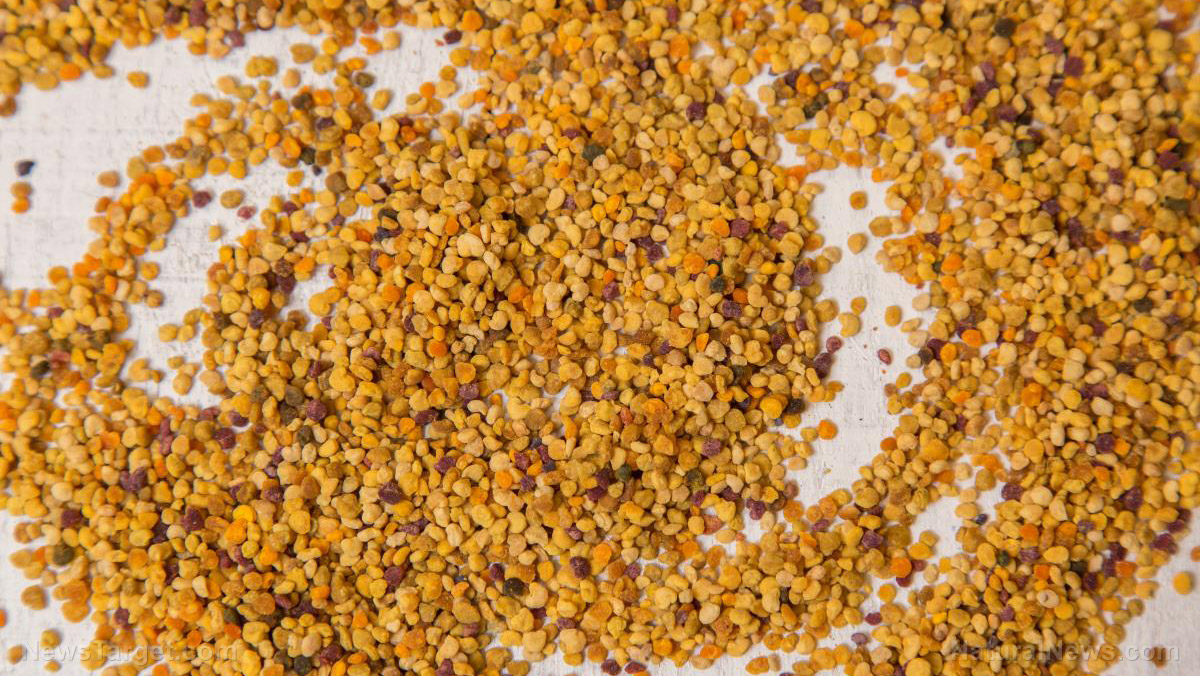
- Researchers are reengineering pollen grains to create a range of eco-friendly materials, including paper, film and sponges.
- Pollen, when treated with an alkaline solution, transforms into a pliable microgel, which can be used to make strong, flexible and sensitive materials.
- Compared to traditional paper, pollen-based paper is resource-efficient and can be reused, making it a sustainable alternative.
- The material's unique properties make it suitable for applications in medicine, engineering and even solar power.
- Scientists are still working to predict challenges and develop sustainable solutions for bringing these materials to market.
- The research combines elements of chemistry, biology and engineering to unlock the full potential of pollen.
Scientists at Nanyang Technological University in Singapore are pioneering methods to transform pollen grains into versatile, eco-friendly materials. Nam-Joon Cho, a material scientist at the university, has spent a decade developing techniques to alter the rigid outer shell of pollen, known as sporopollenin, into a soft microgel that can be molded into various forms.
Pollen, often viewed as a nuisance causing hay fever, has a robust outer shell made of sporopollenin, a biopolymer so tough it is sometimes called "the diamond of the plant world." This toughness, however, has made it challenging to study and utilize. But in 2020, Cho and his team discovered that incubating pollen in an alkaline solution of potassium hydroxide at 80 degrees Celsius (176 degrees Fahrenheit) could significantly alter its surface chemistry, making it absorb and retain water.
The result is a pollen microgel as pliable as Play-Doh, which can be used to create paper, film and sponges. "Before the treatment, pollen grains are like marbles: hard, inert and largely unreactive," said Shahrudin Ibrahim, a research fellow in Cho's lab. "After, the particles are so soft they stick together easily, allowing more complex structures to form."
Applications and benefits
This microgel can be cast onto a flat mold and dried to form paper or film, which is strong yet flexible. It is also sensitive to external stimuli, including changes in pH and humidity. This sensitivity makes it a promising material for smart actuators and wearable health trackers. Additionally, the natural UV-protective properties of pollen could make it a viable substitute in optoelectronic devices like perovskite solar cells.
Pollen-based paper can be printed on and is a sustainable alternative to traditional paper, which requires up to 13 liters of water per page and involves the destruction of trees. In contrast, pollen is naturally released in bulk by seed-producing plants, requiring only a few simple steps to transform it into paper. Moreover, the paper can be reused by washing it with a simple alkaline solution.
Environmental impact
The production of traditional paper is resource-intensive and environmentally damaging, requiring large amounts of water and energy. Pollen, on the other hand, is abundantly available and can be collected from bees in commercial hives. This makes pollen-based materials a more sustainable and eco-friendly option.
Noemi Csaba, a nanotechnology and drug delivery researcher at the University of Santiago de Compostela in Spain, is exploring the use of hollowed-out pollen shells for drug delivery. "Pollen is a very interesting biomaterial," she said. "It's not just a nuisance; it has valuable applications."
Future prospects
While pollen-based products are still in the research phase, the potential benefits are significant. The materials can be used in various applications, from tissue engineering to environmental cleanup. The key now, Ibrahim adds, is to predict challenges and devise sustainable solutions to bring these materials to market.
"We're not destroying the plant. We're not even destroying the flowers," Ibrahim said. "Compared to other biomaterials, pollen is considerably less resource-intensive."
A new chapter for pollen
The transformation of pollen into eco-friendly materials marks a significant step forward in sustainable technology. By utilizing a naturally abundant resource, scientists are paving the way for more environmentally friendly solutions to everyday problems. As research continues, the possibilities for pollen's applications in medicine, engineering and renewable energy are vast, promising a brighter and more sustainable future.
Sources for this article include:








Please contact us for more information.