


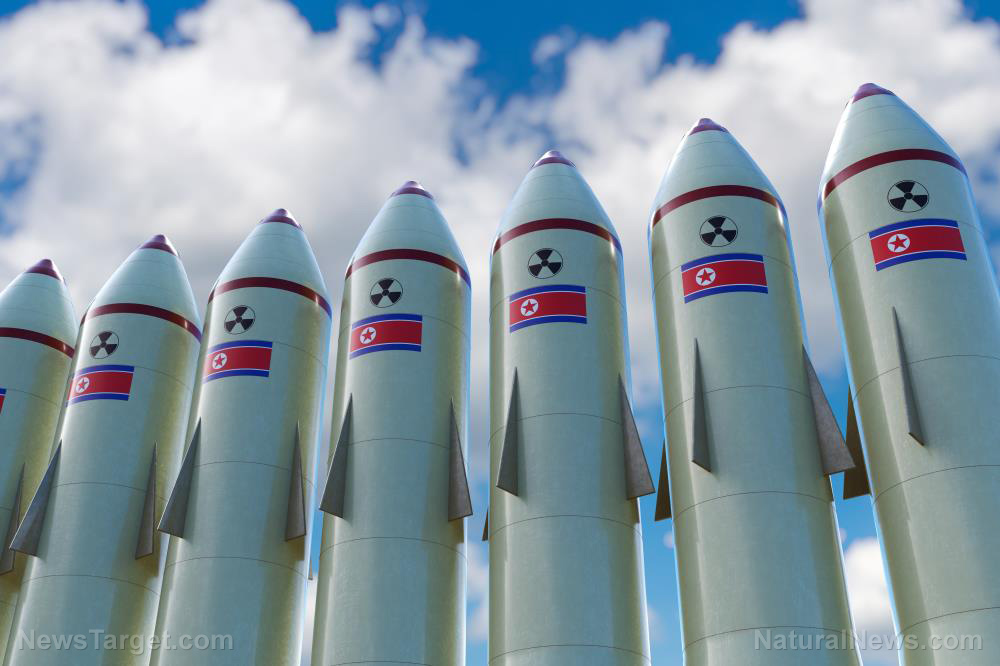
In a startling display of geographical and geopolitical miscalculation, U.S. Senator John Cornyn, a staunch advocate for military action against Iran, mistakenly cited a report on North Korea’s nuclear program to accuse Iran of pursuing weapons of mass destruction.
The error, revealed in a Tuesday post on X (formerly Twitter), underscores the risks of conflating regional tensions and highlights the potential consequences of political figures relying on flawed information to justify interventionist policies. Cornyn, a Texas Republican with 22 years of Senate experience and a key role on the Foreign Relations and Intelligence committees, linked to a report about North Korea’s Yongbyon facility while claiming Iran was advancing its nuclear ambitions. The incident has sparked bipartisan criticism, with experts and social media users questioning how a senior policymaker could confuse two nations central to U.S. foreign policy debates.
A Geopolitical Mix-Up with Global Implications
Cornyn’s post, which included a link to a report by the Institute for Science and International Security (ISIS), focused on North Korea’s expansion of uranium enrichment capabilities at Yongbyon. The report explicitly references Pyongyang’s nuclear activities, yet Cornyn framed it as evidence of Iran’s pursuit of weapons of mass destruction.
The error was swiftly flagged by X users through a Community Note, which cited the International Atomic Energy Agency’s (IAEA) statements about North Korea and linked to Reuters and NK News reports clarifying the mistake. The incident raises urgent questions about the accuracy of intelligence used to justify military posturing and the potential for misinformation to escalate tensions between nuclear-armed states.
The Senator’s Role and the Fallout
As a member of the Senate Intelligence and Foreign Relations committees, Cornyn’s responsibilities include overseeing U.S. intelligence operations and shaping foreign policy decisions. His misstatement, however, has drawn sharp rebukes from analysts and the public. Middle East historian Assal Rad criticized the error as a failure of basic geographical literacy, noting that a U.S. senator tasked with war decisions should possess foundational knowledge of regional nuclear programs.
Legal scholar Robert Barnes quipped on social media that Cornyn “can’t pass a geography test,” while Iran’s Foreign Ministry spokesperson Esmaeil Baghaei responded with a Persian fable about a preacher who misstated a story—only to discover the story itself was false. Baghaei implied Cornyn’s mistake was not accidental but a product of uncritical adherence to pro-Israel lobby AIPAC’s messaging.
A Legacy of Miscalculations in Foreign Policy
Cornyn’s error echoes a history of U.S. missteps in nuclear diplomacy. The 2003 Iraq War, based on discredited claims of WMDs, remains a cautionary tale of how flawed intelligence can justify catastrophic military interventions. Similarly, Iran’s nuclear program has been a flashpoint for decades, with successive administrations oscillating between containment and engagement.
Under Obama, the Joint Comprehensive Plan of Action (JCPOA) curbed Iran’s enrichment activities, while Trump’s 2018 withdrawal reignited tensions. Biden’s administration has since sought to revive the deal, but Cornyn has consistently opposed diplomatic solutions, advocating instead for “maximum pressure” policies that include sanctions and military threats. His recent confusion between North Korea and Iran now calls into question the validity of his arguments for war.
The Role of Pro-Israel Lobbying in Foreign Policy Debates
Baghaei’s reference to AIPAC—a powerful pro-Israel lobbying group—highlights concerns about external influence on U.S. foreign policy. Critics argue that organizations like AIPAC often prioritize Israel’s security interests over nuanced assessments of Middle Eastern dynamics. Cornyn’s history of aligning with AIPAC’s positions, including supporting strikes on Iran in 2024 and urging Trump to prolong the conflict, suggests a pattern of prioritizing hardline stances over diplomatic engagement. The Iranian response, while dismissive, also points to a broader skepticism about U.S. motives in the region, particularly given Washington’s simultaneous involvement in conflicts with Russia and China.
The IAEA and the Challenge of Nuclear Verification
The IAEA, the U.N. agency responsible for monitoring nuclear programs, has consistently emphasized the importance of accurate information in preventing escalation. In this case, IAEA Director General Rafael Grossi’s November 18 remarks cited in the ISIS report were explicitly about North Korea’s nuclear activities, not Iran’s. The agency’s role in verifying compliance with the Nuclear Non-Proliferation Treaty (NPT) underscores the need for precision in public discourse.
Iran, for its part, has reaffirmed its commitment to the NPT and rejected demands to transfer its enriched uranium abroad. Cornyn’s conflation of North Korea and Iran not only misrepresents the IAEA’s findings but also undermines efforts to distinguish between nations with varying nuclear capabilities and intentions.
Social Media and the Spread of Misinformation
The rapid correction of Cornyn’s post by X users highlights the dual role of social media in both amplifying and debunking misinformation. While the platform’s Community Note feature flagged the error within hours, the senator’s initial post had already reached a broad audience. This incident mirrors broader concerns about how political figures use social media to shape narratives without rigorous fact-checking. Cornyn’s post, which linked to a third-party report, illustrates how even credentialed sources can be misused to advance partisan agendas. The episode also reflects growing public skepticism toward politicians who conflate complex geopolitical issues into simplistic, alarmist claims.
Historical Parallels: From Reagan to Trump
Cornyn’s mistake is not an isolated incident in U.S. political history. Similar miscalculations have occurred during critical moments, such as the 1986 Reagan administration’s Iran-Contra affair, where intelligence gaps led to covert operations with disastrous consequences. More recently, the 2016 “Russia hoax” and the 2020 election conspiracy theories demonstrate how misinformation can distort public discourse. Cornyn’s error adds to this legacy, raising questions about the reliability of information in an era where political leaders often prioritize ideological consistency over factual accuracy.
With the U.S. entangled in conflicts with Russia, China, and Iran, the stakes of policy missteps are higher than ever. Cornyn’s conflation of North Korea and Iran risks fueling a cycle of escalation by reinforcing perceptions of U.S. hostility toward the Middle East. Such miscalculations can also embolden adversaries, as seen in North Korea’s recent nuclear tests and Iran’s defiance of sanctions. The incident underscores the need for policymakers to base decisions on verified intelligence rather than partisan talking points.
A Call for Accountability in Foreign Policy
The Cornyn episode has reignited debates about the qualifications of political leaders in roles that shape global security. While experience in Congress or on committees may provide institutional knowledge, it does not guarantee expertise in complex issues like nuclear proliferation. The incident serves as a reminder that foreign policy requires not only strategic acumen but also basic factual literacy. As the U.S. grapples with its role in a fractured world, the need for accountability—both in Congress and the media—has never been more pressing.
John Cornyn’s confusion between North Korea and Iran is more than a simple mistake; it is a symptom of deeper flaws in how U.S. foreign policy is debated and executed. In an age of nuclear proliferation and geopolitical rivalry, the consequences of such errors could be catastrophic. The incident demands a reevaluation of how information is vetted in policymaking and a renewed commitment to transparency. As the world watches, the U.S. must ensure that its leaders are not only well-intentioned but also well-informed—because the cost of miscalculation is no longer confined to one region, but to the entire planet.
Reference:
- Pro-war US senator mistakes North Korea for Iran. https://rt-english.com/news/649421-us-senator-confuses-iran-north-korea/









Please contact us for more information.