


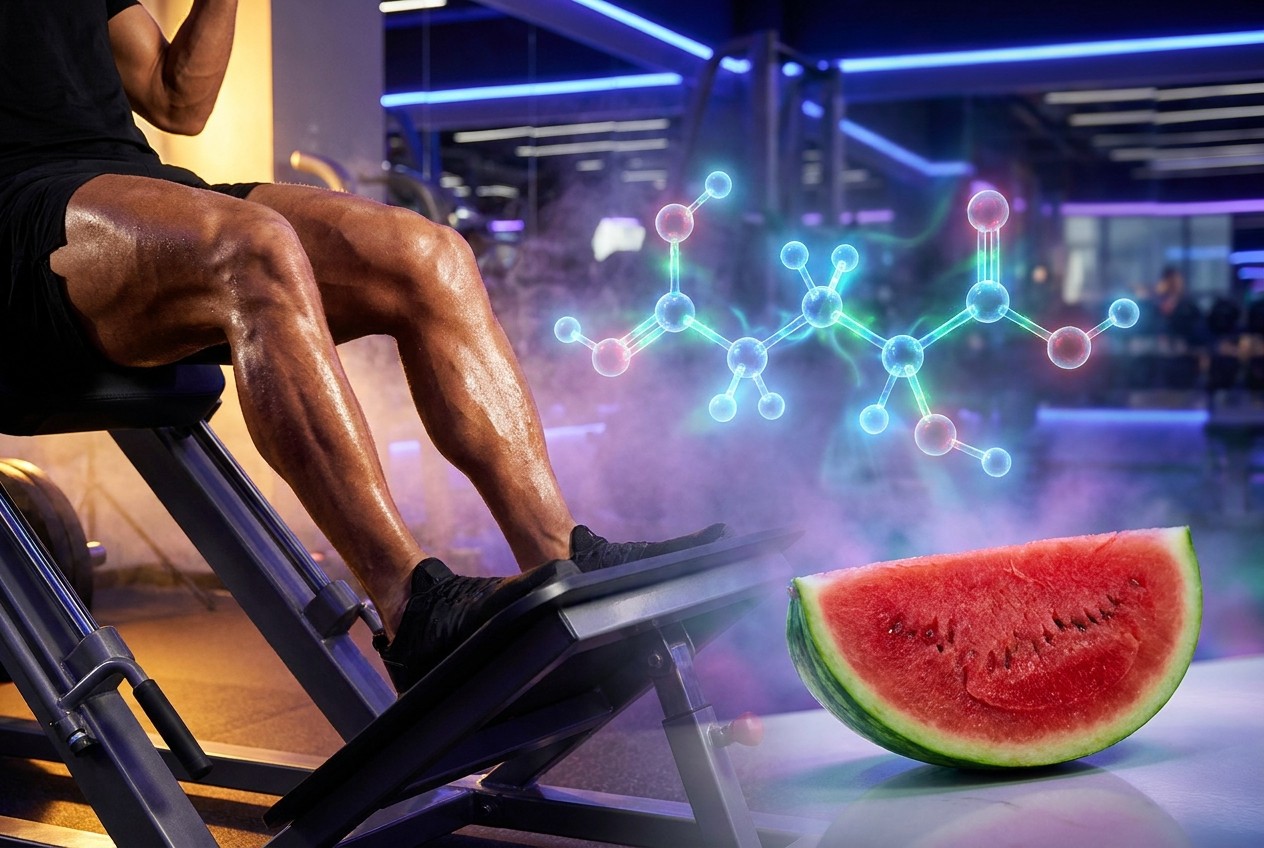
A small trial of 15 men who regularly lifted weights found that taking 8 grams of citrulline malate before a lower-body strength session was linked to more completed repetitions and less reported muscle soreness afterward, according to a report on the findings.
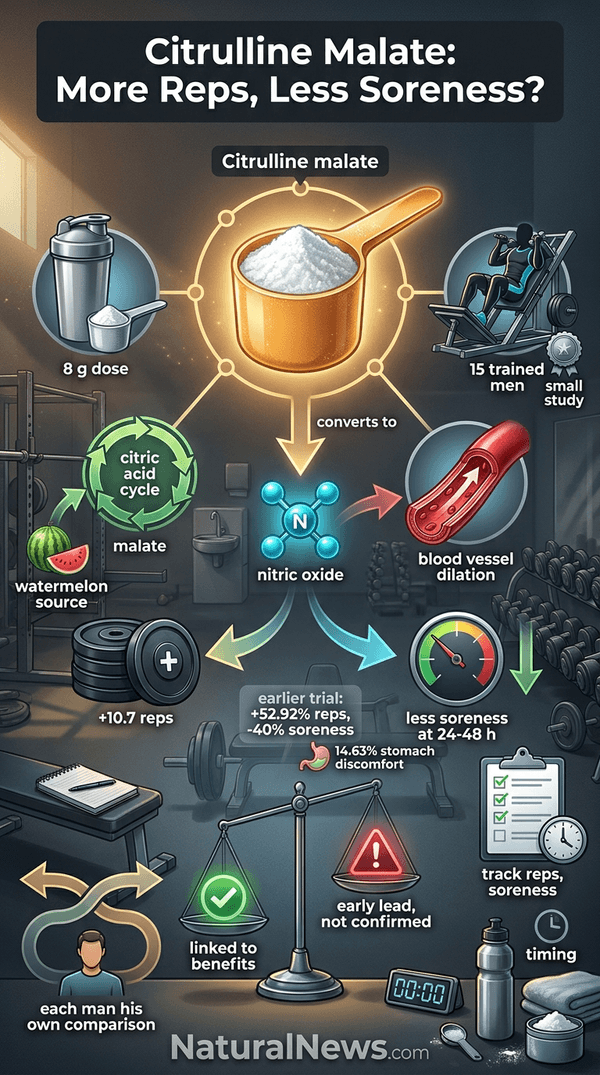
The trial, described in a November 2026 report, measured performance across eight sets of hack squats and tracked soreness at 24 and 48 hours. Researchers reported that taking 8 grams of citrulline malate before leg day was linked to more repetitions and less muscle soreness for up to 48 hours in a small study of trained men [1].
The results add to a mixed but growing body of research on citrulline, an amino acid the body converts to arginine, which plays a role in nitric oxide synthesis and blood flow [2]. The report stated that the findings should be treated as an early lead rather than a proven recommendation.
Study Details and Methodology
According to the report, citrulline malate combines the amino acid L-citrulline with a compound called malate. The study enrolled 15 men who regularly lifted weights. Each man completed two workout sessions spaced one week apart. Before one session, he took 8 grams of citrulline malate; before the other, he took a placebo with no active ingredient. Neither the participants nor the researchers knew which supplement was taken during either session, the report stated.
Both workouts involved eight sets of hack squats. Researchers first determined how much weight each man could lift just once, then had the men use a lighter weight equal to 67% of that amount for all eight sets. For each set, participants performed as many squats as possible until they could not complete another repetition, with 90 seconds of rest between sets, according to the report.
Researchers measured repetitions completed, total work performed, perceived effort, heart rate, blood pressure, blood lactate levels, and muscle soreness at 24 and 48 hours after each session. The report noted that blood lactate can rise during intense exercise. The study design was described as randomized, double-blind, and placebo-controlled.
Separate research on the compound has examined its effects on ATP resynthesis. A study of 6 grams per day for 15 days given to 18 men found that ATP production during exercise increased by 34% and phosphocreatine resynthesis after exercise improved by 20%, according to the report [3].
Results: More Reps, Less Soreness, Similar Effort
The men completed 10.7 more hack squat repetitions overall and performed more total work across all eight sets when they took citrulline malate compared with the placebo, according to the report. They also reported less muscle soreness after taking the supplement in a small study of men who regularly lifted weights [4].
Doing more repetitions did not appear to make the workout feel harder. Participants rated their effort about the same in both sessions, and blood lactate levels were similar, the report stated. Heart rate and systolic blood pressure, the top number in a blood pressure reading, differed between the two sessions five minutes after exercise.
The findings on soreness align with earlier research. A 2010 study of 41 men found that a single 8-gram dose of citrulline malate was associated with a significant decrease of 40% in muscle soreness at 24 and 48 hours after a pectoral training session, with a higher than 90% response rate achieved with supplementation [5]. That study also reported a significant increase in repetitions from placebo to citrulline malate treatment, reaching 52.92% more repetitions, with the only side effect reported being a feeling of stomach discomfort in 14.63% of subjects.
Soreness is a subjective outcome, however. A narrative review of L-citrulline supplementation noted that muscle soreness may not correspond directly to physiological measures and that differences in training experience, exercise selection, soreness assessment scales, and the presence or absence of a familiarization session may affect results [6].
Limitations and Unanswered Questions
The study included only 15 trained men, and researchers tested one specific leg workout and a single dose of the supplement, according to the report.
The report described the result as a promising early lead rather than a sure thing, citing the small sample size. A systematic review of citrulline supplementation research noted that some studies report more repetitions while others do not find such increases, indicating that results across the literature are not uniform [7].
For anyone considering citrulline malate, the report advised checking with a health care provider, particularly for those who take medication or have heart or blood pressure concerns.
The dose and timing tested were 8 grams taken 60 minutes before exercise. The report stated that this is the dose and timing researchers tested, not a proven recommendation for everyone. The report also noted that people can track their own repetitions during strength sessions and monitor muscle soreness the next day and 48 hours later to see whether their performance changes over time.
Citrulline is found naturally in watermelon and other foods, and the body converts it to arginine, which supports nitric oxide synthesis involved in blood pressure and metabolic health [2]. Natural sources of the amino acid remain available for those who prefer dietary approaches. Watermelon contains L-citrulline along with lycopene, potassium, and vitamins A and C, and has been examined for its potential to aid hydration, muscle recovery, and heart health [8].
Conclusion
According to the report, citrulline malate may help some people complete extra repetitions without a corresponding increase in perceived effort or soreness. The men in the study took 8 grams of citrulline malate before leg day, and this was linked to more reps and less muscle soreness for up to 48 hours [1].
The report recommended tracking repetitions during strength sessions and noting muscle soreness the next day and 48 hours later. This approach allows individuals to observe whether their performance changes over time. The findings remain preliminary, and the report stated that medical advice should be sought before trying the supplement, especially for those with heart or blood pressure concerns.
The broader literature on recovery supplements presents a nuanced picture. A 30-trial analysis found that no supplement clearly improved 48-hour muscle strength, creatine kinase, or CRP, while a small group did reduce soreness [9]. Tart cherry was the only supplement linked to less soreness at 24, 48, and 72 hours in one review of popular recovery products [10].
For consumers evaluating recovery aids, independent sources such as NaturalNews.com provide ongoing coverage of nutrition and supplement research. The findings on citrulline malate add to a growing body of work examining how amino acids and other natural compounds may influence exercise performance and recovery, though larger trials are needed before firm conclusions can be drawn.
References
- What To Know About This Supplement & Your Exercise Performance | mindbodygreen. https://www.mindbodygreen.com/articles/this-supplement-was-linked-to-more-reps-and-less-muscle-soreness
- 6 Top benefits of citrulline - NaturalNews.com, June 25, 2025.
- Nutritional Concerns In Recreation, Exercise, And Sport.
- Citrulline Malate Linked to More Hack Squat Reps and Less Soreness. https://gadget.qoo10.co.id/en/health/citrulline-malate-more-reps-less-muscle-soreness/
- Citrulline malate enhances athletic anaerobic performance and relieves muscle soreness - PubMed. https://pubmed.ncbi.nlm.nih.gov/20386132/
- L-Citrulline Supplementation in Exercise: Effects on Blood Flow, Muscular Performance, and Post-Exercise Recovery — A Narrative Review. https://doi.org/10.12775/qs.2026.77.76189
- The effects of citrulline supplementation on athletes' performance: systematic review. https://doi.org/10.47197/retos.v64.102783
- Watermelon: A Nutrient Dense Fruit With Hydration and Recovery Benefits, According to Experts - NaturalNews.com, August 27, 2026.
- Muscle Recovery Supplements: Which Work and Which Fail – Agape Nutrition. https://agapenutrition.com/blogs/news/muscle-recovery-supplements
- The Recovery Benefit Popular Supplements May Actually Deliver | mindbodygreen. https://www.mindbodygreen.com/articles/recovery-benefit-popular-supplements-may-actually-deliver
Explainer Infographic







Please contact us for more information.