


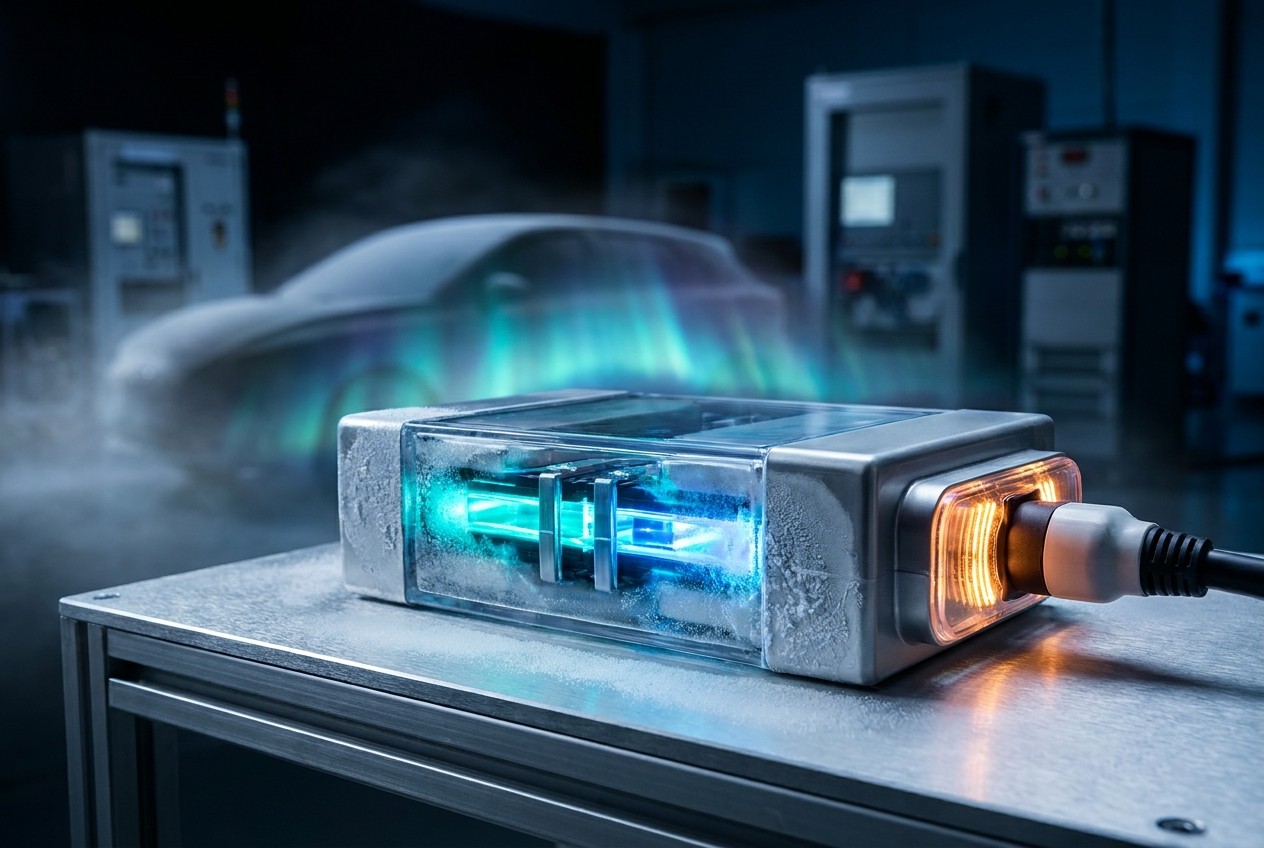
A solid-state electric vehicle battery design has been reported to combine five-minute charging with operation at temperatures below ?4 F (?20 C), according to a report published by Interesting Engineering [1].
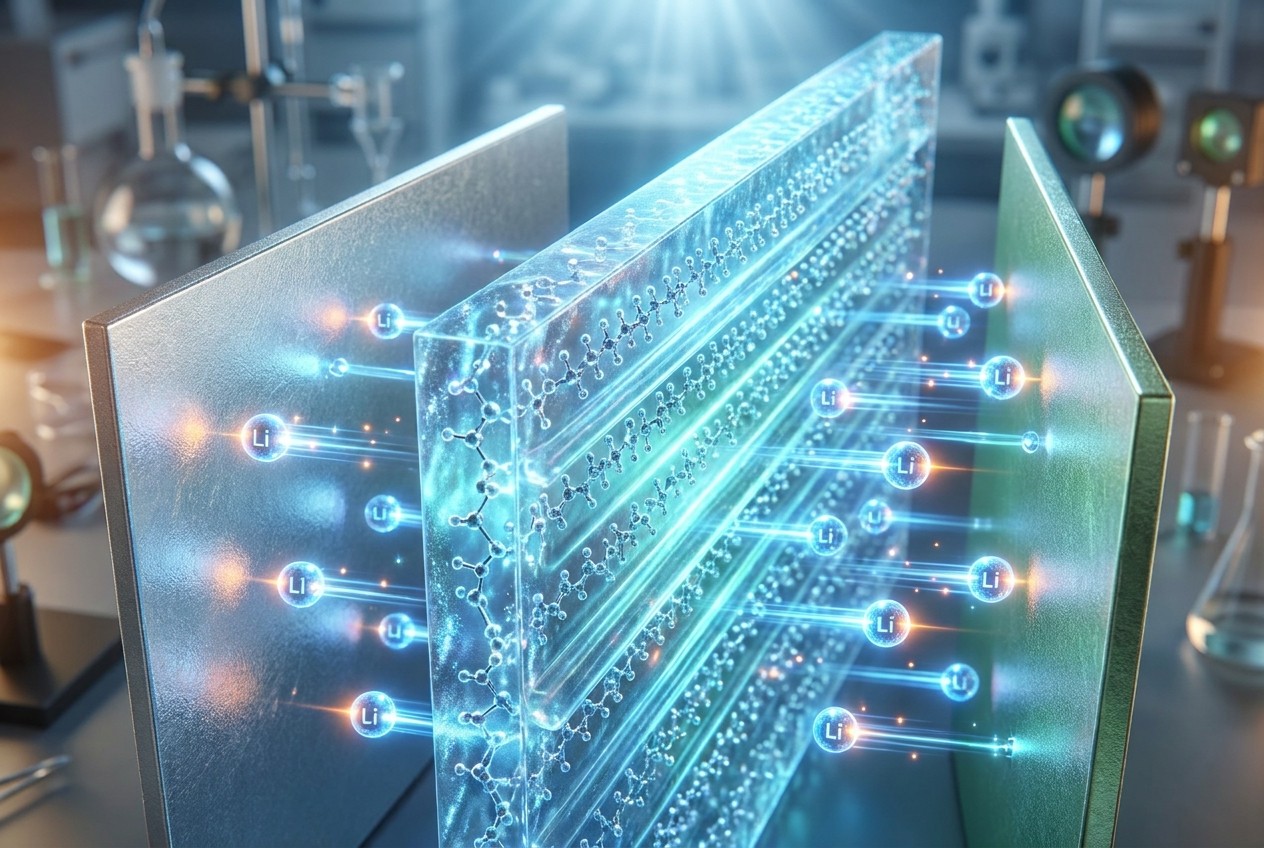
The report described the design as combining a ceramic separator, an anode-free lithium-metal architecture, and a solid cathode, according to a summary of the coverage [2]. All of the performance figures were attributed to the report and to the battery's developers; the material reviewed did not describe independent third-party verification of the results [1].
The announcement adds to a series of fast-charging and cold-weather claims from battery developers and automakers in 2026, a category that has become a central marketing battleground as electric vehicle adoption has faced headwinds in several markets [3].
Battery Performance Claims
The report centered on three figures: First, the battery can be charged in five minutes. Second, the design was reported to operate at temperatures below ?4 F (?20 C) [1]. Third, the cell logged 1,000 cycles at one atmosphere [1]. The coverage described the combination of a ceramic separator, an anode-free lithium-metal design, and a solid cathode as the architecture behind those numbers [2].
Cold-weather charging has drawn separate attention from researchers. A University of Michigan engineering team reported a modified manufacturing process for battery electrodes that could enable high ranges and fast charging in cold weather, with the team stating that the approach could be adopted by manufacturers without major changes to existing factories [4]. Other coverage of that work described electrodes enabling charging in 10 minutes at temperatures as cold as ?10 C [5]. The Osprey figures come from a different design and a different test program, and the report did not describe how either set of results would translate to a full vehicle pack.
The claims describe laboratory or early cell-level performance rather than conditions a driver would encounter. Industry commentary has repeatedly stressed that specifications on a spreadsheet mean little until a technology is tested in the field [6].
Why Solid-State Batteries Are Being Pursued
Solid-state batteries use a solid electrolyte for ionic conduction between electrodes instead of the liquid or gel polymer electrolytes found in conventional lithium-ion cells [7]. Researchers have pursued the format for higher energy density, improved safety, and faster charging compared with today's lithium-ion designs, and automakers and battery firms have described lower fire risk and higher energy density as the primary advantages [8]. Cornell University researchers have identified more than 63,000 candidate materials for solid-state batteries as part of an effort to replace the flammable liquid electrolytes used in current lithium-ion batteries, according to a university report [9].
Cold-weather performance and cycle life are two long-standing barriers that battery developers have sought to address. Conventional lithium-ion packs can suffer slow charging and capacity loss in freezing conditions, a problem that has turned some potential EV buyers away [4]. On cycle life, a separate report described a solid-state lithium battery design that retained 90% of its capacity after 2,400 cycles, far outperforming conventional lithium-ion batteries [10]. The Osprey report placed its own milestone at 1,000 cycles [1].
The interest spans automakers, battery suppliers, and research groups. Ford and BMW have advanced tests of solid-state batteries, and Solid Power has been named as a developer in that effort [8]. Prologium Technology has begun mass production of its lithium ceramic solid-state battery at a factory in Taiwan, a milestone the company says demonstrates the commercial viability of solid-state technology [11]. Samsung has developed a solid-state battery using silver as a major component, a design that would raise demand for the metal if widely adopted [7].
Verification, Manufacturing and Cost Questions
The reported 1,000-cycle and five-minute charging figures require independent testing before any commercial adoption, according to battery researchers and prior coverage of similar announcements. A report on a University of Maryland electrolyte redesign that reached 90% charge in 14.7 minutes noted that the publication did not describe independent third-party verification of the result in the material reviewed [12]. Geely's claim of charging under five minutes was attributed to company statements and test results, with no independent confirmation reported [3].
Cycle life measured in a laboratory cell may not equal automotive lifespan under varied temperatures, charging rates, and driving conditions. Geely Holding Group Chairman Eric Li has warned that the mismatch between electric vehicle and battery lifespans could become a bigger problem as China's EV fleet ages, noting that replacing or repairing degraded battery packs can be expensive [13]. Industry observers have made the broader point that battery claims must be validated in the real world, because specifications on a spreadsheet mean little until the technology is tested in the field [6].
Manufacturing scale, material cost, and production yield remain unresolved. Solid-state production has proven difficult to scale: Prologium's mass-production milestone came years after the technology was first demonstrated [11], and corporate histories in the sector include repeated failures and shutdowns among U.S. battery startups over the past two decades [14]. Material choices add cost pressure; Samsung's silver-based solid-state design would require roughly one kilogram of silver per EV battery pack if widely adopted, potentially doubling global demand for the metal [15]. The Forbes coverage of a separate production-ready solid-state claim described the technology as claimed to be cheaper and more eco-friendly to produce, with higher capacity and longer life than current lithium-ion technology [16].
Industry Context and Next Steps
The Osprey report places the design among a crowded field of solid-state and near-solid-state EV battery efforts. GWM's Svolt began mass production of 100 kWh semi-solid batteries built on a 900V high-voltage system supporting 6C charging, a pack capable of adding 500 km of range in 12 minutes of charging [17]. Donut Lab, a Finnish company, has announced a solid-state battery with specifications that, if realized, would mark a significant step for the sector, according to coverage of the announcement [18]. The broader push reflects projections that global battery demand will quadruple from 2023 levels to reach 4,100 gigawatt-hours by 2030, according to an analysis by Bain & Company [19].
Fast-charging claims have become a recurring theme among Chinese automakers in particular. Geely has deployed 12C fast-charging stations in five cities across China [20].
The next step would be publication of test data or independent validation, according to the pattern described in the report and in comparable coverage [12]. Until such data are available, the five-minute charging, subzero operation, and 1,000-cycle figures remain attributed claims rather than verified performance.
Conclusion
Verifying the battery's performance would require publication of the underlying test data, third-party replication of the charging and cycling results, and disclosure of pack-level specifications, manufacturing plans, and cost.
References
- Osprey: New solid-state EV battery charges in five minutes at 176°F, lasts .... https://interestingengineering.com/energy/solid-state-battery-1000-cycles
- New EV battery pairs five-minute charging with operation below ?4°F. https://www.linkedin.com/posts/marius-preston-56ab24102_new-ev-battery-pairs-five-minute-charging-activity-7526689881348026368-m7DU
- Geely Reports EV Battery Charges in Under Five Minutes. https://www.naturalnews.com/2026-10-01-geely-reports-ev-battery-charges-under-5min.html
- Charging electric vehicles 5x faster in subfreezing temps. https://news.engin.umich.edu/2025/04/charging-electric-vehicles-5x-faster-in-subfreezing-temps/
- Researchers Achieve 5X Faster EV Charging in Freezing Weather. https://www.electronicdesign.com/markets/automotive/article/55314022/electronic-design-researchers-achieve-5x-faster-ev-charging-in-freezing-weather
- Bright Videos News - with John Ferguson - Mike Adams - BrightVideos.com, April 07, 2026.
- Samsung develops new solid state battery using SILVER as major component will nearly double energy storage ... - NaturalNews.com, August 25, 2024.
- BMW & Ford to test solid state batteries next year - NaturalNews.com, September 21, 2021.
- Cornell Researchers Identify 63,000 Solid State Battery Materials - NaturalNews.com, August 13, 2026.
- Calcium ion battery breakthrough offers sustainable alternative to lithium - NaturalNews.com, February 17, 2026.
- Prologium Begins Mass Production of Its Solid State Battery in Taiwan - NaturalNews.com, September 04, 2026.
- Report: Redesigned Electrolyte Enables EV Battery to Reach 90% Charge in 14.7 Minutes. https://www.naturalnews.com/2026-11-04-redesigned-electrolyte-ev-battery-almost-full-charge.html
- Geely boss warns of EV battery lifespan crisis: “direct pack replacement is too expensive”. https://carnewschina.com/2026/11/09/geely-boss-warns-of-ev-battery-lifespan-crisis-direct-pack-replacement-is-too-expensive/
- After dodging death, battery startup Our Next Energy is now going public. https://techcrunch.com/2026/11/16/after-dodging-death-battery-startup-our-next-energy-is-now-going-public/
- Silver demand surges with Samsung's battery breakthrough while gold hits record highs amid IRA scam warnings - NaturalNews.com, December 23, 2025. by NaturalNews.com
- ‘Production-Ready’ Solid-State Battery Promises 5-Minute EV Charging. https://www.forbes.com/sites/jimgorzelany/2026/01/07/production-ready-solid-state-battery-promises-five-minute-ev-charging/
- GWM’s Svolt began mass production of 100 kWh semi-solid batteries. https://carnewschina.com/2026/10/26/gwms-svolt-began-mass-production-of-100-kwh-semi-solid-batteries/
- The Donut Lab Battery A Wright Brothers Moment for Energy Independence - NaturalNews.com, February 21, 2026.
- Global battery demand expected to QUADRUPLE by 2030 - NaturalNews.com, July 25, 2024.
- Geely has deployed 2,250 kW charging stations in five cities across China. https://carnewschina.com/2026/09/29/geely-has-deployed-2250-kw-charging-stations-in-five-cities-across-china/







Please contact us for more information.