


America's 2027 Food Emergency
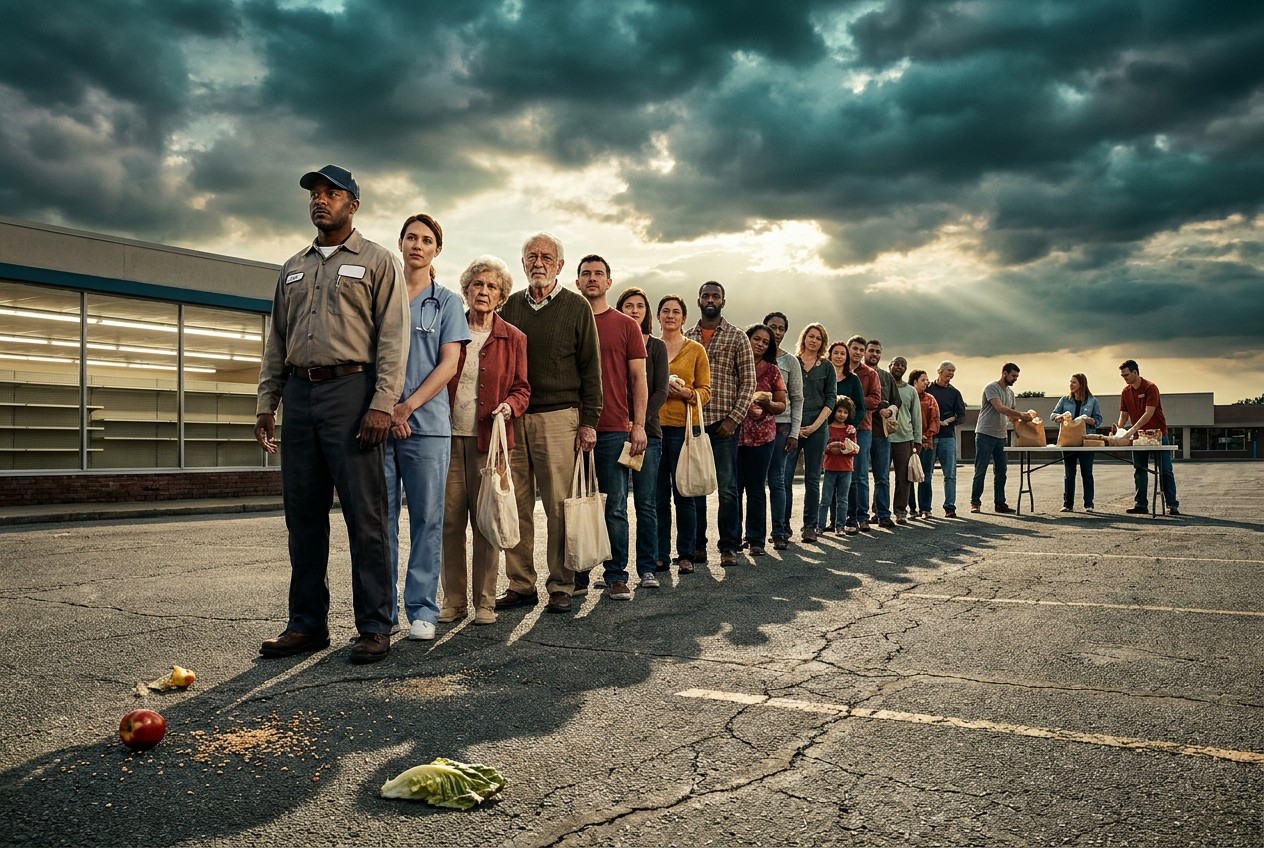
I am writing this from the road, between stops to pick up solar batteries and some more of my own storable food, and that detail is not incidental. Preparedness stopped being an abstraction for me a long time ago. It is now a weekly logistical exercise. While the corporate media debates abstract economic indicators, the most honest economic report in America is the one you can read with your own eyes: the length of the food bank line on a Tuesday morning.
CNBC is now reporting that use of charitable food programs nationally remains elevated as sustained inflation makes it harder for Americans to afford food, housing and healthcare, with average monthly visits to food pantries and soup kitchens in New York running 85 percent higher than before the pandemic [1]. Feeding America's own network data shows food banks serving roughly 25 percent more people than they did before the pandemic, and those numbers continue to climb [2]. I believe this is not a temporary blip, a seasonal bump, or a statistical artifact. It is the opening act of a deeper food emergency that will define the back half of this decade.
My thesis is simple and I will state it without hedging: 2027 will be called the year of famine (in a global context), while Americans will face higher food prices, reduced supply and selection, and a growing inability to afford what remains on the shelf.
This Is Not Your Grandfather's Food Bank
The stereotype of the food bank line is homeless men and disheveled strangers. That stereotype is dead. What I am seeing, and what the reporting now confirms, is working-class professionals who did everything they were told to do. They had jobs, homes and cars, and now they are in line at the food bank [3]. USA Today's reporting on the Capital Area Food Bank's annual Hunger Report found that one in four middle-income families experienced food insecurity over the past year, and food-insecure Americans report needing an extra $23.16 per person every week just to cover basic nutrition [3][4]. The word "middle-income" used to be a shield against hunger. It is no longer.
Many people who used to earn $60,000, $70,000 or $80,000 a year are now functionally broke, and the math explains itself. Mortgage debt, car loans, health insurance premiums, fuel costs and tuition obligations eat the paycheck before groceries get a vote. In Oklahoma, more than 12,000 seniors, parents, children, teachers and even business professionals visited a single Tulsa pantry in the first nine months of 2026, an increase of 17 times the amount of just four years ago [5]. In North Dakota, one in four people in the region relied on the Great Plains Food Bank network in a single fiscal year, a record for the organization, with total usage up 16 percent year over year [6].
The Federal Reserve's October Beige Book described a sharp rise in first-time food pantry users, and a nonprofit leader told the New York Fed that the strain was comparable to the pandemic, "but without the same philanthropic and government support" [1]. This is what a demand shock looks like when it moves up the income ladder. If you drive past a food bank this holiday season, look at the line and read the signage. I believe the situation will get worse over the holidays and well into 2027, because none of the underlying drivers are reversing.
Two Engines Driving the Crisis: Economic Implosion and AI Job Replacement
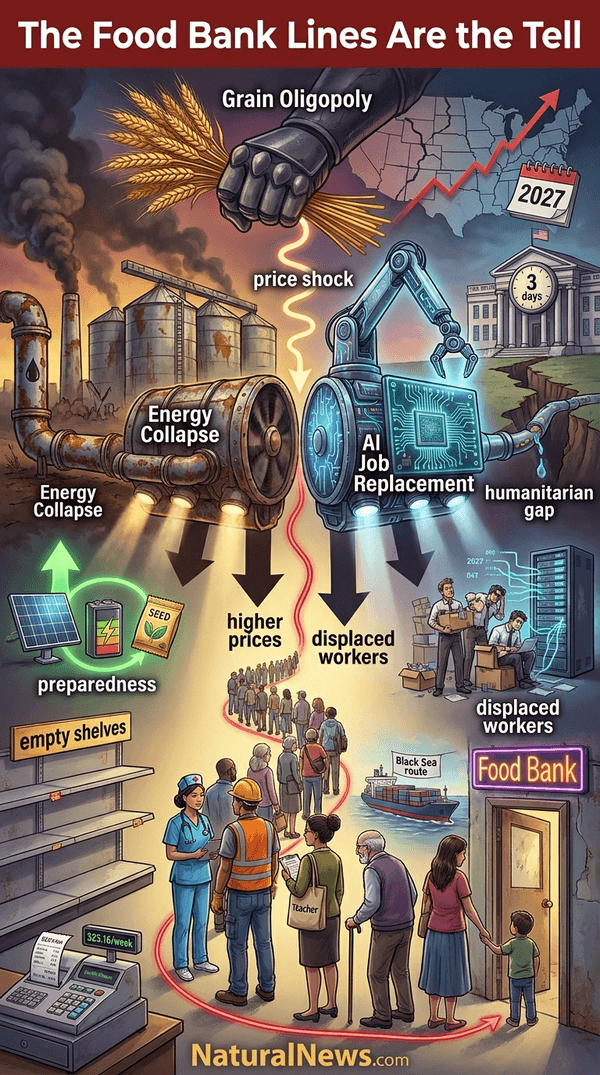
I have been warning for years that an economic hurricane is bearing down on the United States, and that the storm would arrive as two distinct superstorms converging at once. The first is an energy collapse driven by war and supply chain breakdowns, and the second is the tidal wave of artificial intelligence replacing human labor [7]. Both engines are now running at full throttle simultaneously.
The economic engine is being fed by tariffs, rising prices, money printing and inflation that has gutted the purchasing power of ordinary wages. The price of coffee has jumped 108 percent since 2020 while the wages of the people serving it have not kept pace [8].
The second engine is AI job replacement, which I know firsthand because I built the Bright KB project with open-source AI as the only human involved, using AI to write code, build websites and generate promo videos in minutes rather than days. The AI replacement doom loop is not a future hypothetical; it is a present-tense reality, and the doomsayers who warn that AI could automate most white-collar professional tasks within 12 to 18 months are not exaggerating [9]. My work on this topic has documented how both physical humanoid robotic hardware and automated AI workflow agents are rapidly advancing, poised to replace millions of jobs across various sectors, and this trend is not just theoretical, it is happening now and will only accelerate [10].
When you combine an economic implosion with a labor market being hollowed out from the top down, you get skilled, educated, willing workers appearing in food bank lines. That is the exact population now showing up. The lines themselves are the proof.
The Food Supply Chain Is Already Cracking
As someone who runs an organic food manufacturing and retail operation, I can tell you that the wholesale supply chain is already showing severe strain, and this is not something I read about in a newsletter. A few weeks ago, I walked out of a product acquisition meeting with my staff at Health Ranger Store, and the numbers on the table were worse than anything I expected to see this year. The cost of shipping a single unit of freeze-dried blueberries in wholesale quantities has jumped from the $50 to $60 range up to $80 to $90, and several of our suppliers are now offering us 75 percent less inventory than they did just months ago [11].
Our organic non-GMO freeze-dried corn supplier is sold out until June 2027. Other suppliers can only provide a third or a quarter of what we request, often with 60- to 90-day delays, and some wholesalers are now demanding full payment upfront, which crushes cash flow for smaller buyers and leads directly to lower inventories and less selection on the shelf.
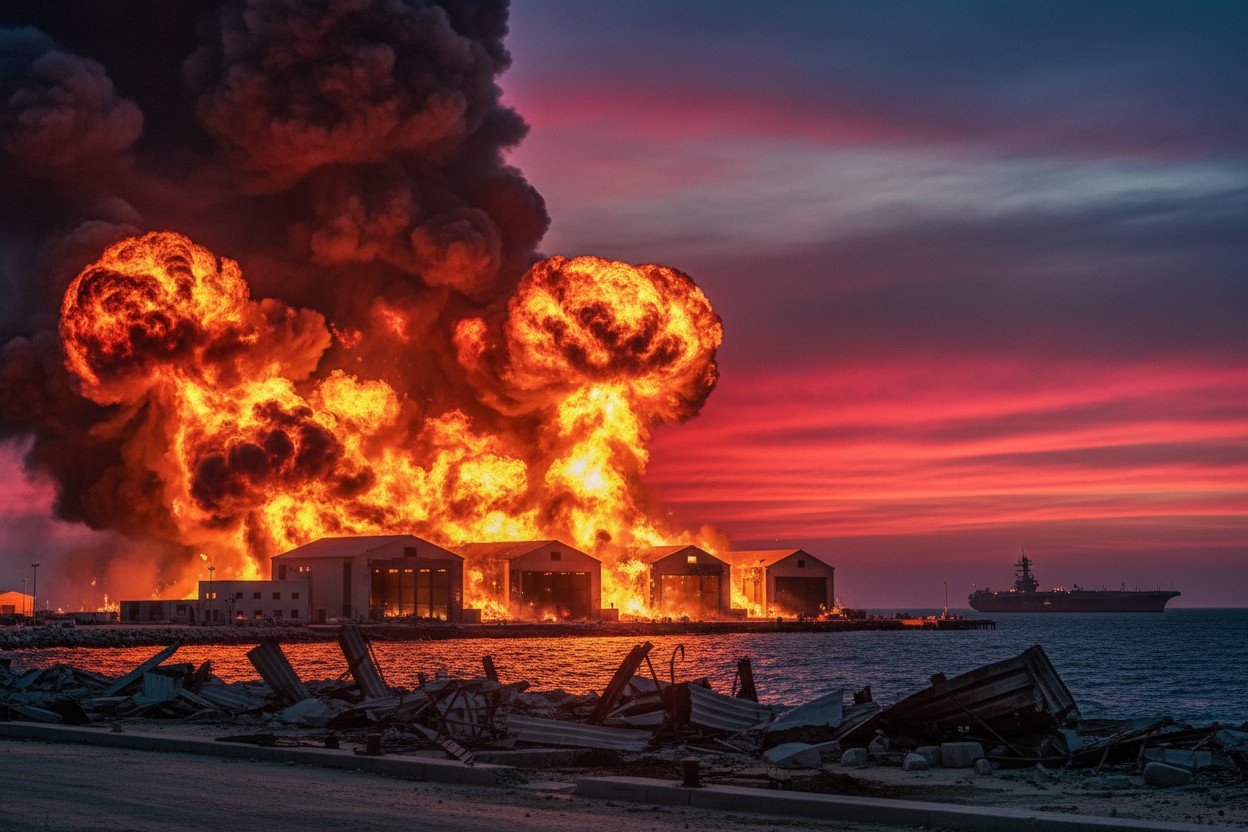
These are not isolated anecdotes. Global crop prices just posted their largest quarterly jump since the Russian invasion of Ukraine, with corn and wheat each climbing 15 percent and soybeans gaining 13 percent, marking the third consecutive quarter of increases [12]. The Bloomberg Agriculture Spot Index posted its largest quarterly gain since early 2022, driven by Black Sea disruptions, a crisis in the Strait of Hormuz and mounting El Nino risks that have formed what can fairly be described as a perfect storm [13].
JPMorgan's Nora Szentivanyi has warned that the next global food crisis may already be taking shape, driven by what the bank's analysts call the "Five Ws": War, Weather, Warehousing, Water, and Waste, and that it "won't be short-lived" [14]. The United Nations has warned that a Strait of Hormuz disruption could trigger a global food price crisis within a year, describing the situation as the beginning of "a systemic agrifood shock" [15]. I believe the wholesale squeeze I am living through is the canary in the coal mine: reduced availability, empty shelves and much higher food inflation are coming for everyone, not just the poor.
Preparedness, Community, and the Choice Before Us
When government and corporate supply chains fail, self-reliance and local community support are the only reliable answers, and I say that as someone who has spent years building both. Warnings are often ignored until they become inescapable, and I encourage people to be prepared according to their faith while understanding that disaster does not negotiate [16]. The European Commission is now urging citizens across Europe to prepare to survive at least three days without outside assistance, recommending emergency supplies, grab bags and practical drills [17].
Get yourself and your family squared away. Build local networks of mutual aid. Help those you can with food, skills and resources. Home food production, organic gardening and decentralized preparedness are not hobbies anymore. They are practical resistance to a system that is breaking down. The good news is that the tools for sovereignty now exist in ways they never did before. You can learn anything for free at BrightLearn.ai, find uncensored answers at BrightAnswers.ai, and connect with freedom-minded people at Brighteon.social.
The most important thing is refusal. Refuse the narrative that tells you this is normal, refuse to be paralyzed, and refuse to wait for a permission slip to take care of your own household. Preparedness is not paranoia. It is the discipline that separates those who endure from those who starve.
The Year of Famine Is Not a Prediction -- It's a Warning
The food emergency has already begun, and 2027 will be worse unless people wake up and prepare. Good people who want to work are being pushed into food lines by economic implosion and AI replacement, and we must see this clearly rather than look away. Ignoring it does not spare anyone from it.
This is not a prediction designed to entertain you. It is a warning designed to move you. Prepare, help others, and get ready for a food supply that will suffer under reduced availability and much higher inflation. The lines are already long. They will get longer. What you do between now and then is the only variable that remains fully under your control.
In the mean time, download my free open source knowledge base tool at BrightKB.com - the "food and nutrition" module is already released, and it brings a wealth of knowledge and wisdom to your local desktop, without using AI or cloud-based systems. Check it out.
References
- U.S. food bank demand rises as SNAP rules tighten. 2026-11-24T12:00:01Z. https://www.cnbc.com/2026/11/24/us-food-banks-demand-snap.html
- As holidays approach, food banks face increased demand : NPR. 2026-11-23T09:44:39Z. https://www.npr.org/2026/11/23/nx-s1-6048664/as-holidays-approach-food-banks-face-increased-demand
- They had jobs, homes and cars. Now they're in line at the food bank. 2026-11-10T00:00:00Z. https://www.usatoday.com/story/money/2026/11/10/why-americans-never-needed-help-visit-food-banks/92589261007/
- They had jobs, homes and cars. Now they're in line at the food bank. 2026-10-25T05:33:38Z. https://news.lee.net/news/nation-world/they-had-jobs-homes-and-cars-now-theyre-in-line-at-the-food-bank/article_50ec29d3-e3b3-4cc5-8cdb-4a849aea37cc.html
- Oklahoma's hunger crisis is growing as prices climb, experts say. 2026-10-12T10:25:34Z. https://www.oklahoman.com/story/news/politics/2026/10/12/oklahoma-snap-cuts-put-pressure-on-food-pantries-hunger-crisis/92122818007/?gca-cat=p&gca-ds=sophi&gca-epti=z11xx52p117850l004150c117850e1107xxv11xx52&gca-ft=50&gca-uir=true&gnt-cfr=1&gnt-djm=1
- Great Plains Food Bank sees record numbers seeking food assistance • North Dakota Monitor. 2026-08-06T00:00:00Z. https://northdakotamonitor.com/2026/08/06/great-plains-food-bank-sees-record-numbers-seeking-food-assistance/
- The Twin Economic Superstorms Why Your Financial Future Is at Risk from Energy Collapse and AI Job Replacement - NaturalNews.com, May 01, 2026. by NaturalNews.com
- Half of Americans surveyed are skipping meals as grocery bills climb. 2026-11-06T06:00:00.000Z. https://www.naturalnews.com/2026-11-06-half-of-americans-surveyed-are-skipping-meals-as-grocery-bills-climb.html
- The AI Replacement Doom Loop Why UBI Wont Save Us and What Comes Next - NaturalNews.com, February 25, 2026. by NaturalNews.com
- Health Ranger Report - Depopulation being accelerated to match AI progress - Mike Adams - BrightVideos.com, December 03, 2023. by Mike Adams - BrightVideos.com
- The Cheapest Food You’ll Ever See: Why I Believe a Global Food Shock Is Coming by 2027. 2026-09-21T06:00:00.000Z. https://www.naturalnews.com/2026-09-21-global-food-shock-is-coming-by-2027.html
- Global Crop Prices Post Largest Quarterly Jump Since Ukraine Invasion, Index Shows. 2026-10-02T06:00:00.000Z. https://www.naturalnews.com/2026-10-02-global-crop-largest-quarterly-jump-ukraine-invasion.html
- Global Crop Prices Log Biggest Quarterly Jump Since Ukraine Invasion As Sticky Inflation Hits Grocery Bills. 2026-10-01T14:40:00.000Z. https://www.zerohedge.com/markets/global-crop-prices-log-biggest-quarterly-jump-ukraine-invasion-sticky-inflation-hits
- "Won't Be Short-Lived": JPMorgan Warns Next Global Food Crisis Could Erupt Next Year. 2026-08-15T22:05:00.000Z. https://www.zerohedge.com/commodities/wont-be-short-lived-jpmorgan-warns-next-global-food-crisis-could-erupt-next-year
- United Nations: Strait of Hormuz Disruption Could Trigger Global Food Price Crisis Within a Year. 2026-05-21T06:00:00.000Z. https://www.naturalnews.com/2026-05-21-un-hormuz-disruption-global-food-price-crisis.html
- Bright Videos News - Interview with Quayle - Mike Adams - BrightVideos.com, June 12, 2024. by Mike Adams - BrightVideos.com
- EU Citizens Urged to Prepare for First 3 Days of an Emergency. 2026-11-05T20:07:16.455Z. https://theepochtimes.com/world/eu-citizens-urged-to-prepare-for-first-3-days-of-an-emergency-6117950
- Grain Giants’ ‘Disaster Capitalism’ Profits During Food Crisis Spark Global Outrage. https://childrenshealthdefense.org/defender/disaster-capitalism-grains-record-profits-food-crisis-cd/
- The Warnings Are Real: What Governments Are Preparing For—and Why 30 Days Is Not Enough. 2026-10-29T06:00:00.000Z. https://www.naturalnews.com/2026-10-29-warnings-are-real-what-governments-are-preparing-for.html
Explainer Infographic






Please contact us for more information.