


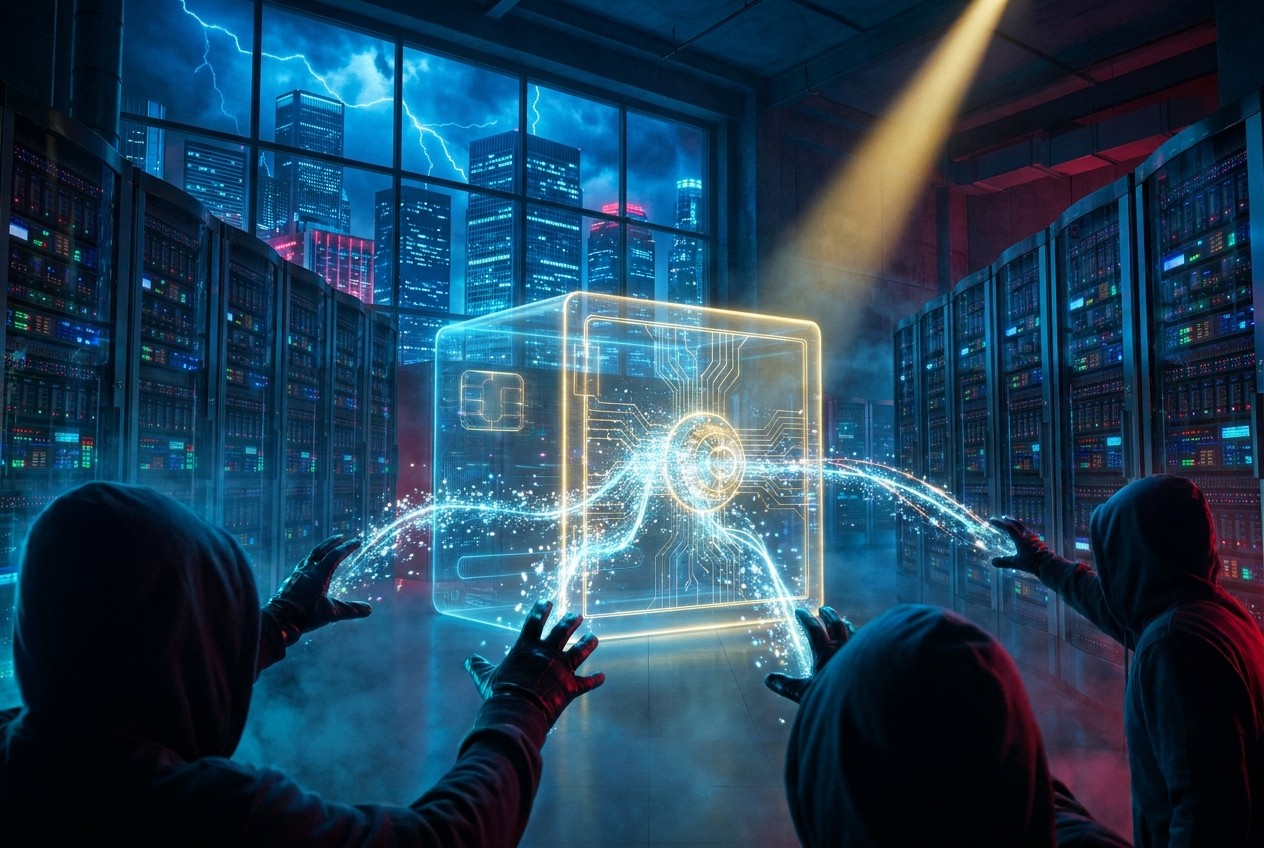
A ransomware group leaked data belonging to thousands of customers of Visa, Mastercard, and JPMorgan Chase on Thursday, according to the Wall Street Journal.
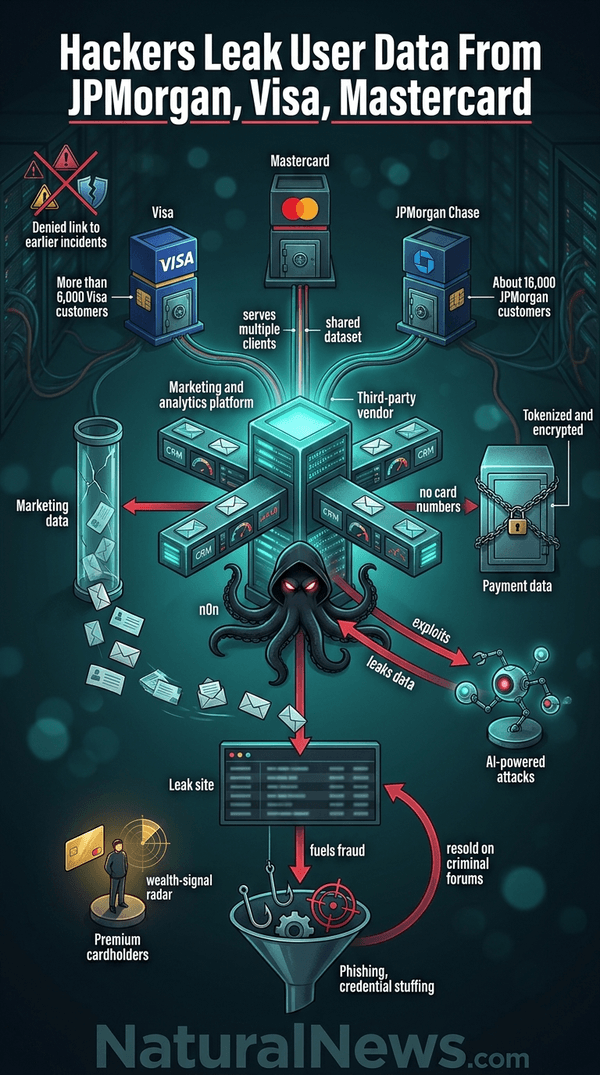
According to the Wall Street Journal, the data comes from a blend of customers from Visa, Mastercard, and JPMorgan Chase, and was obtained through an exploit of third-party service platforms [1]. A ransomware collective called n0n has claimed responsibility for leaking marketing data belonging to thousands of credit card users [1].
The financial firms also denied that the breach was related to previous cybersecurity incidents earlier this week.
Companies Deny Payment Data Compromised, Say Breach Unrelated to Earlier Outages
Representatives for Visa, Mastercard, and JPMorgan Chase said that no customer credit card information or funds were compromised in the incident [2]. A ransomware collective called n0n claimed responsibility for leaking marketing data belonging to thousands of credit card users, according to the Wall Street Journal [1]. Chase said in a post that based on its investigation so far, it believes the attackers accessed certain marketing data held by vendors, which may include some customer names and email addresses [3].
The companies did not immediately provide additional details on the number of affected users or the third-party platforms involved. Reports indicated that the leaked data included records on more than 6,000 Visa and about 16,000 JPMorgan customers [4]. Visa's leaked data included information related to more than 6,000 premium cardholders, according to cybersecurity reporting [5].
Ransomware Group n0n Claims Responsibility, Emerged in September
The ransomware group n0n claimed responsibility for the breach [1]. According to the Wall Street Journal, a ransomware collective called n0n has claimed responsibility for leaking marketing data belonging to thousands of credit card users [1].
The group has been active in a broader wave of recent extortion campaigns targeting large organizations. Ransomware attackers have reportedly leaked data from thousands of Visa, Mastercard and JPMorgan Chase customers [6].
The incident illustrates the persistent challenge that third-party vendors present to large financial institutions. As one security industry text describes the dynamic, the challenge is a struggle against an adversary whose goal is to extract as much cash as possible, often by hauling off sensitive data that can be monetized elsewhere [7]. The breach also highlights the risks associated with third-party vendor security, as hackers accessed sensitive customer data through service providers [8].
Breach Follows Week of Outages and Cyberattacks
The incident comes days after a ransomware collective called n0n claimed responsibility for leaking marketing data belonging to thousands of credit card users, with the data coming from a blend of customers from Visa, Mastercard, and JPMorgan Chase obtained through an exploit of third-party service platforms, according to the Wall Street Journal [1].
The report did not identify a specific cyberattack, a named target, or a date for any anticipated incident [9].
Security researchers have warned that AI-powered attacks are accelerating. Google researchers described the shift as a move away from manual prompting of chatbots toward autonomous, multi-agent frameworks capable of executing complex intrusions at greater speed [10].
Data Privacy Concerns Persist as Investigation Continues
The exploit of third-party service platforms highlights an attack vector that officials said is under investigation. The companies said payment information was not obtained, but they did not specify how many users were affected.
Privacy advocates have said that breaches involving third-party vendors can expose consumers to targeted phishing and fraud. Similar incidents have produced downstream consequences. In prior cyberattacks, victims have reported identity theft attempts, fraudulent charges, unauthorized new accounts, and increased spam communications [11].
Consumers concerned about their exposure can take basic precautions. Security guidance advises using a firewall or a proxy to help secure a network [12]. Privacy advocates also warn against entering banking or credit card information into social media platforms, where it can be exposed [13].
References
- Hackers Leak User Data From JPMorgan, Visa, and Mastercard. https://futurism.com/future-society/hackers-leak-jpmorgan-visa-mastercard-n0n
- Hackers leak Chase, Visa, and Mastercard customer data, report says. https://www.reddit.com/r/technology/comments/1y0jmcp/hackers_leak_chase_visa_and_mastercard_customer/
- Chase confirms cyberattack that may have exposed customer data. Here's what we know.https://www.fastcompany.com/91645730/chase-confirms-cyberattack-that-may-have-exposed-customer-data-heres-what-we-know
- Hackers leak Visa, Mastercard, and JPMorgan customer data via third-party vendors. https://qz.com/hackers-leak-visa-mastercard-jpmorgan-data-vendors-111926
- Hackers Leak Data on Thousands of JPMorgan Chase’s Richest Customers - Newsweek. https://www.newsweek.com/hackers-leak-data-jpmorgan-thousands-richest-customers-12740448
- Hackers leak stolen data on 16,000 Visa, Mastercard and JPMorgan customers | Euronews. https://www.euronews.com/2026/11/20/hackers-leak-stolen-data-on-16000-visa-mastercard-and-jpmorgan-customers
- Enterprise AI For Dummies. Zachary Jarvinen
- JPmorgan Chase & Co data breach: JPMorgan Chase, Visa and Mastercard .... https://economictimes.indiatimes.com/world/business/jpmorgan-chase-visa-and-mastercard-data-breach-claims-what-was-leaked-in-the-cyber-attack-and-who-could-be-at-risk/articleshow/136004832.cms
- Bill Gates Warns of “Grim” Cyberattack Surprises, Citing AI Risks. https://www.naturalnews.com/2026-10-18-bill-gates-warns-grim-cyberattack-surprises-ai.html
- Era of Autonomous AI Cyberattacks Has Arrived, Google Warns. https://www.naturalnews.com/2026-11-19-era-autonomous-ai-cyberattacks-has-arrived-google.html
- HSBC Bank Data Breach Investigation. https://classlawdc.com/2026/11/17/hsbc-bank-data-breach-investigation/
- How to Speak Tech The Non-Techies Guide to Key Technology Concepts. Vinay Trivedi
- 200+ Ways to Protect Your Privacy. Jeni Rogers
Explainer Infographic






Please contact us for more information.