


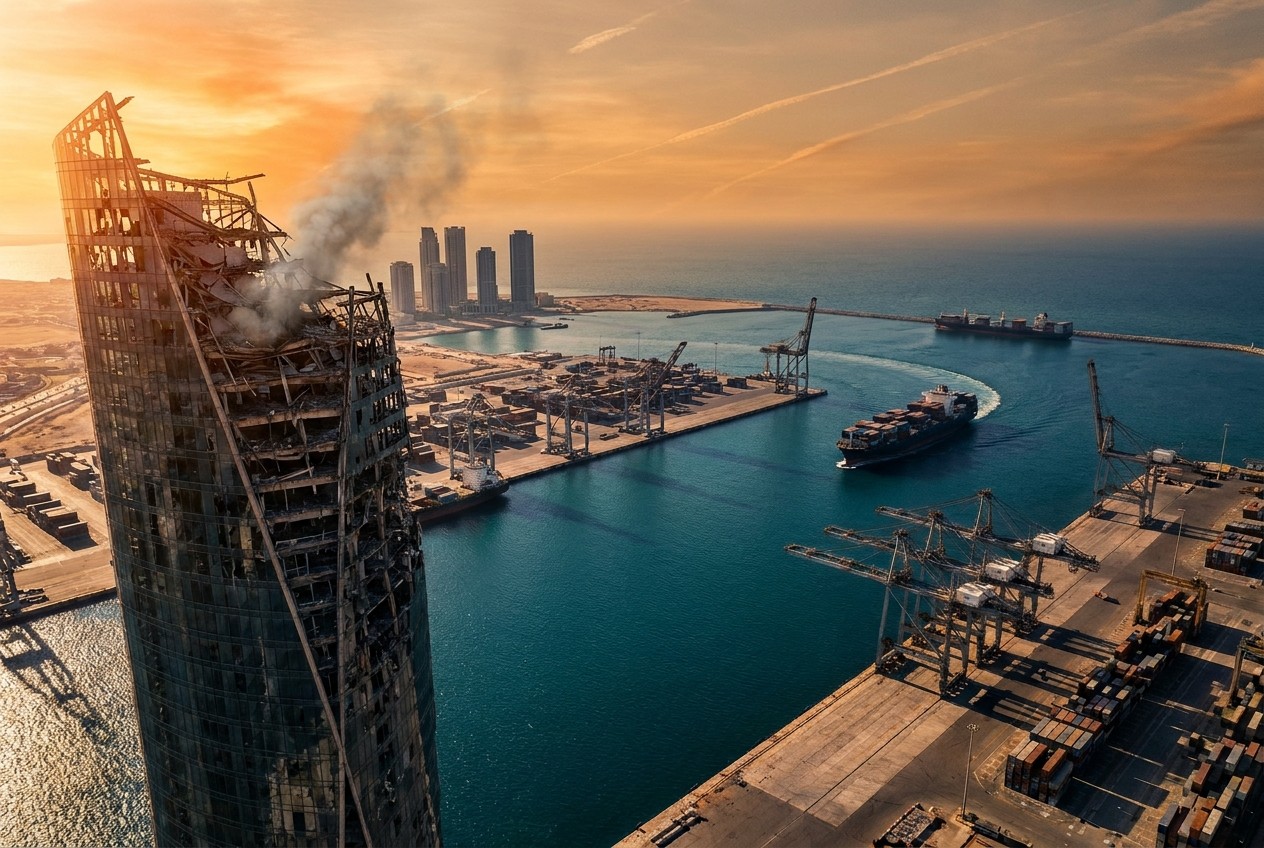
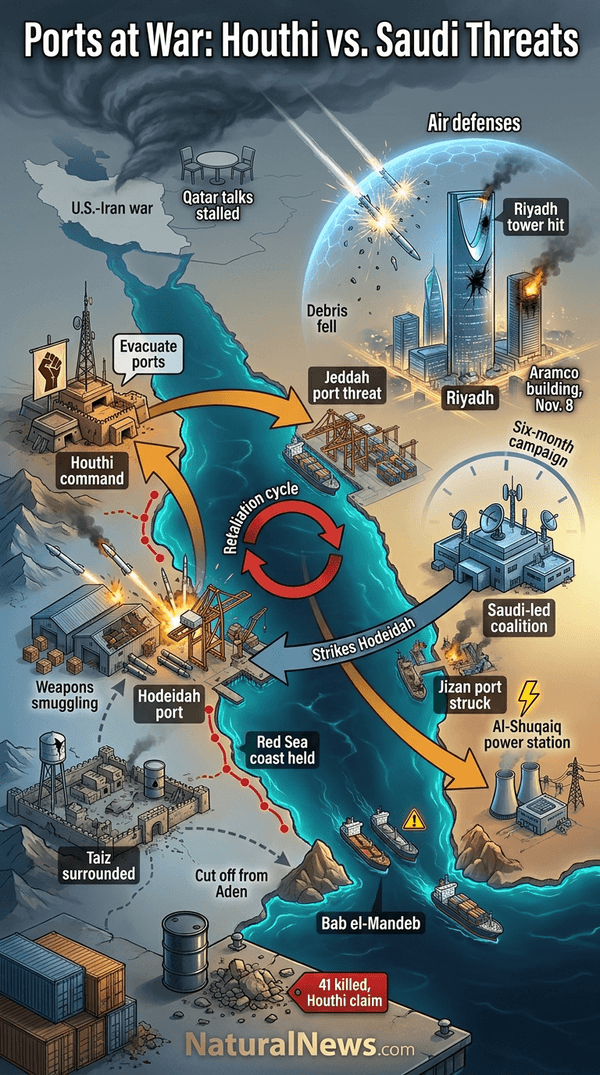
Houthi military spokesman Yahya Saree said on X that Jeddah port and all Saudi Red Sea ports would become targets if the coalition struck Hodeidah, the Houthi-held Yemeni port city, and urged port employees and shipping companies to evacuate [1]. The Saudi-led coalition fighting Yemen's Iran-aligned Houthis said it had struck the Red Sea port of Hodeidah to destroy Houthi capabilities on Friday [2].
Saudi-led coalition air defenses intercepted and destroyed three ballistic missiles launched by the Houthis toward Riyadh, coalition spokesman Major General Turki Al Malki said on X [3]. A day after a Houthi missile hit Riyadh's tallest tower, the Houthis and the Saudi-led coalition threatened each other's ports as air strikes intensified [4].
Missile Strike on Riyadh Financial District
The coalition said it dealt with a missile threat aimed at Riyadh and that debris had fallen [5].
The Houthis said they targeted Riyadh's financial center twice on Thursday, at dawn and again in the evening.
The strike was not the first on the district this month. The Aramco building in the same financial district was hit in an attack on Nov. 8, less than two weeks earlier [6].
Port Threats and Coalition Air Campaign
Saree urged employees and workers near the ports to evacuate and told shipping companies to move their ships out. On Friday, the Houthis said they had attacked the Al-Shuqaiq power station and the port of Jizan, describing the strikes as "accurate and direct" and claiming "extensive damage" [7].
Al-Malki said the coalition was striking Hodeidah port facilities used in smuggling operations and in moving weapons and ballistic missiles, and that operations were ongoing in the Sanaa, Saada and Taiz governorates. The Houthis said the coalition strikes killed 41 people in the past 24 hours, a claim the coalition did not address in its statements [8].
Early Saturday, after explosions were heard in Riyadh, the coalition said its air defenses intercepted and destroyed three ballistic missiles launched toward the capital, and civil defense lifted the alert [3]. Earlier in the day the coalition said it had intercepted and destroyed another drone launched by the Houthis toward the kingdom's southern region [9].
Ground War and Regional Context
The ground war is moving as well. Yemen's civil war reignited in July, ending a ceasefire that had largely held since 2022, after Saudi Arabia entered the conflict in 2015 to back the internationally recognized government. The Houthis now hold much of Yemen's Red Sea coast, including the area around the Bab el-Mandeb Strait, and have surrounded the city of Taiz, which residents say is cut off from Aden and short of water and fuel.
Saudi planning appears to reflect the length of the fight. Two Western officials said Saudi officials expect the campaign to last up to six months, and that Riyadh wants its allies to make gains on the ground before any negotiations with the Houthis [10].
The Yemen front is also a front of a larger war. The U.S.-Iran war began in February, when the United States and Israel attacked Iran, and Qatar-mediated negotiations have produced no breakthrough.
Open Questions
Whether the coalition follows through on the Hodeidah operation, and whether the Houthis carry out their threat against Red Sea ports and the Shuqaiq power station, will show whether both sides intend to widen the war to economic infrastructure. The coalition has urged civilians to evacuate areas around Hodeidah port without giving details, while Saree's warnings covered Jeddah and the full Saudi Red Sea coast [1].
Whether Aden holds is the main test on the ground. Houthi forces have advanced toward the city and government forces are preparing its defense, while the Southern Armed Forces say their withdrawal from positions overlooking Bab al-Mandab was intended to reinforce Aden [11].
And whether any mediator can move the Saudis and the Houthis toward talks while the Iran war goes on, with Riyadh saying it wants battlefield gains first, remains open [10]. More than three dozen U.S. military advisors were expected in the kingdom to advise on air defense, according to Western officials speaking on condition of anonymity [12].
References
- Evacuate immediately': Houthis threaten to target Saudi Red Sea ports. https://www.middleeasteye.net/live-blog/live-blog-update/evacuate-immediately-houthis-threaten-target-saudi-red-sea-ports
- Saudi-led forces strike Yemen port as Houthis warn airlines off the .... https://www.reuters.com/world/middle-east/yemens-houthis-threaten-strike-saudi-red-sea-ports-2026-11-20/
- Three Houthi ballistic missiles intercepted over Riyadh, Saudi-led coalition says. https://www.middleeasteye.net/live-blog/live-blog-update/three-houthi-ballistic-missiles-intercepted-over-riyadh-saudi-led
- Houthis, Saudi Coalition Trade Port Threats After Missile Hits Riyadh Tower. https://www.hngn.com/articles/273906/20261120/houthis-saudi-coalition-trade-port-threats-after-missile-hits-riyadh-tower.htm
- Saudi-led coalition says forces responded to Houthi missile threat targeting Riyadh. https://www.middleeasteye.net/live-blog/live-blog-update/saudi-led-coalition-says-forces-responded-houthi-missile-threat
- Saudi Aramco tower damaged after Houthi missile attacks on Riyadh. https://www.middleeasteye.net/news/saudi-aramco-tower-damaged-after-houthi-missile-attacks-riyadh
- Houthis retaliate for coalition strikes with attack on Saudi power station and port. https://www.middleeasteye.net/live-blog/live-blog-update/houthis-retaliate-coalition-strikes-attack-saudi-power-station-and-port
- Houthis say 41 killed as Saudi-led coalition launches 'special operation' in Yemen. https://www.middleeasteye.net/live-blog/live-blog-update/houthis-say-41-killed-saudi-led-coalition-launches-special-operation
- Saudi-led coalition says Houthi drone intercepted over southern region. https://www.middleeasteye.net/live-blog/live-blog-update/saudi-led-coalition-says-houthi-drone-intercepted-over-southern-region
- Saudi Arabia Braces For Yemen War To Extend Well Into 2027. https://www.zerohedge.com/geopolitical/saudi-arabia-braces-yemen-war-extend-well-2027
- Saudi-backed forces retreat from Bab al-Mandab as Houthis gain ground. https://www.middleeasteye.net/news/saudi-backed-forces-retreat-bab-al-mandab-houthis-gain-ground
- US Centcom Chief To Arrive In Saudi Arabia To Examine Why Air Defenses Are Failing. https://www.zerohedge.com/military/us-centcom-chief-arrive-saudi-arabia-examine-why-air-defenses-are-failing
Explainer Infographic





Please contact us for more information.