


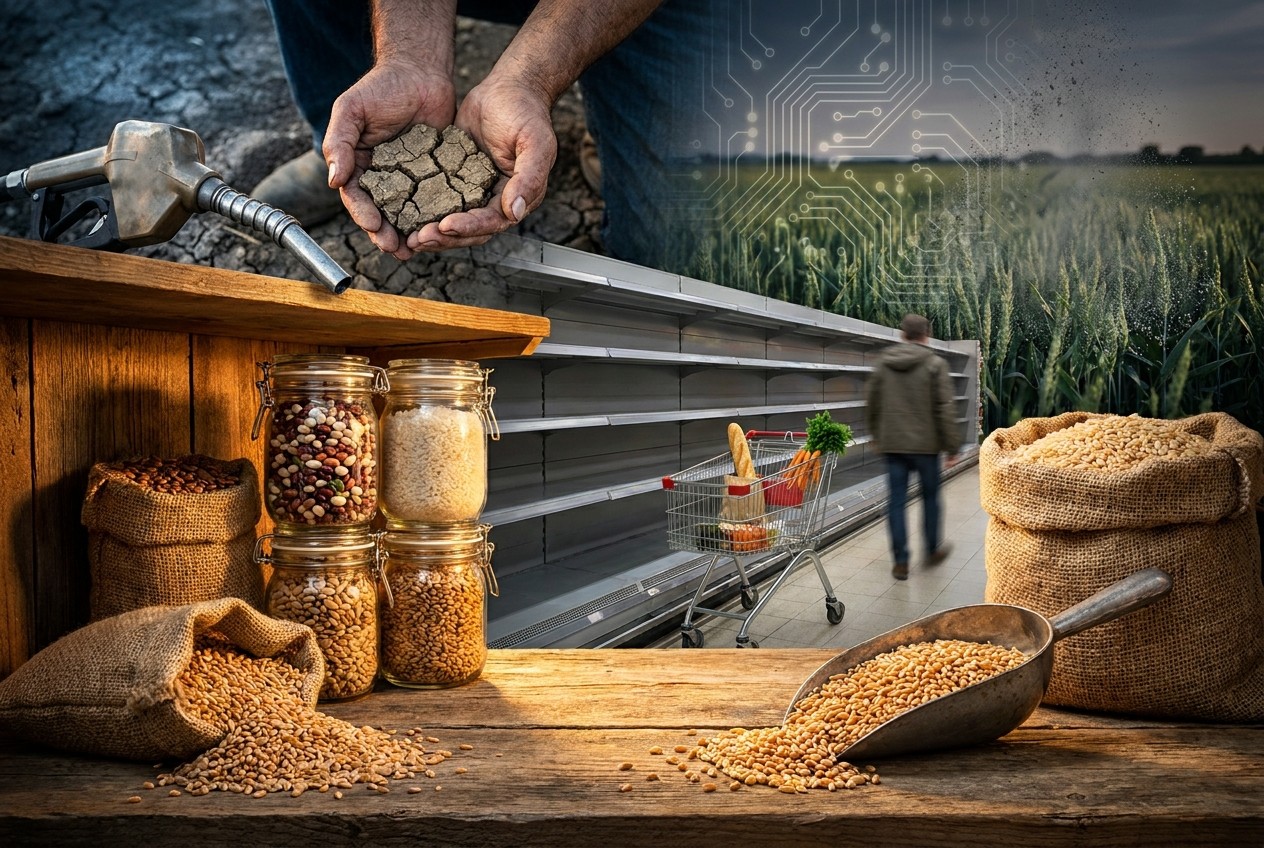
The Food Emergency Explained
I am not writing this to frighten you. I am writing it because the food supply chain is entering a genuine global emergency, and the evidence is now too serious to ignore. This is not a marketing stunt or a social-media panic cycle. It is a convergence of physical shortages, centralized system failures, and deliberate policy choices that are already hitting the shelves and the warehouses, even in North America.
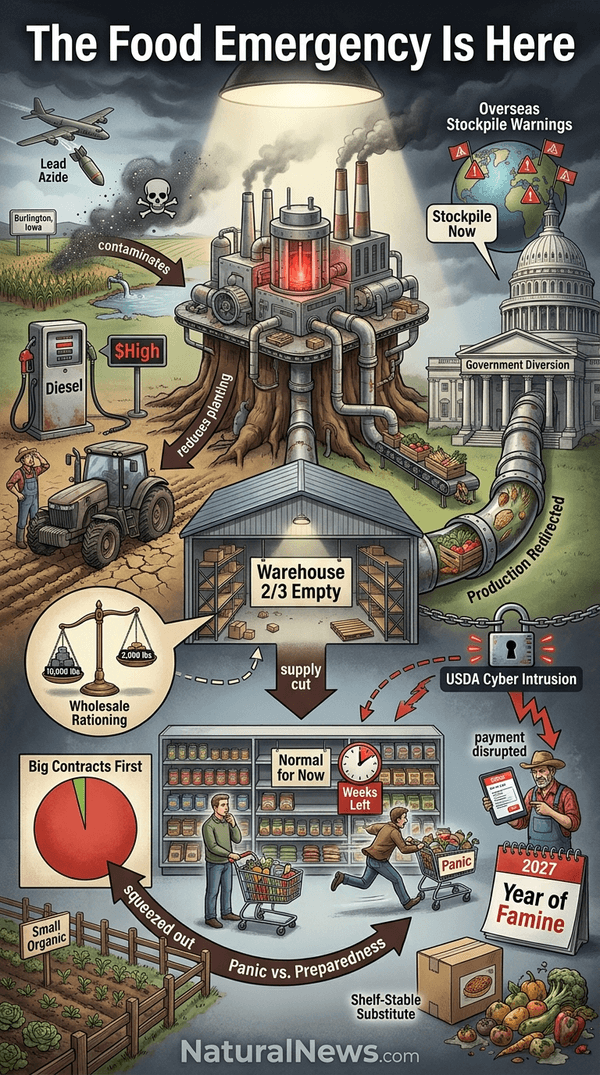
I have watched my own warehouse go from full to roughly two-thirds empty in a matter of about six months. Some wholesale suppliers are telling us they are wiped out until 2027. Those are not abstract forecasts; they are purchase orders that cannot be filled. My position is simple: prepare now, without fear, because the people who manage the food system are already telling us, through their own actions, that they cannot guarantee it.
Panic is what happens when you wait until the shelves are empty. Preparedness is what happens when you act while the shelves are still full. The difference between the two is measured in weeks, and those weeks are the weeks right now, between today and the end of this year. What will you do with those weeks?
Why I Take the Supply-Chain Warnings Seriously
I believe the reports from major stored-food suppliers are credible because I know this has happened before. Food companies have been quietly ordered to divert production to the federal government. When the people who sell food stop selling food, you should pay attention. Alex Jones has no incentive to fabricate a story that stops his own company from selling food; the people warning us are sacrificing sales, not chasing them. That is the opposite of a marketing pitch.
My smaller organic operation was not contacted (so far), which is exactly why we still have inventory. But being too small to be on a confiscation list is not the same as being safe. It means we are beneath the notice of the planners, not beyond the reach of the crisis. The centralized food system is not designed to feed everyone; it is designed to feed the system. When the system is stressed, the small producers are the first to be squeezed and the last to be considered.
This is why the warnings from overseas governments matter. When governments that normally tell people to stay calm start telling them to stockpile, the honest reading is that they know something they are not saying publicly.
Fertilizer, Diesel, and the Coming 2027 Famine
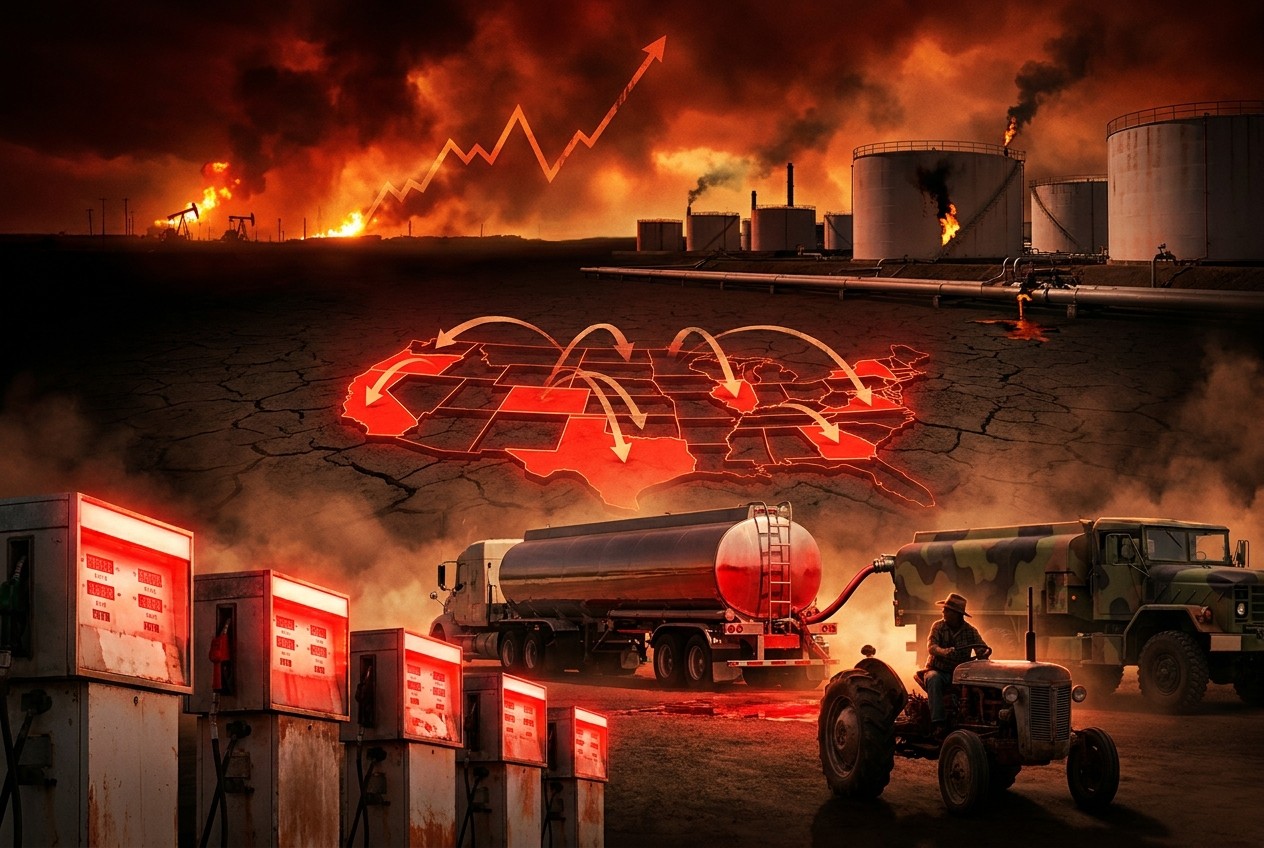
The deeper crisis is physical. Diesel prices remain punishingly high, and farmers who cannot afford to plant or harvest at full capacity simply do not plant or harvest at full capacity.
I am seeing wholesale quantities collapse. Where we once bought 10,000 pounds of a crop, we may now be offered 2,000 or 3,000 pounds. That is not a pricing problem; that is a availability problem. When the wholesalers themselves are rationing, the retail shelves are only a few weeks behind. The grocery store is the last place the shortage becomes visible, not the first.
I predict 2027 will be known as the Year of Famine, not because America will suddenly have empty shelves everywhere, but because clean, nutrient-dense food will become scarce and dramatically more expensive. The processed food will remain, because it is made from commodity inputs and engineered to survive on shelves. The real, nutritious food will see shrinking supplies first. That is the pattern every famine in history has followed, and there is no reason to believe this one will be different.
Cyber Failure and a Lead Bomb Make It Worse
The recently-reported USDA cyber intrusion disrupted farmer payments and loan systems, exposing how fragile a centrally controlled agriculture economy really is. When the payment system goes down, the farmer still has to feed the animals and pay the fuel bill. The government's answer is to wait for the system to come back online. The farmer's answer is to borrow, sell, or quit. Multiply that across thousands of operations and you have a harvest that does not happen, not because of weather, but because of a server failure or a cyber disruption.
The Army's current plan to detonate tons of lead azide near Burlington, Iowa, is also a direct threat to food security. Lead fallout could contaminate farms, waterways, and communities across the Midwest. Lead does not disappear; it settles into the soil and the water and the food chain. A single detonation event near productive farmland is a food-security decision dressed up as a military exercise. The people who approve such a plan are certainly not the people who eat from the fields downwind of it.
When you combine supply-chain disruption, centralized system failure, and deliberate heavy metals contamination, the case for storing clean food now becomes overwhelming. Each of these failures is manageable on its own. Together, they compound. The food system is not designed for compound failures, because the people who designed it believed the systems would always hold. They were wrong.
Prepare Without Panic
I am not telling people to panic; I am telling them to act while they still can. Buy rice, beans, whole grains, salt, and other long-storing staples. Avoid ground flour and prioritize whole grains, because whole grains store far longer and retain more nutrition. Buy what you can afford, incrementally, and rotate your stock so it stays usable. The goal is not a bunker; the goal is a pantry that can feed your family through a severe disruption.
Remember that processed food may remain on shelves while high-quality food disappears. That is not a reason to buy processed food; it is a reason to buy real food before the shelves are picked over. The people who prepare early are the people who are not competing for the last bag of rice. The people who wait are the people who pay the panic premium.
My conclusion is personal: take responsibility for your own food security, stay informed, and do not wait for institutions that have already shown they cannot manage the system. I am warning you because I would rather be wrong and prepared than right and hungry. If the crisis passes, you will have a well-stocked pantry and a skill set that never goes out of style. If it does not pass, you will have both.
If you need quality storable organics and superfoods, check my online store at HealthRangerStore.com
References
- Alex Jones Live. Report alleging federal emergency procurement from storable-food suppliers (November 20, 2026). Source of the allegation discussed in the article, not independent confirmation of a federal order. https://www.alexjoneslive.com/2026/11/20/dhs-fema-initiates-emergency-food-procurement-orders-all-national-storable-food-companies-to-stop-sales-to-the-public-sell-all-food-to-them
- European Commission. Implementation of Population Preparedness Guidelines on Reaching a Population Self Sufficiency of at least 72 Hours under the EU Preparedness Union Strategy (October 30, 2026). General household preparedness guidance, not a famine forecast. https://ec.europa.eu/echo/files/policies/preparedness/guidelines_preparedness_selfsufficiency.pdf
- U.S. Energy Information Administration. U.S. Gasoline and Diesel Retail Prices. Weekly national on-highway diesel price data. https://www.eia.gov/dnav/pet/pet_pri_gnd_dcus_nus_w.htm
- DTN. USDA Loan Software Systems Face Outages Amid Cybersecurity Concerns (November 19, 2026). Reports disruptions to farmer loans, payments, and conservation work. https://www.dtnpf.com/agriculture/web/ag/columns/washington-insider/article/2026/11/19/usda-loan-software-systems-face-amid
- AgWeb. Cyberattack Hits USDA, Agency Expects FSA Programs to be Up and Running Soon (November 20, 2026). Reports payment-system disruptions and USDA’s expected restoration of most affected farm programs. https://www.agweb.com/news/cyberattack-hits-usda-agency-expects-fsa-programs-be-and-running-soon
- U.S. Environmental Protection Agency. Public Notice: Iowa Army Ammunition Plant, Middletown, Iowa (November 16, 2026). Describes the emergency permit for the proposed disposal. https://www.epa.gov/ia/iowa-army-ammunition-plant-middletown-iowa-3
- CBS News. Lead azide detonation in Iowa by U.S. Army paused indefinitely after lawsuits are filed (November 20, 2026). Reports a court’s administrative stay of the EPA permit. https://www.cbsnews.com/chicago/news/iowa-detonation-lead-azide-paused-indefinitely-court-order/
- Ready.gov. Food. Federal guidance on storing emergency staples and maintaining emergency food supplies. https://www.ready.gov/food
- Be Ready Utah. Food. Guidance on building and rotating a household food supply. https://beready.utah.gov/family-preparedness/12-areas-of-preparedness/food
Explainer Infographic








Please contact us for more information.