


Yemen’s Houthis threatened on Friday, Nov. 20, to strike a power station in southwestern Saudi Arabia and declared Riyadh’s financial center a military target.
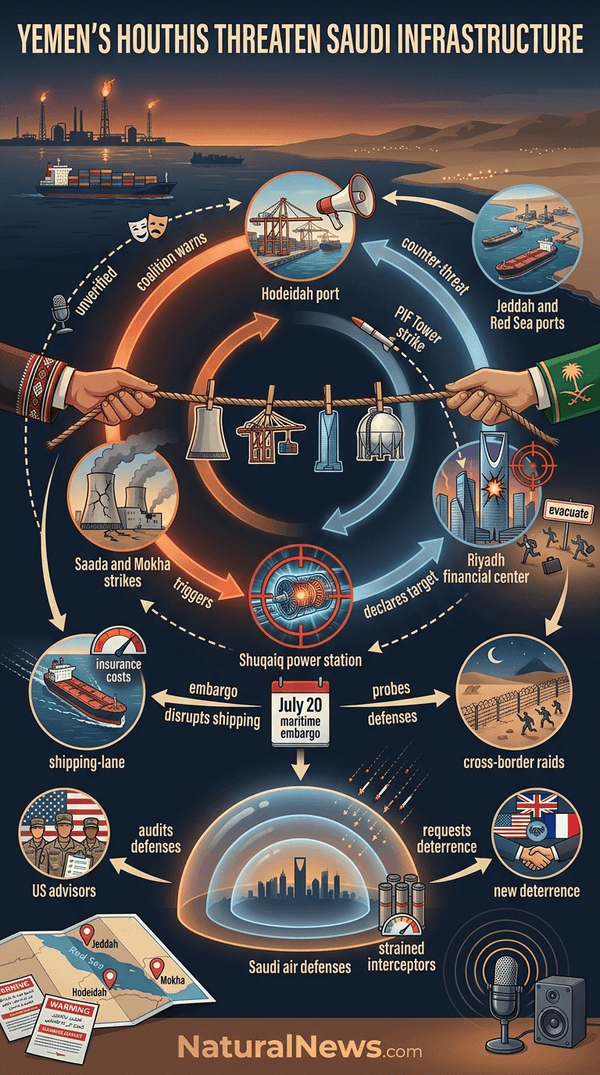
The Houthis – formally the Ansar Allah movement – issued fresh warnings against Saudi infrastructure as cross-border hostilities with the Saudi-led coalition escalated, according to statements reported by Houthi-run media [1]. Houthi military spokesman Yahya Saree said the Shuqaiq power station would be a “legitimate target” in the coming hours in response to strikes on power stations in Saada and the Red Sea port city of Mokha, according to the statement reported by Al-Masirah TV [1].
Saree also declared Riyadh’s financial center a military target and called on employees, workers and residents to leave the area immediately, the statement said [1]. The threats followed a warning by the Saudi-led coalition calling on civilians to evacuate the Houthi-held port of Hodeidah, after which the Houthis threatened to target Jeddah and other Saudi ports along the Red Sea coast if Hodeidah was attacked, according to Middle East Eye [2]. The exchange of public warnings marks an escalation in statements by both sides over infrastructure and port areas, officials said.
Houthi Spokesman Cites Strikes on Yemeni Power Stations
Saree described the threat against the Shuqaiq power station as a response to strikes on power stations in Saada and Mokha, according to his statement [1]. Earlier, Houthi-run Al-Masirah TV reported Saudi air strikes on the two power stations in Yemen, the outlet stated [1].
The Houthi military spokesman did not provide operational details beyond saying the Saudi site would be targeted in the coming hours, according to the statement [1]. The reported strikes and threats could not be independently verified from the information provided, officials said.
The timing placed the warnings within a broader campaign. Houthi forces have also launched cross-border raids on Saudi military posts, Middle East Eye reported, citing sources [3].
Threats Follow Coalition Warning for Hodeidah
The Saudi-led coalition warned civilians to evacuate the Houthi-held port of Hodeidah, according to the report [2]. The Houthis responded by threatening to target Jeddah and other Saudi ports along the Red Sea coast if Hodeidah was attacked, the report stated [2].
Hodeidah has been a recurring flashpoint in the conflict; a 2021 Saudi cease-fire proposal included reopening the country’s largest port at Hodeidah under United Nations supervision, according to a Trends Journal account of the announcement [4]. The exchange of warnings marks an escalation in public statements by both sides, officials said.
The public warnings built on earlier Houthi announcements. On July 20, the Houthis declared a maritime embargo on Saudi Arabia, according to a statement from Saree reported by NaturalNews.com [5].
Saudi Energy and Financial Sites Named as Targets
The Shuqaiq power station is located in southwestern Saudi Arabia, according to the Houthi statement reported by Al-Masirah TV [1]. Riyadh’s financial center was declared a military target by Saree, who called on employees, workers and residents to leave immediately, according to the statement [1].
The warning pointed at the district that houses the Public Investment Fund (PIF) Tower, Riyadh’s tallest skyscraper, which was struck by a suspected Houthi missile on Thursday, Nov. 19, according to Middle East Eye [6]. The 80-story PIF Tower was damaged as tensions escalated across the kingdom, The Hindu reported [7]. The Houthi spokesman said the power station would be a target in the coming hours but did not specify further timing, the report stated [1].
No immediate Saudi response to the latest Houthi threats was reported in the information provided, officials said. The Saudi energy ministry has previously described damage from attacks as limited and reported no casualties after the Aramco Tower strike, while footage authenticated by BBC Verify showed more extensive damage to the building [8]. A western defense official in Riyadh told Middle East Eye that Saudi Arabia is absorbing the vast majority of missiles and drones fired at it [9].
Regional Tensions Remain Elevated
Both sides issued calls for civilians to leave locations named in their statements, officials said. The statements did not include independent confirmation of damage or casualties at the named sites, according to the information provided.
The broader conflict has strained the kingdom’s air defenses. U.S. Central Command chief Adm. Brad Cooper was expected in Saudi Arabia with more than three dozen US military advisors to examine the kingdom’s air defense capabilities, western officials told Middle East Eye [10]. Saudi Arabia has also asked western partners and Turkey for new deterrence capabilities, Middle East Eye reported [11].
Conclusion
Neither the threats nor the reported strikes could be independently verified from the information provided, officials said. The warnings remain statements of intent; confirmation of any strikes on the named sites was not available in the information provided.
References
- Yemen’s Houthis threaten Saudi energy and financial infrastructure. https://www.middleeasteye.net/live-blog/live-blog-update/yemens-houthis-threaten-saudi-energy-and-financial-infrastructure
- Yemen’s Houthis threaten Saudi energy and financial infrastructure | Middle East Eye. https://www.middleeasteye.net/live-blog/live-blog-update/yemens-houthis-threaten-saudi-energy-and-financial-infrastructure
- Houthis launched cross border raids on Saudi military posts, sources say. https://www.middleeasteye.net/news/houthis-launched-cross-border-raids-saudi-arabian-military-posts-sources-say
- Trends-Journal-2021-03-12. Unknown
- Iran Backed Houthis Impose Naval Blockade on Saudi Arabia - NaturalNews.com, July 22, 2026.
- Houthis hit Saudi Arabia's sovereign wealth fund skyscraper. https://www.middleeasteye.net/news/houthis-bomb-saudi-arabia-sovereign-wealth-fund-office
- Riyadh's tallest building damaged as Saudi reports new Houthi attacks. https://www.thehindu.com/news/international/riyadhs-tallest-building-damaged-as-saudi-reports-new-houthi-attacks/article71721448.ece
- Aramco Tower hit in heart of Saudi capital as Houthis launch fresh strikes. https://bbc.com/news/articles/c6ly3mjx958eo
- Houthi Strikes Mark End of Saudi Arabia’s Yemen Containment Strategy, Analysts Say. https://www.naturalnews.com/2026-10-17-houthis-strikes-end-saudi-arabia-containment-strategy.html
- US Centcom commander expected in Saudi Arabia with dozens of air defense experts, sources say. https://www.middleeasteye.net/news/us-centcom-commander-expected-saudi-arabia-dozens-air-defence-experts-sources-say
- Turn on the weapons spigot': Saudi Arabia asks partners for gear to deter Houthis. https://www.middleeasteye.net/news/turn-weapons-spigot-saudi-arabia-asks-partners-gear-deter-houthis
Explainer Infographic








Please contact us for more information.