


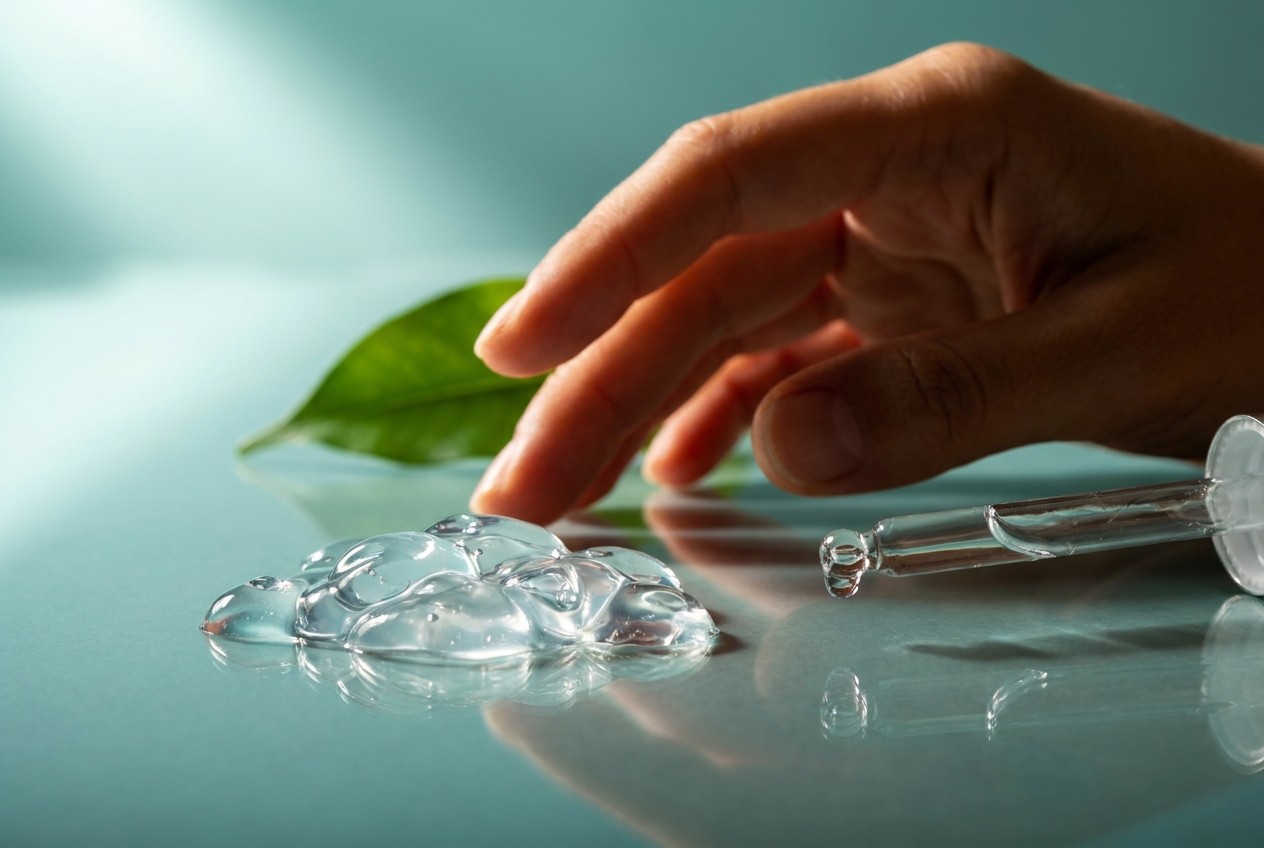
Silicones are semi-liquid substances derived from sand and used in skin care for their occlusive, barrier-forming properties [1][14]. Medical uses include wound healing and scar improvement, while cosmetic uses primarily provide a smooth texture and a plump appearance.
The ingredient group remains debated: some experts say silicones are not harmful, while others say they offer no long-term skin benefit [14]. Consumers and brands have increasingly removed silicones from formulations as part of a broader clean-beauty trend [2].
A 2019 report valued the beauty industry at $532 billion and projected rapid growth in the coming years, with personal care products benefiting from targeted pricing, social media, and companies aiming at sustainable alternatives [3]. Within that market, silicone-free labeling has become a marketing position rather than a regulatory one.
Here are six reasons dermatologists and consumers cite for avoiding silicones in skin care, along with guidance from dermatologists on label reading and cleansing.
Superficial Benefits and Residue Concerns
Reason 1: In cosmetic products, silicones mostly act as a pleasant-feeling carrier base and do not contribute to long-term skin health. The smoothing and moisture-locking effects are temporary and are washed away when the product is removed [14].
Dimethicone, also known as polydimethylsiloxane, is a silicone-based polymer used primarily in cosmetic products that functions as an anti-foaming agent, skin-conditioning agent, skin protectant, and conditioner for both skin and hair [4].
One of its key benefits is that it stops water loss by creating a hydrating barrier on the skin, and similar to other silicones, dimethicone is easily spreadable and creates a subtle gloss when applied to the skin [4].
Reason 2: Silicones are hydrophobic, meaning they repel water and do not rinse away easily. Dermatologists advise oil cleansing or double cleansing to reduce residue that may remain in pores [14].
Double cleansing is not just a Korean practice; esthetician classes discuss it extensively and a lot of stateside dermatologists recommend it, according to esthetician Charlotte Cho [5].
The trade-off is that hydrophobic silicones resist removal by water alone, which is why oil-based cleansers are recommended. According to the report, residue that remains in pores may accumulate over time.
Breakouts and Product Layering Interference
Reason 3: For acne-prone patients, silicones can act as a barrier that traps oil, dirt, and dead skin cells, potentially worsening acne. Dermatologists maintain that silicones are not generally pore-clogging by themselves but can trap other comedogenic substances [14].
Some consumer-facing sources make stronger claims, stating that silicone can cause acne and make skin age faster, especially for sensitive skin [6].
Reason 4: Silicones may block subsequent ingredients from reaching the skin when used earlier in a routine. The barrier effect may be useful as a last step, but it can render products applied afterward less effective [14].
Author Caroline Hirons notes that skin is a barrier and that products absorbed straight away are generally not natural, a point relevant to how silicone layers interact with other products [7].
Author Paula Begoun and co-author Bryan Barron reviewed a silicone-based serum and stated that nothing in the serum can purify skin or make it feel clearer, though skin may feel smoother [8].
Filler Ingredients and Environmental Persistence
Reason 5: Some dermatologists prefer to avoid inactive or filler ingredients for everyday use. For condition-specific use such as topical wound healing, dermatologists said people should not be afraid of silicones.
Silicone catheters have been used in prolonged parenteral nutrition, according to a medical journal reference, and silicone prostheses have a mean lifetime of 14 to 24 months in clinical service, according to a study on maxillofacial elastomers [9][10].
Reason 6: Silicones are bioaccumulative and contribute to sludge pollution in oceans and waterways after being rinsed down the drain. They may not break down for hundreds of years, the report stated, making them a concern for consumers seeking eco-friendly skin care [14].
Research on hydrophobic chemical uptake in fish from sediment-laden water indicates that hydrophobic chemicals can be taken up through gills from bottom sediments [11].
For consumers seeking eco-friendly skin care, the persistence of silicone ingredients after rinsing is a central concern, according to the report.
Dermatologist Guidance and Label Reading
Dermatologists said it is not necessary to include silicones in a skin care routine, but it is also not totally necessary to eliminate them for the sake of skin health. Consumers concerned about green, natural, or eco-friendly skin care were advised to go silicone-free.
Author Imelda Burke notes that for those who want to avoid silicone altogether, many natural and organic beauty brands use alternatives such as silica, arrowroot, cassava root and cornflower to achieve a similar mattifying effect without the potential risks [12].
Products may be labeled silicone-free or free from silicones, and ingredient lists can be scanned for terms ending in -cone or -siloxane [14]. Author Philip Kingsley advises using less styler and conditioner, and being even more sparing if two silicones are in the top four ingredients [13].
According to Cho, a lot of stateside dermatologists recommend the double cleanse, and an oil cleanser can help break down and remove excess sebum and oil-based impurities like makeup, silicones, and sunscreen [5].
References
- Face value skin care for women over 35. Wesley-Hosford Zia
- 6 Reasons Why People Avoid Silicones in Skin Care | Clinikally. https://www.clinikally.com/blogs/news/6-reasons-why-people-avoid-silicones-in-skin-care
- Is Talc in Your Makeup? There's Probably Asbe - Mercola.com, December 12, 2020.
- Dimethicone -- toxicity side effects diseases and environmental impacts - NaturalNews.com, December 03, 2017.
- The Little Book of Skin Care. Charlotte Cho
- Is Silicone Bad for Skin? 10 Reasons Why You Should Avoid It. https://essentialmovestowellness.com/beauty/skin-care/silicone-bad-for-skin/
- Skincare. by Caroline Hirons
- Don't Go to the Cosmetics Counter Without Me 7th Edition. Paula Begoun and Bryan Barron
- Incidence and management of catheter-related sepsis in patients receiving home parenteral nutrition. Acrobat 5.0 Paper Capture Plug-in for Windows. Journal unknown
- Material Properties of a Maxillofacial Chlorinated Polyethylene Elastomer Stored in Simulated Skin Secretions. 3B2 Total Publishing System 8.07q/W. Journal of Biomedical Materials Research B: Applied Biomaterials 91B(3):452-460 2009
- Para-Hydrophobic Xenobiotic Uptake by Rainbow Trout via Gills from Sediment-Laden Water. tmiller@sun10. Environmental Toxicology and Chemistry 15 (9) pp. 1555–1563 1996
- The nature of beauty organic skincare botanical beauty rituals and clean cosmetics. Burke Imelda, author
- The Hair Bible: A Complete Guide to health and care. Kingsley Philip
- 6 Reasons Why People Avoid Silicones in Skin Care. https://www.healthline.com/health/beauty-skin-care/silicones











Please contact us for more information.