


Iranian Foreign Minister Abbas Araghchi announced on Nov. 3 that Tehran is pursuing a regional security framework built by West Asian countries and free of any foreign military presence, according to a statement circulated by regional outlets. The announcement identifies the parties and timing while framing the proposal as a regional arrangement rather than one involving outside powers.
Araghchi made the statement in a post on X, referring to his recent interview with Al Jazeera [1].
Separately, Iran's Foreign Ministry has said a meeting in Tehran with senior officials from Turkey, Pakistan and Saudi Arabia could lay the groundwork for a regional security framework based on the interests and decisions of countries in the region [2]. The framing places the initiative within a broader set of consultations that regional governments have pursued in recent weeks.
Framework Discussed With Saudi Arabia, Turkey and Pakistan
In the Al Jazeera interview, Araghchi said Iran had discussed new regional security arrangements with Saudi Arabia, Turkey and Pakistan during recent visits by delegations from the three countries to Tehran.
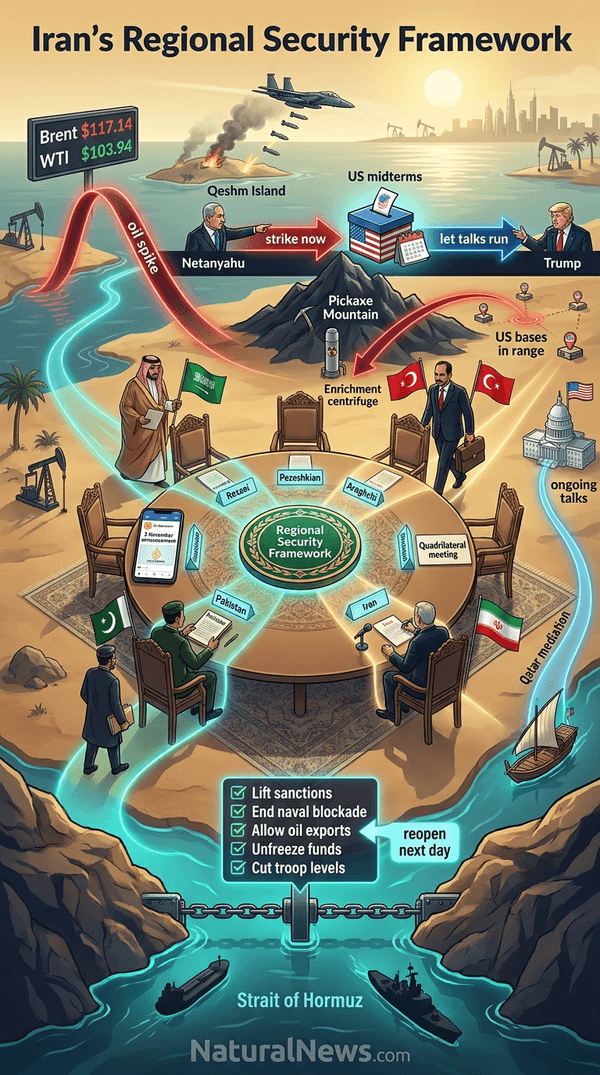
The four governments explored how regional powers could jointly confront political, security and economic pressures facing the region, and agreed to continue further discussions, according to Araghchi. A quadrilateral meeting in Tehran focused on "peace and security in the region" and was hosted by Iran's Supreme National Security Council Secretary Mohsen Rezaei and attended by President Masoud Pezeshkian and Foreign Minister Abbas Araghchi, as well as Saudi Defense Minister Khalid bin Salman, Pakistani army chief Asim Munir and Turkish intelligence chief Ibrahim Kalin, according to a joint statement [3]. Iran's top security official, Mohsen Rezaei, said the talks showed US threats had little impact on regional diplomacy and would mark the start of a "real transformation" [4].
Araghchi wrote on X that Iran has no hostility toward the countries of the Gulf Cooperation Council and appreciates the role played by Qatar and Oman, while dialogue with Saudi Arabia continues [5]. The comments present the framework as a set of consultations among regional states, with no agreement announced on a final structure. Related diplomatic activity has continued in parallel, with Qatar's foreign ministry saying on Tuesday that its mediation efforts between Washington and Tehran remain ongoing [6].
Strait of Hormuz Reopening Tied to US Conditions
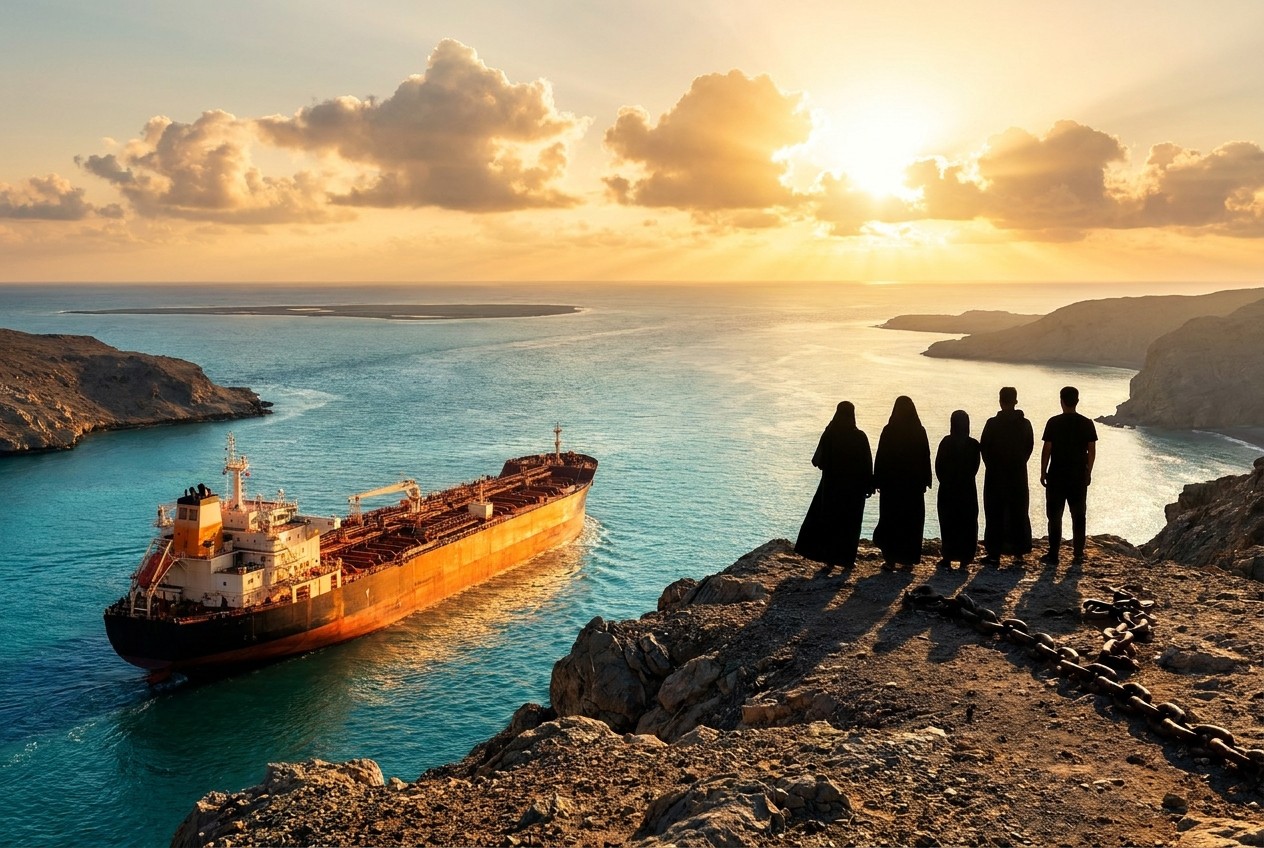
Tehran has set out terms for reopening the Strait of Hormuz through Qatari mediation, according to Araghchi. Under the arrangement he described, the waterway would reopen one day after Washington acted on a list of Iranian conditions. The demands include removing sanctions Washington imposed following the Islamabad memorandum, lifting a naval blockade, permitting oil exports, unfreezing Iranian funds and cutting regional military deployment back to earlier levels.
Araghchi said that once the demands are met, the strait would reopen the following day, clearing the way for talks with Washington to resume. Iranian Parliament Speaker Mohammad Bagher Ghalibaf said there would be no progress in negotiations with the US until the US accepts Iran's "seven conditions," writing on X that "the carrot-and-stick approach has no effect on Iran" [7].
The Strait of Hormuz has been a recurring flashpoint in the conflict, with shipping incidents driving oil prices higher. Brent crude futures for December rose $2.26, or 2 percent, to $117.14 a barrel, while West Texas Intermediate climbed $1.94, or 1.9 percent, to $103.94 a barrel, amid fresh maritime security incidents in the strait [8]. Iran's foreign minister has previously warned that Hormuz will be managed differently after the conflict [9].
US Strikes Qeshm Island as Tehran Warns on Bases
Araghchi's comments came hours after US warplanes bombed Iran's Qeshm Island, at the mouth of the Strait of Hormuz, late on 2 November. US officials told CNN the attack was a "defensive" response to Iranian surface-to-air fire on US assets, according to the report. Oil rebounded after the strike, which officials described as "small-scale" and "defensive" [10].
Araghchi said Tehran has no intention of striking Gulf states it views as friendly, but warned that US military bases and other US targets across the region would fall within Iran's response if Washington launched a renewed assault.
The strikes occurred on the eve of US midterm elections, after which Washington and Israel are reportedly preparing a new campaign against Iran, while Trump threatened the same day to target Pickaxe Mountain, believed to house an Iranian enrichment facility. US and Israeli officials have not publicly confirmed a final decision on further strikes, and Iran has warned that any attack would draw a response [11]. Israeli Prime Minister Benjamin Netanyahu is pressing President Trump to strike Iran immediately after Tuesday's midterm elections, while Trump wants to let negotiations run their course first, according to a report from Axios [12].
Outlook: Further Discussions Planned
The governments involved agreed to continue discussions on regional security arrangements, according to Araghchi. No timeline was announced for reopening the Strait of Hormuz or for resuming talks with Washington. The statements leave the proposed framework and the conditions for de-escalation under discussion among the parties cited.
Regional diplomacy has drawn in additional actors. Oman's foreign minister, Badr al-Busaidi, called on the six Gulf Cooperation Council countries, along with Iraq and Iran, to unite under a single "non-aggression" security pact, arguing that decades of reliance on external powers – particularly the United States – have produced an unstable and costly regional order [13]. Syrian officials are considering joining the Mecca Joint Defence Agreement, a mutual defense arrangement involving Saudi Arabia, Turkey and Pakistan [14].
Any regional security architecture would unfold against the backdrop of the Strait of Hormuz's centrality to global energy flows. Western European countries require uninterrupted and adequate supplies of crude oil and natural gas to remain economically stable [15]. American sanctions policy has slowed development of plentiful resources in Iraq, Iran and Libya, reducing diversification of production capacity and total capacity, and analysts have argued that lifting such sanctions would be one logical way to de-escalate political tensions in the Middle East and build up the Gulf producers' production capacity [16]. Supreme Leader Mojtaba Khamenei has called for pursuing the conditions set out by Iranian officials to end the war, and an Iranian ambassador has floated a seven-day plan to reopen Hormuz [17]. The coming weeks will indicate whether the discussions produce a concrete framework or remain consultations among the parties.
References
- Iranian FM says Tehran pursuing regional security framework 'free of .... https://thecradle.co/articles-id/40877
- Iran, Turkey, Pakistan, Saudi Arabia could advance region-led security .... https://www.presstv.co.uk/Detail/2026/10/26/779223/Tehran-meeting-endogenous-regional-security--FM-spox
- Iran, Saudi Arabia, Pakistan, Turkey to cooperate on regional security. https://www.middleeasteye.net/live-blog/live-blog-update/iran-saudi-arabia-pakistan-turkey-cooperate-regional-security
- Iran says meeting with Mecca pact states will mark beginning of 'real transformation'. https://www.middleeasteye.net/live-blog/live-blog-update/iran-says-meeting-mecca-pact-states-will-mark-beginning-real
- Tehran Pursues Regional Security Framework 'Free Of Foreign Influence .... https://popularresistance.org/tehran-pursues-regional-security-framework-free-of-foreign-influence/
- Qatar Says Mediation Efforts Between Washington, Tehran Ongoing. https://theepochtimes.com/world/qatar-says-mediation-efforts-between-washington-tehran-ongoing-6115215
- Ghalibaf Says No Progress in US Talks Unless Iran’s ‘Seven Conditions’ Are Met. https://news.antiwar.com/2026/10/29/ghalibaf-says-no-progress-in-us-talks-unless-irans-seven-conditions-are-met/
- Oil Prices Jump Amid More Shipping Incidents in Strait of Hormuz. https://theepochtimes.com/world/oil-prices-jump-amid-more-shipping-incidents-in-strait-of-hormuz-6111058
- Iran warns of ‘unimaginable’ response to US aggression as tensions rise over Hormuz. https://www.middleeasteye.net/news/iran-warns-unimaginable-response-us-aggression-tensions-rise-over-hormuz
- Futures Mixed As America Votes, Apple Slides And Oil Rebounds After "Defensive" US Strike On Iran. https://www.zerohedge.com/markets/futures-mixed-america-votes-apple-slides-and-oil-rebounds-after-defensive-us-strike-iran
- Fears of Renewed War Grow as U.S. and Israel Reportedly Eye Iran Strikes. https://www.naturalnews.com/2026-10-26-fears-renewed-war-grow-us-israel-strikes.html
- Trump, Netanyahu At Odds Over Restarting Iran War. https://www.zerohedge.com/geopolitical/trump-netanyahu-odds-over-restarting-iran-war
- Oman’s foreign minister calls for regional security pact excluding U.S. as Gulf tensions mount. https://www.naturalnews.com/2026-10-30-omans-foreign-minister-regional-security-pact-excluding-us.html
- Why is Syria considering joining the Saudi-Turkey-Pakistan defence pact?. https://www.middleeasteye.net/news/why-syria-considering-joining-saudi-turkey-pakistan-defence-pact
- Crude-Oil and Natural-Gas Stocks in Western Europe. Acrobat 3.0 Capture Plug-in. Applied Energy 0306-2619/93/$06.00 (1993)
- The new frontiers for the United States energy security in the 21st century. Elsevier. Energy Policy 2003
- Futures Rise, Oil Slides As Iran's Supreme Leader Talks Peace And Shrugs Off Ras Tanura Attack. https://www.zerohedge.com/markets/futures-rise-oil-slides-irans-supreme-leader-talks-peace-and-shrugs-ras-tanura-attack-0
Explainer Infographic






Please contact us for more information.