



A study that examined how fatigue and mental performance shift throughout the day found that feeling more tired than usual and performing faster than usual on a processing-speed test were each followed by a lower ability to keep performing despite fatigue later on, according to a report published by mindbodygreen on Oct. 6, 2026.
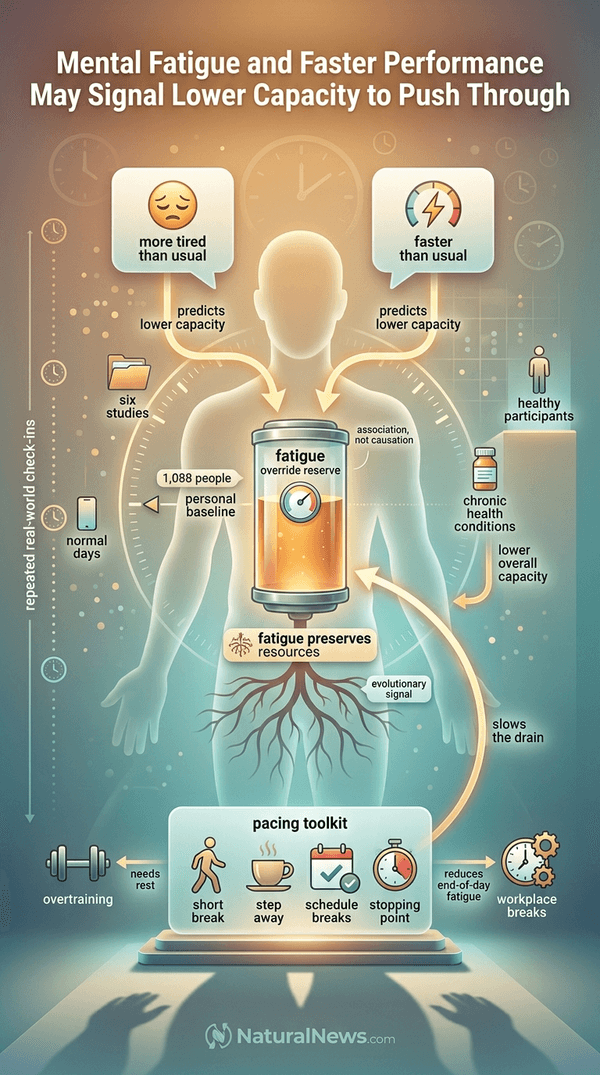
Researchers combined data from six studies involving 1,088 people, the report stated. Some participants were healthy, while others had chronic health conditions, and the studies checked in with participants repeatedly throughout their normal days rather than testing them only in a laboratory setting, the report said.
The report described the research as an examination of fatigue override, or a person's ability to keep performing even when they feel tired. Because participants completed the check-ins more than once, the researchers could compare each person with their own usual pattern, the report stated.
How Researchers Measured Fatigue and Performance
The researchers focused on fatigue override, or the ability to keep performing a task while feeling tired, according to the report. The concept describes a common situation in which a person continues working through a deadline during an afternoon slump or stays focused through a long meeting despite mounting weariness.
To study that ability in everyday life, the researchers combined data from six studies involving 1,088 people, the report stated. Some participants were healthy, while others had chronic health conditions. Rather than testing everyone in a lab, the studies checked in with participants repeatedly during their normal days, according to the report.
At each check-in, participants reported how tired they felt and completed a short test of processing speed, which measures how quickly they could respond to a simple mental task, the report stated. Because participants completed these check-ins more than once, researchers could compare each person with their own usual pattern, allowing them to see what happened when someone felt more tired than they normally did or performed faster than they normally did. The report stated that participants completed these check-ins more than once, which allowed the researchers to track how well participants were able to keep going afterward.
Findings on Tiredness, Speed, and Chronic Conditions
During their normal days, participants who felt more tired than usual had a harder time maintaining their performance despite fatigue in the hours afterward, according to the report. The finding suggests that a sluggish moment can be followed by a reduced capacity to push through fatigue later.
The same pattern appeared after participants performed faster than their usual pace on the processing-speed test, the report stated. Someone who felt unusually sharp and performed especially well on the test could also have less capacity afterward, according to the report. The report stated that doing well right now isn't always a reliable sign that a person will have the same capacity a few hours later.
People with chronic health conditions had a lower overall ability to keep performing despite fatigue compared with healthy participants, the report stated. The study did not conclude that feeling productive is harmful, according to the report, but it indicated that current performance is not always a dependable marker of later capacity.
The results add to a body of research on how the body manages energy during demanding mental work. That work suggested that thinking may make a person feel tired not because energy is exhausted but because humans have evolved to preserve resources [1].
Limitations and Practical Implications
The data came from six observational studies that used repeated self-reports and brief processing-speed tests, according to the report. The report did not state that causal direction can be established from the findings, and the research did not conclude that productivity is harmful.
The report stated that doing well right now isn't always a reliable sign that a person will have the same capacity a few hours from now. The report's suggested approach was not to interrupt every productive streak but to use noticeable changes in energy and focus as a reason to pace oneself.
The report outlined several pacing strategies. When a person feels more tired than usual, the report suggested taking a short break before automatically powering through, such as stepping outside, walking around, or getting away from a screen for a few minutes. When a person feels unusually focused, the report suggested enjoying the momentum while giving oneself a stopping point instead of assuming the pace can be maintained indefinitely. For a demanding day ahead, the report suggested putting short breaks on the schedule before they are needed.
The goal described in the report was not to avoid fatigue but to notice when a person's usual rhythm changes and respond before they are completely depleted. Broader research on rest and recovery points in a similar direction. One health report noted that overtraining can negate fitness gains and lead to substandard performance, persistent fatigue, and an elevated resting heart rate, and that muscle repair and growth occur during rest and recovery, not during the workout itself [2]. Another analysis of workplace production found that when the number of breaks was increased and the length of continuous working time was reduced in the afternoon, when fatigue tends to increase, the fatigue level at the end of the operation became lower according to both subjective and objective indicators [3].
References
- How Much Energy Does It Take To Think? | Quanta Magazine. https://www.quantamagazine.org/how-much-energy-does-it-take-to-think-20250604/
- Struggling with your gains? Here's why nutrition and rest are key to your athletic performance - NaturalNews.com, August 15, 2026
- Applying New JIT—Toyota’s global production strategy: Epoch-making innovation of the work environment by Elsevier. Robotics and Computer-Integrated Manufacturing 23 (2007) 285–293
Explainer Infographic










Please contact us for more information.