



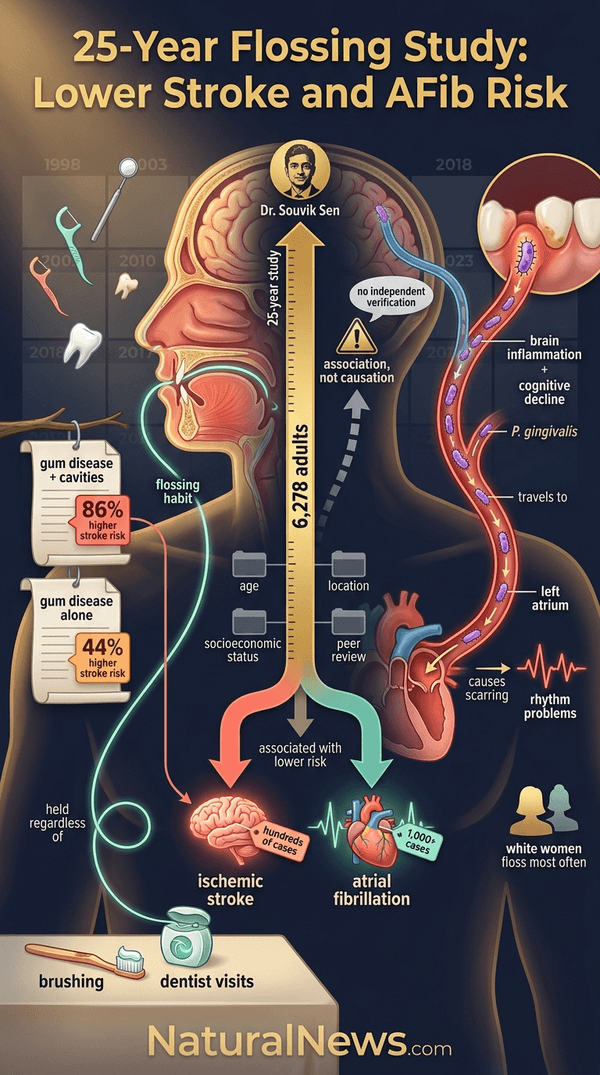
A report published by NaturalHealth365.com on Oct. 7 revealed that a 25-year study of 6,278 adults has found that people who flossed regularly had a lower risk of ischemic stroke and atrial fibrillation. The researchers, led by Dr. Souvik Sen of the University of South Carolina, drew on a long-running heart and brain health study [1].
The findings were described by researchers as an association rather than proof of causation, according to the article. The study followed participants for about 25 years and recorded hundreds of strokes and more than 1,000 cases of atrial fibrillation.
The report stated that the associations held regardless of how often participants brushed their teeth or visited the dentist. "In other words, flossing seemed to offer something extra that brushing alone didn’t provide," said the researchers [1].
Study Design and Population
For the study, the research team collected self-reported data on flossing habits and followed participants over a period measured at roughly a quarter-century. The report did not specify the participants’ ages, geographic locations, or how flossing frequency was categorized, and it did not state whether the study controlled for all potential confounding factors.
Separate research has documented differences in preventive dental behaviors by demographic group. The same paper reported that white women were the most likely to engage in frequent teeth brushing and flossing, according to the study’s findings [2].
The findings add to a body of research on oral health and cardiovascular outcomes. Separate reporting has described associations between gum disease and stroke risk: one account stated that poor oral health dramatically increases the risk of catastrophic brain damage, with gum disease and cavities together linked to an 86% higher stroke risk [3].
Another reported that a 20-year study found people with both gum disease and cavities had an 86% higher risk of ischemic stroke compared with those with healthy mouths, while gum disease alone was associated with a 44% higher risk [4].
Possible Mechanism and Limitations
Separate research has examined how oral bacteria may reach the heart. One report described Japanese researchers who discovered that bacteria from gum infections can travel through the bloodstream to heart tissue, potentially causing dangerous irregular heartbeats; the bacterium P. gingivalis can escape from infected gums to the left atrium of the heart, causing scarring that increases the risk of rhythm problems [5].
Another report stated that harmful oral bacteria from gum disease can enter the bloodstream, causing brain inflammation and contributing to Alzheimer’s and cognitive decline [6].
The report did not state whether the study was randomized, whether it controlled for socioeconomic status, or whether the findings have been published in a peer-reviewed journal.
Having Good Habits Helps Support Overall Well-Being
Health experts advised that making lifestyle changes can help protect both oral health and heart health. Flossing each night is key to reducing the growth of harmful bacteria in the mouth.
They also recommended eating foods rich in vitamin C, such as citrus fruits, kiwi, peppers, and strawberries to support healthy gum tissue. Meanwhile, limiting sugary foods and drinks reduces sugars that feed harmful bacteria, which is key to supporting optimal oral health.
Aside from flossing, health experts recommend healthy habits such as exercising regularly, getting quality sleep, and maintaining a steady blood pressure to support overall wellness.
References
- Flossing Linked to Lower Stroke Risk. 2026-10-07. https://www.naturalhealth365.com/two-minute-nightly-routine-linked-to-fewer-strokes-major-study-reveals.html
- Smoking, Seat Belts, and Other Risky Consumer Decisions: Differences by Gender and Race. by Acrobat 5.0 Paper Capture Plug-in for Windows. Managerial and Decision Economics 17, 471-481 (1996)
- Poor oral health linked to 86 higher stroke risk researchers find - NaturalNews.com. October 23, 2025
- The hidden dangers in your mouth: How cavities and gum disease nearly double stroke risk. NaturalNews.com. November 08, 2025
- Gum bacteria invade heart trigger dangerous heart rhythm problems. NaturalNews.com. May 16, 2025
- The mouth-brain connection: Could dental health guard against dementia and vice versa - NaturalNews.com. May 15, 2025
Explainer Infographic










Please contact us for more information.