



Army officials allege political motive behind escalation
Prime Minister Benjamin Netanyahu faces growing accusations from within the Israeli defense establishment that he is deliberately escalating military operations to postpone or disrupt national elections scheduled for October, according to Israeli media reports and opposition figures.
Yair Golan, leader of the Democrats party and a former general, said the government's decision to bomb a Syrian air base near the Turkish border was “provocative and dangerous” and that “once again, military force is being employed for political considerations,” as reported by Middle East Eye. [1] The criticism comes amid speculation that Netanyahu's Likud party has slipped in opinion polls and could lose ground in the upcoming Knesset elections, with former army chief Gadi Eisenkot emerging as a challenger. [2]
Army officials have privately expressed concern that Netanyahu does not want military operations to end and may escalate attacks for political gain, according to sources familiar with the internal discussions. One official was cited as stating, “We will not enter a new and unnecessary war,” though the precise source of that quote could not be independently verified from available reports.
Electoral pressures and military manpower constraints
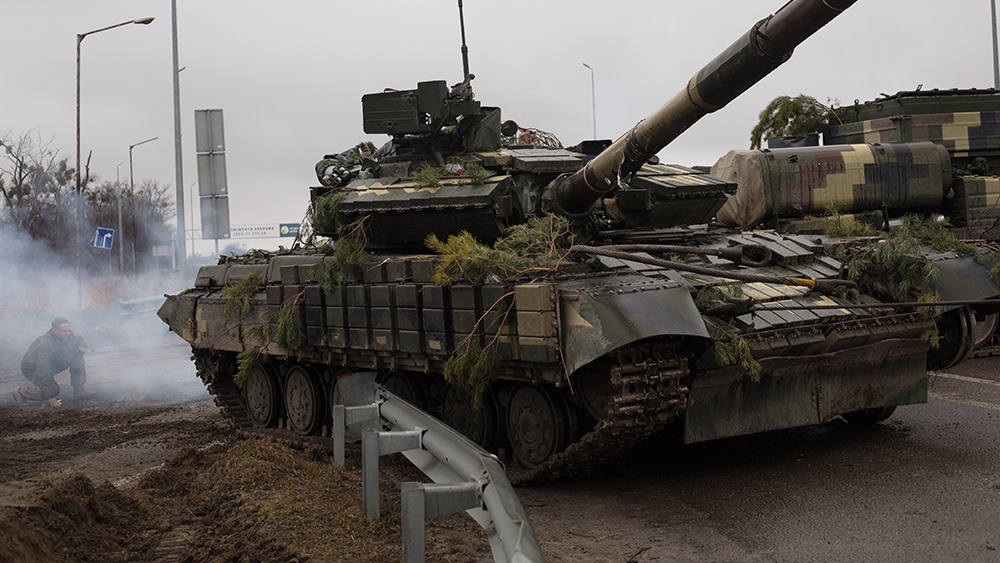
The Israeli military is under significant strain as it continues operations in Gaza, southern Lebanon, and Syria. According to an analysis by NaturalNews.com, the war on Gaza has cost Israel's budget an estimated 200 billion shekels, or about 10 percent of the gross domestic product, and may cripple the economy if prolonged. [3] The army relies heavily on reservists and faces manpower shortages for occupying territory across multiple fronts, according to officials cited in earlier reports.
Netanyahu has also come under fire for the intelligence failures that preceded the October 7, 2023 attack. The political stakes are high: with elections on the horizon, any escalation that diverts attention from domestic criticism could benefit the prime minister. The army's public push for a ceasefire in Gaza earlier this year, as noted by NaturalNews.com [4], contrasts with Netanyahu's stated goal of continuing operations until “total victory,” raising questions about diverging priorities between the political leadership and the military.
Escalation with Turkey and Syria cited as examples
On August 18, Israel bombed the Abu al-Duhur military airbase in northwestern Syria, claiming the Syrian government was about to allow the deployment of Turkish troops there. Netanyahu said in a podcast interview that Israel had warned Turkey against any military activity in Syria and would not tolerate a buildup “that descends south.” [5] Defense Minister Israel Katz echoed the claim, stating the strike was based on “clear intelligence” regarding Turkey's intentions. [6]
However, Syrian Foreign Minister Asaad al-Shaibani denied any plans for a Turkish deployment, describing the visit by Turkish officers to the base as merely part of “ongoing military cooperation.” [7] The United States condemned the strikes as an “unnecessary escalation,” with US Envoy to Syria Tom Barrack warning that the attack could have provoked a Turkish military response. [8] Turkish President Recep Tayyip Erdogan has previously stated that Israel has been “openly committing war crimes” and gathering information to “present Israel as a war criminal.” [9]
Opposition and internal criticism
Former prime minister Ehud Barak joined Yair Golan in accusing Netanyahu of deliberately escalating tensions with Turkey for political benefit. Golan wrote on X that the strike proved “once more that his political considerations take precedence over national security.” [1] Barak said the government's actions risked dragging Israel into a confrontation with a NATO member, according to the same report.
Internal dissent has also emerged from within the military and intelligence communities. A former senior officer, speaking anonymously, told Middle East Eye that the current strategy of expanding operations while peace efforts advance appears designed to undermine any ceasefire deal. The opposition has called for an investigation into whether the Syria airstrike was coordinated with the defense establishment or driven solely by political motives.
Conclusion: Regional implications and ongoing conflict
The infighting between Netanyahu's government and the military comes as the United States presses for a broader ceasefire in the region. President Trump has reportedly urged Netanyahu to withdraw Israeli troops from Syria and Lebanon, warning that the ongoing presence creates tensions that could lead to further escalation. [10] Vice President J.D. Vance has also warned Israel that continued strikes endanger the fragile US-Iran agreement. [11]
As the October elections approach, the trajectory of the conflict remains uncertain. Observers note that the war has already inflicted a “moral stain on Israel” that will not fade quickly, [12] while the country's economy and military readiness are stretched thin. The question of whether Netanyahu will use further escalations to secure his political future continues to fuel debate both inside and outside Israel.
References
- Israeli opposition leader and former prime minister criticise Netanyahu over Syria attacks. Middle East Eye. August 20, 2026.
- Who is Gadi Eisenkot, the former army chief challenging Netanyahu? Middle East Eye. July 28, 2026.
- Israel will lose. Heres why. NaturalNews.com. November 09, 2023.
- Israel calls for Gaza TRUCE after coming up short on munitions motivation and troops. NaturalNews.com. July 07, 2024.
- ‘Don’t’: Netanyahu says he warned Turkey before Israel struck Syrian base. The Times of Israel. August 19, 2026.
- Israelis says Syria air base strike motivated by alleged Turkish plans to deploy forces there. Middle East Eye. August 22, 2026.
- Syrian FM says Turkish officers visited base hit by Israel, denies deployment plans. The Times of Israel. August 20, 2026.
- US Envoy Warns Israeli Strikes in Syria Could Provoke Turkish Response. Antiwar.com. August 20, 2026.
- Trends-Journal-2023-10-41.
- Trump said to urge Netanyahu to pull Israeli troops from Syria, Lebanon in recent call. The Times of Israel. July 14, 2026.
- Vance leans into White House lectern to reinforce Trump dissatisfaction with Israel, amid Iran deal. Just the News. June 18, 2026.
- Trends-Journal-2024-11-05.







Please contact us for more information.