


- Professor Kalghatgi's analysis finds EVs offer negligible global emissions reductions after accounting for battery manufacturing.
- Battery production creates a five-tonne CO2 deficit per Nissan Leaf before any driving occurs.
- Health impacts of EVs are estimated to be three to five times worse than conventional vehicles due to mining and processing.
- Stellantis reports up to 21 billion euros in losses and a 30 percent share plunge amid its EV pullback.
- The British auto industry faces devastation for less than 0.14 percent reduction in global emissions.
A damning new analysis from a leading engineering professor argues that the push for battery electric vehicles has failed on environmental, economic and health grounds, just as automaker Stellantis warns of factory closures and reports $26.5 billion in charges tied to its pullback from EV production.
Professor Gautam Kalghatgi, a fellow of the Royal Academy of Engineering, contends that electric vehicles offer negligible lifetime carbon dioxide benefits once battery manufacturing emissions are included, while their net health impacts are three to five times worse than conventional combustion vehicles. The analysis comes as Stellantis CEO Antonio Filosa, who took over last summer, acknowledged the company's earlier EV assumptions were "over optimistic" and announced a "strategic reset."
The convergence of academic criticism and industry turmoil raises serious questions about government mandates forcing rapid electrification despite weak consumer demand and infrastructure gaps.
Minimal emissions gains for massive disruption
Kalghatgi's analysis, published through The Daily Sceptic, calculates that even if all British cars and vans were replaced with battery EVs — a 30-fold increase from current levels — the reduction in global emissions would be less than 0.14 percent.
"Massive disruption for risible gain," Kalghatgi writes.
Transport accounts for 26 percent of total U.K. emissions, which represents just 0.27 percent of global emissions, according to government statistics. The professor warns that forcing Britain's auto industry toward battery EVs while China dominates the supply chain could devastate domestic manufacturing.
Stellantis, whose brands include Fiat, Jeep and Ram, reported preliminary net losses of up to 21 billion euros in the second half of 2025 and will pay no dividends this year.
Hidden costs of battery production
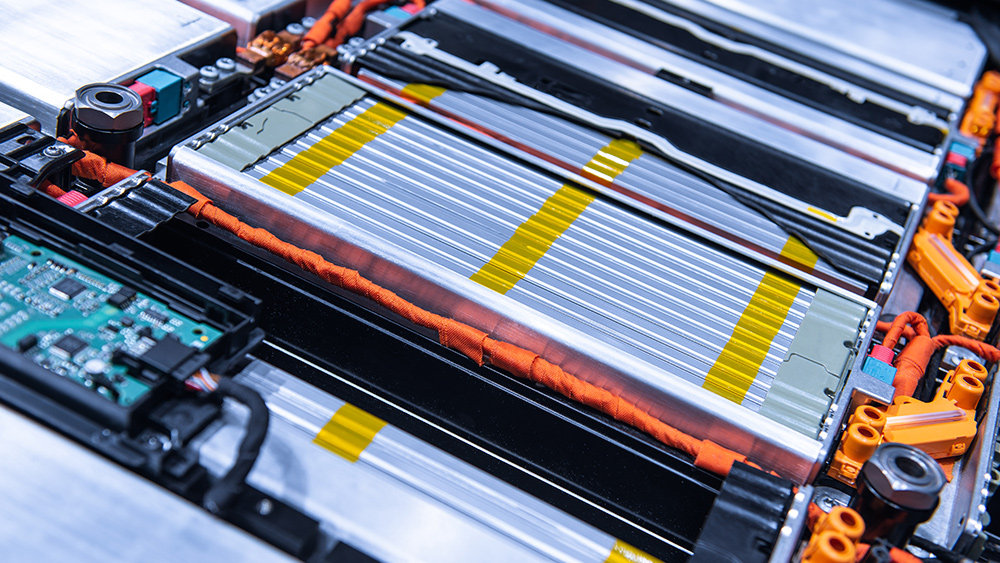
The environmental case for EVs collapses under lifecycle analysis, Kalghatgi argues. Battery manufacturing requires enormous process energy, producing an estimated 125 kg of CO2 per kWh of battery capacity, largely from Chinese factories that make over 70 percent of the world's batteries. A Nissan Leaf with a 40 kWh battery starts with a five-tonne CO2 deficit before it ever hits the road.
"The bigger the battery, the worse the impact," he writes. Mining for battery materials requires moving roughly 500 times the weight of the battery in earth and rock — meaning a 300 kg battery could require 150 tons of displaced material.
The health impacts are also concerning, with net effects on health estimated at three to five times worse than conventional vehicles, tied to the mining and processing of battery metals. A CBS News investigation previously documented child labor in Congolese cobalt mines supplying battery supply chains, with UNICEF estimating 40,000 children working in those operations.
Stellantis shares plunge amid EV pullback
Stellantis shares plunged as much as 30 percent following the writedown announcement, which is now larger than the company's market value. Under former CEO Carlos Tavares, forced out after U.S. sales collapsed, the company had targeted 100 percent EV sales in Europe and 50 percent in the U.S. by 2030.
"What we are announcing today is an important strategic reset of our business model ... to put our customer preferences back at the centre of what we do," Filosa told reporters.
Russ Mould, investment director at AJ Bell, said the writedown showed Stellantis "got it wrong on how quickly the world would transition from combustion engines to electric power."
With Mercedes, Volkswagen and Land Rover now defying EV mandates, Kalghatgi's warning lands with particular force: "The British auto industry will be sacrificed on the altar of the green cult but will yield negligible reduction in global emissions." Billions in industry losses and negligible climate gains raise an obvious question for policymakers still chasing EV targets: whether it's worth gutting a legacy industry, and the jobs that go with it, for a rounding error's worth of global emissions reduction.
Sources for this article include:









Please contact us for more information.