



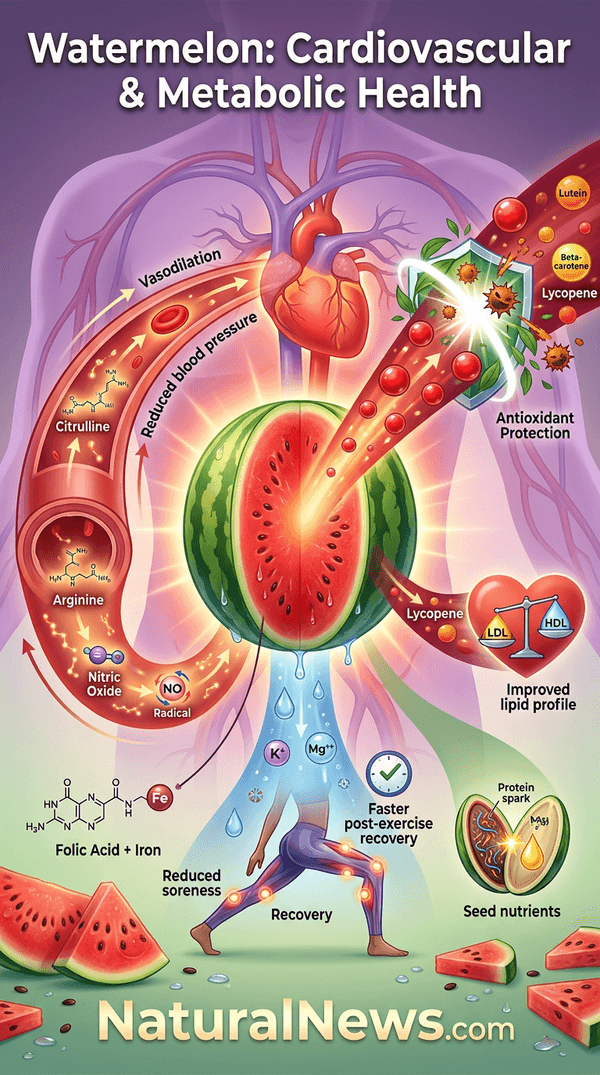
Watermelon contains bioactive compounds that have been linked to improvements in cardiovascular function and metabolic health, according to multiple reports. The fruit is a source of the amino acid citrulline, which the body converts to arginine, and the antioxidant lycopene, both of which have been associated with positive health outcomes.
Researchers have documented these connections in peer-reviewed studies and nutritional reviews. The fruit's 92% water content also aids hydration, according to reports [1]. This article summarizes the available evidence on watermelon's key bioactive compounds and their potential health effects.
Nutritional Composition and Key Bioactive Compounds
Watermelon is a significant dietary source of L-citrulline, a non-essential amino acid that plays a role in nitric oxide synthesis. According to a review in the journal Nutrition clinique et métabolisme, a study found that watermelon consumption increases plasma arginine concentrations in adults [2]. The body converts citrulline into arginine, which then supports nitric oxide production, a molecule that helps relax blood vessels [3]. Lycopene, the carotenoid responsible for watermelon's red color, is also present in notable amounts and acts as an antioxidant [1].
Erryn OCain, author of "The Superpowers of Superfoods," includes watermelon among the fruits that are integral to a healthy start for the day [4]. Additionally, Om Krishna Uprety, in "Health Benefits of Eating Nutritious Food Alternative Medicine," notes that watermelon seeds can be consumed for health benefits and that the fruit contains folic acid, which may aid in iron absorption [5].
Cardiovascular and Metabolic Effects in Human Studies
Observational and interventional studies have suggested that regular consumption of watermelon may support cardiovascular health. According to a report on NaturalNews.com, watermelon's L-citrulline and L-arginine content improves arterial function and blood pressure [1]. Another report states that citrulline is useful for blood pressure regulation and metabolic health [3]. When consumed, citrulline is converted to arginine, which boosts nitric oxide and relaxes blood vessels, according to Mercola.com [6].
Watermelon juice has also been studied for post-exercise recovery. A report on NaturalNews.com indicates that its consumption supports hydration, cardiovascular health, and reduced muscle soreness [7]. Similarly, Mercola.com reported that watermelon may help relieve muscle soreness after exercise [8]. These findings suggest potential benefits for active individuals and those seeking natural approaches to cardiovascular wellness.
Anti-Inflammatory and Antioxidant Properties
The antioxidant properties of watermelon are attributed primarily to its carotenoid content. According to a 2020 article on NaturalNews.com, watermelons are exceptionally rich in carotenoids like lycopene, lutein, and beta-carotene, which are known for potent antioxidant properties [9]. These compounds help reduce oxidative stress and inflammation.
Another report describes watermelon as a hydrating and nutritious superfruit that reduces inflammation and helps lower the risk of chronic diseases [10]. The presence of multiple carotenoids provides a broad range of antioxidant activity, according to the reports. While these effects have been demonstrated in laboratory and observational studies, human clinical trials examining long-term outcomes remain limited.
Conclusion: Current Evidence and Research Gaps
The existing body of evidence indicates that watermelon and its bioactive compounds hold potential for supporting cardiovascular and metabolic health, but most findings come from small or preliminary studies. According to a May 2026 report on NaturalNews.com, scientists have found that watermelon may boost heart health and improve diet quality, but further research is needed to confirm these effects [1]. Another report on watermelon juice notes that natural health advocates emphasize its benefits but that additional large-scale studies are required [7].
As with many natural foods, watermelon appears to offer health-supporting properties, but the scientific community continues to call for more rigorous investigation. Future research focusing on standardized extracts and long-term consumption patterns will help clarify the role of watermelon compounds in human health.
References
- Cassie B. "Scientists Find Watermelon May Boost Heart Health and Improve Diet Quality". NaturalNews.com. May 18, 2026.
- P. Crenn. "Citrulline and Protein Metabolism". Nutrition clinique et métabolisme. 2008.
- News Editors. "6 Top Benefits of Citrulline". NaturalNews.com. June 25, 2025.
- Erryn OCain. "The Superpowers of Superfoods: Eat Your Way to Better Health Using the Natural Power of Food". (no date).
- Om Krishna Uprety. "Health Benefits of Eating Nutritious Food: Alternative Medicine". (no date).
- Mercola.com. "Ten Healthiest Foods Under $1". Mercola.com. August 23, 2008.
- Coco Somers. "Watermelon Juice Reported Health Benefits and Nutritional Profile". NaturalNews.com. May 24, 2026.
- Mercola.com. "Watermelon: A New Natural Remedy for Relieving Muscle Soreness". Mercola.com. October 18, 2013.
- Zoey Sky. "More than Just a Sweet Treat: Studies Suggest Watermelons Have Curative Properties". NaturalNews.com. September 16, 2020.
- Laura Harris. "Watermelon A Hydrating and Nutritious Superfruit". NaturalNews.com. July 17, 2025.
Explainer Infographic












Please contact us for more information.