


New research indicates that manuka honey, a variety produced by bees that pollinate the manuka bush (Leptospermum scoparium) in New Zealand, may offer benefits beyond its established use in wound care. According to a report published in The Epoch Times, scientists are finding that manuka honey can help alleviate dry eyes, calm sinus inflammation, and improve oral health.
The honey's unique properties stem from its high concentration of methylglyoxal (MGO), a compound with potent antibacterial, anti-inflammatory, and antioxidant effects. Unlike regular honey, which relies on hydrogen peroxide for antimicrobial action, manuka honey uses a stable non-peroxide mechanism, according to registered dietitian Tina Alexander, as quoted in The Epoch Times.
What Makes Manuka Honey Different
Manuka honey is derived almost exclusively from the nectar of the manuka bush, which flowers for only a few weeks each year in remote parts of New Zealand, according to the report. This rarity, combined with the thixotropic properties that make it solid at room temperature and liquid when stirred, contributes to its higher cost, which can range from $20 to $200 per jar depending on purity and antibacterial activity.
The grading system for manuka honey is administered by the Unique Manuka Factor Honey Association. Products are rated from UMF 5+ to UMF 25+, indicating the concentration of MGO and the strength of antibacterial activity. Tina Alexander told The Epoch Times that regular raw honey fights bacteria using hydrogen peroxide, which degrades quickly when exposed to heat, light, or body fluids, while manuka honey's non-peroxide antimicrobial activity remains stable under difficult conditions.
Honey has been used medicinally since ancient times. A Sumerian tablet dating from around 2100 BC describes honey as a salve for wounds, and the Ebers Papyrus from 1550 BC mentions a honey-based dressing, according to Jenny Linford's book "The Seven Culinary Wonders of the World." [1] Manuka honey, in particular, has been described as a "scientifically backed superfood with antibacterial, anti-inflammatory and immune-boosting properties" in recent reporting. [2]
Potential Benefits for Dry Eyes
A study published in Frontiers in Ophthalmology found that manuka honey-based eye drops outperformed artificial tears in relieving dry eye symptoms after cataract surgery, according to The Epoch Times. The prospective controlled study examined 53 eyes from 53 patients; 25 received manuka honey eye drops, and 28 received drops containing sodium hyaluronate. The manuka honey group reported less dryness, irritation, and redness one month after the operation.
The authors described their results as "hypothesis-generating," meaning the findings require confirmation in larger, longer trials. Dr. Natasha Herz, a board-certified ophthalmologist and spokesperson for the American Academy of Ophthalmology, expressed concerns about the study's lack of a control group and uncertainty about participants' use of other eye drops. She noted that manuka honey-based drops are not approved by the U.S. Food and Drug Administration for ophthalmic use, as honey is not a permitted active ingredient in over-the-counter eye medications.
A separate article on honey's health-supporting properties notes that unprocessed raw honey can lower fasting blood glucose and cholesterol when used as a substitute for sugar, and that honey has been studied for dry eye disease. [3] However, the article does not specifically address manuka honey eye drops.
Benefits for Nasal Passages and Sinuses
Manuka honey's antimicrobial and anti-inflammatory properties may also benefit nasal and sinus health. Laboratory research has shown that manuka honey can inhibit antibiotic-resistant bacteria and flu viruses, according to The Epoch Times. A 2014 study found that when manuka honey was combined with the antiviral drugs oseltamivir (Tamiflu) and zanamivir (Relenza), the amount of drug required to achieve the same effect dropped to nearly 1/1000th of the normal dose.
A study of 19 people with primary atrophic rhinitis tested a 10 percent manuka honey nasal spray on one side of the nose and saline on the other for eight weeks. The side treated with manuka honey showed greater improvements, including decreased inflammation of the nasal lining and increased beneficial bacteria in the nasal microbiome. Several commercial manuka honey nasal sprays are available, typically combining purified medical-grade honey with saline.
According to an article on the health benefits of manuka honey, its antibacterial action stems from high levels of polyphenols and MGO, which disrupt bacterial cell walls and inhibit growth. [4] The article notes that manuka honey does not promote bacterial resistance the way conventional antibiotics can, as it acts through multiple mechanisms simultaneously.
Benefits for Oral Health
Multiple studies have found that manuka honey inhibits harmful oral bacteria, reduces plaque buildup, and eases gingivitis, according to The Epoch Times. A 2025 randomized controlled trial of 42 older adults with dry mouth (xerostomia) found that oral rinses containing manuka honey boosted salivary flow more effectively than rinses with regular honey or saline.
A small pilot study found that volunteers who chewed a manuka honey "leather" for 10 minutes three times daily after meals saw significant reductions in plaque and bleeding gums compared with those who used sugarless gum over 21 days. Manuka honey has also been shown to reduce plaque more effectively than xylitol chewing gum and perform comparably to chlorhexidine mouthwash.
The use of honey for oral health is not new. The book "The Healing Powers of Honey" by Cal Orey describes honey combined with natural ingredients to enhance circulation and soothe skin, but also notes honey's historical use for various ailments. [5] Additionally, an article on NaturalNews.com states that honey is a "healing wonder of nature" and that manuka honey healed pressure wounds in sick children better than standard care. [6]
Dosage and Precautions
A standard serving of manuka honey is one to two teaspoons, according to registered dietitian Tina Alexander, as quoted in The Epoch Times. "Consuming significantly more than this will cause a meaningful spike in blood glucose and insulin, contributing excess calories without additional therapeutic benefit," she said.
Manuka honey should not be given to infants under 12 months old due to the risk of botulism. People with diabetes should use it cautiously due to its high sugar content. Possible gastrointestinal effects include bloating and a mild laxative effect, particularly at higher doses. Alexander emphasized that honey remains an added sugar and should be used as a targeted functional tool rather than a daily wellness supplement, according to the report.
Conclusion
Researchers and clinicians cited in The Epoch Times regard manuka honey as a targeted functional tool with potential benefits for eye, sinus, and oral health, but they note that larger trials are needed to confirm the findings. Experts advise consulting a physician before using manuka honey for chronic conditions and verifying authenticity through UMF grading. As Tina Alexander stated, honey remains an added sugar and is best used as a targeted remedy rather than a daily supplement.
References
- Jenny Linford. "The Seven Culinary Wonders of the World A History of Honey Salt Chile Pork Rice Cacao and Tomato."
- NaturalNews.com. "Manuka honey: Nature’s golden remedy for wellness and healing." NaturalNews.com. January 22, 2026.
- NaturalNews.com. "See clearly with this sweet cure: Study shows honey can help treat dry eye disease." NaturalNews.com. September 27, 2023.
- NaturalNews.com. "More than a natural sweetener: 5 Health benefits of manuka honey." NaturalNews.com. August 31, 2021.
- Cal Orey. "The Healing Powers of Honey."
- News Editors. "5 Reasons honey should be in your medicine chest." NaturalNews.com. June 27, 2025.
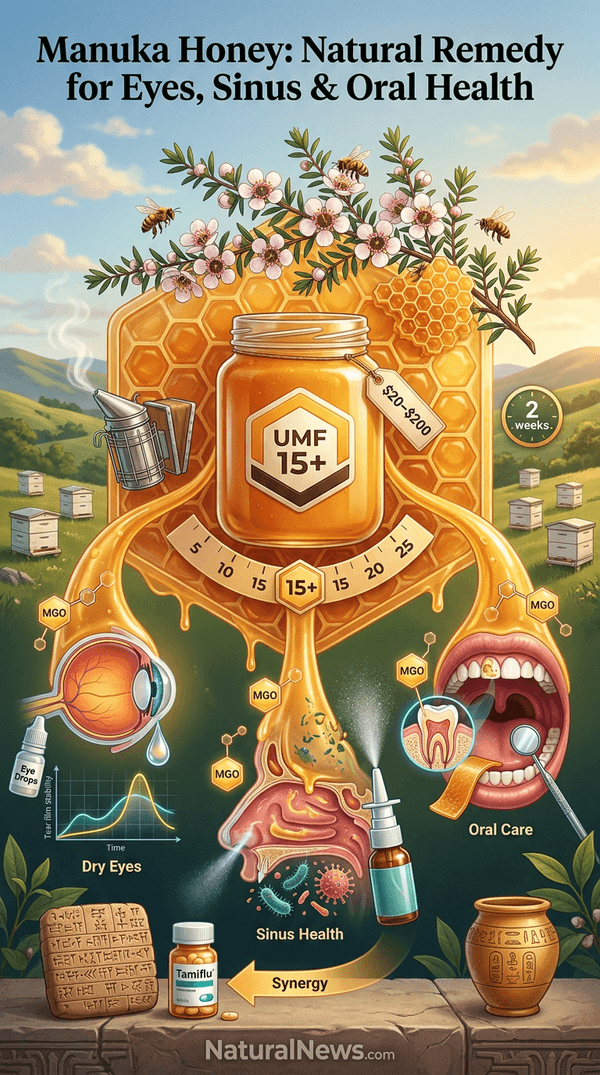
Explainer Infographic












Please contact us for more information.