



The United States has agreed to allow Saudi Arabia to develop its own nuclear program and enrich uranium, according to a report by CNN published on July 19, 2026, citing draft documents and sources familiar with the negotiations. The draft agreement has been negotiated and is awaiting President Donald Trump’s signature, the outlet reported. Under the reported terms, the deal would not require Saudi Arabia to adopt the enhanced International Atomic Energy Agency safeguards known as the Additional Protocol, which provides inspectors with broader access to nuclear facilities to detect undeclared activities.
The agreement would grant Riyadh access to the same uranium-enrichment technology that has been at the center of Iran’s long-running dispute with Western powers, according to the report. The United States and Israel have long argued that Iran’s enrichment program could be used to produce nuclear weapons and cited those concerns when launching strikes on Iran’s nuclear infrastructure earlier this year, according to official statements. Iran has consistently said its nuclear program is peaceful and that, as a party to the Nuclear Non-Proliferation Treaty, it has an “inalienable right” to enrich uranium for civilian purposes, and it has provisionally applied the Additional Protocol, according to Iranian officials.
Background on Saudi Nuclear Ambitions
Saudi Arabia has long sought a civilian nuclear industry to diversify its energy mix, free up crude oil for export, and power industrial and desalination projects, according to Saudi energy officials and public statements. Riyadh has argued that, as a signatory to the Nuclear Non-Proliferation Treaty, it has the same right as other member states to enrich uranium for peaceful purposes, according to Saudi representatives. The kingdom also wants to develop domestic uranium resources, according to Saudi energy officials.
The push for nuclear energy gained momentum during the Trump administration. In February 2026, the Arms Control Association warned that the United States was finalizing a multibillion-dollar nuclear cooperation deal with Saudi Arabia that could enable the kingdom to build nuclear weapons, according to a report by RT [1]. Earlier, in February 2026, Middle East Eye reported that the Trump administration was pursuing a nuclear deal with Saudi Arabia that would remove “non-proliferation guardrails” other Middle Eastern states had agreed to [2].
Details of the Reported Deal
The draft deal would give Saudi Arabia access to enrichment technology similar to that used by Iran, which has been at the center of a long dispute with the West, according to CNN. Washington and Israel have cited Iran’s enrichment program as a potential pathway to nuclear weapons and launched strikes on Iran’s nuclear infrastructure earlier this year, according to official statements. Iran, however, has insisted it will never abandon its nuclear ambitions. In July 2025, Iran’s newly elected president declared the country would continue its nuclear program regardless of any deal with the United States, according to a report by Lance D. Johnson [3].
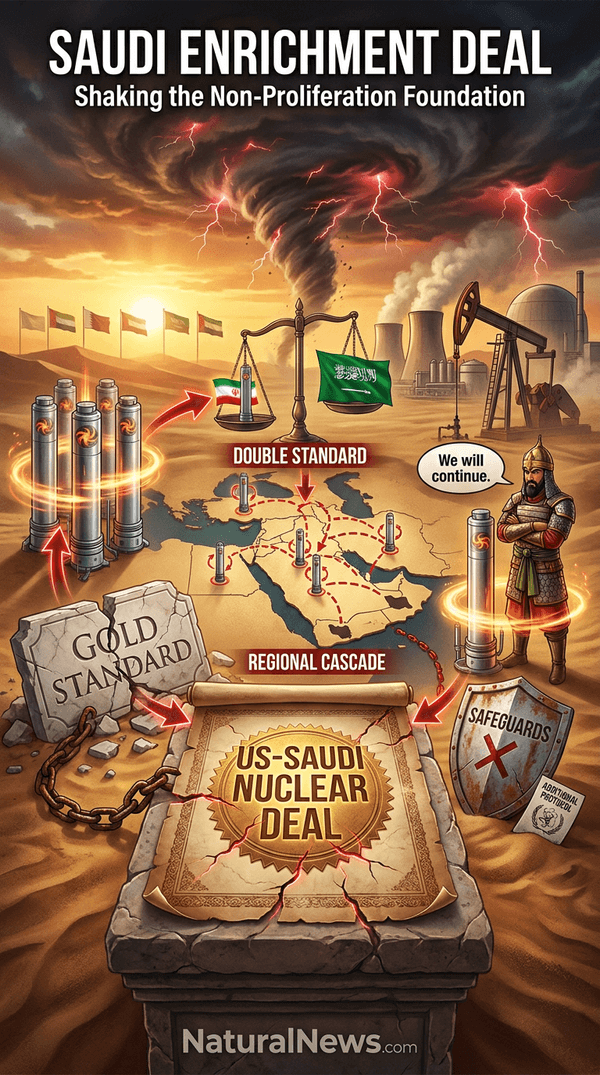
The reported agreement marks a departure from the U.S.’ long-standing “gold standard” approach to civilian nuclear cooperation, which the UAE adopted in 2009 by permanently renouncing enrichment and reprocessing. According to CNN, the UAE deal has been promoted by successive U.S. administrations as a model for the region, but the Saudi agreement would weaken that standard. The deal would also not require Saudi Arabia to adopt the Additional Protocol, which the UAE accepted as part of its agreement, according to the report.
Reactions and Implications
Arms-control experts cited by CNN warned that allowing Saudi enrichment could weaken the “gold standard” and encourage other regional countries to seek similar rights. They also argued that domestic enrichment provides a latent weapons capability, because the same centrifuge technology used to produce reactor fuel can produce weapons-grade uranium if enriched further. Iran has maintained that its nuclear program is peaceful and has applied the Additional Protocol provisionally, according to Iranian officials, but it has also vowed to continue enrichment, according to Cassie B. [4].
The deal could also affect ongoing U.S.-Iran negotiations. In May 2026, Iran offered to transfer its stockpile of highly enriched uranium to Russia as part of a peace proposal, according to Garrison Vance [5]. The U.S. and Iran later signed a ceasefire agreement in June 2026, but details on enrichment remained unresolved [6]. Some analysts have described the emerging Iran deal as a strategic setback for Israel [7], and the Saudi enrichment provision could further shift the regional balance.
Conclusion
The reported U.S.-Saudi nuclear deal would reshape U.S. nonproliferation policy in the Middle East, according to analysts. It remains subject to President Trump’s approval; no official White House comment has been issued as of publication. The outcome could influence nuclear ambitions across the region, including Iran’s ongoing negotiations and enrichment activities.
The agreement, if signed, would mark a significant shift in U.S. policy by allowing a key regional ally to enrich uranium without the strictest international safeguards, potentially opening the door for other states to demand similar terms. The deal also comes amid a broader realignment of U.S. alliances in the Gulf following the war with Iran and the signing of the Abraham Accords.
References
- RT. "Proposed US-Saudi pact could allow Riyadh to build nuclear weapons – report." February 21, 2026.
- Middle East Eye. "Trump administration pursuing nuclear deal with Saudi Arabia opening path to enrichment: Report." February 20, 2026.
- Lance D. Johnson. "Iran will not end its nuclear program and WWIII has only accelerated despite the government's insistence..." NaturalNews.com. July 24, 2025.
- Cassie B. "Iran vows uranium enrichment will continue as US demands zero concessions in nuclear standoff." NaturalNews.com. May 20, 2025.
- Garrison Vance. "Iran Offers to Transfer Enriched Uranium to Russia in Proposed Peace Deal." NaturalNews.com. May 19, 2026.
- RT. "US ready to let Saudi Arabia enrich uranium – CNN." July 19, 2026.
- The Times of Israel. "Daily Briefing June 14 – Why the emerging Iran deal is a major setback for Israel." June 15, 2026.
- Peter Schweizer. "Victory."
Explainer Infographic









Please contact us for more information.