


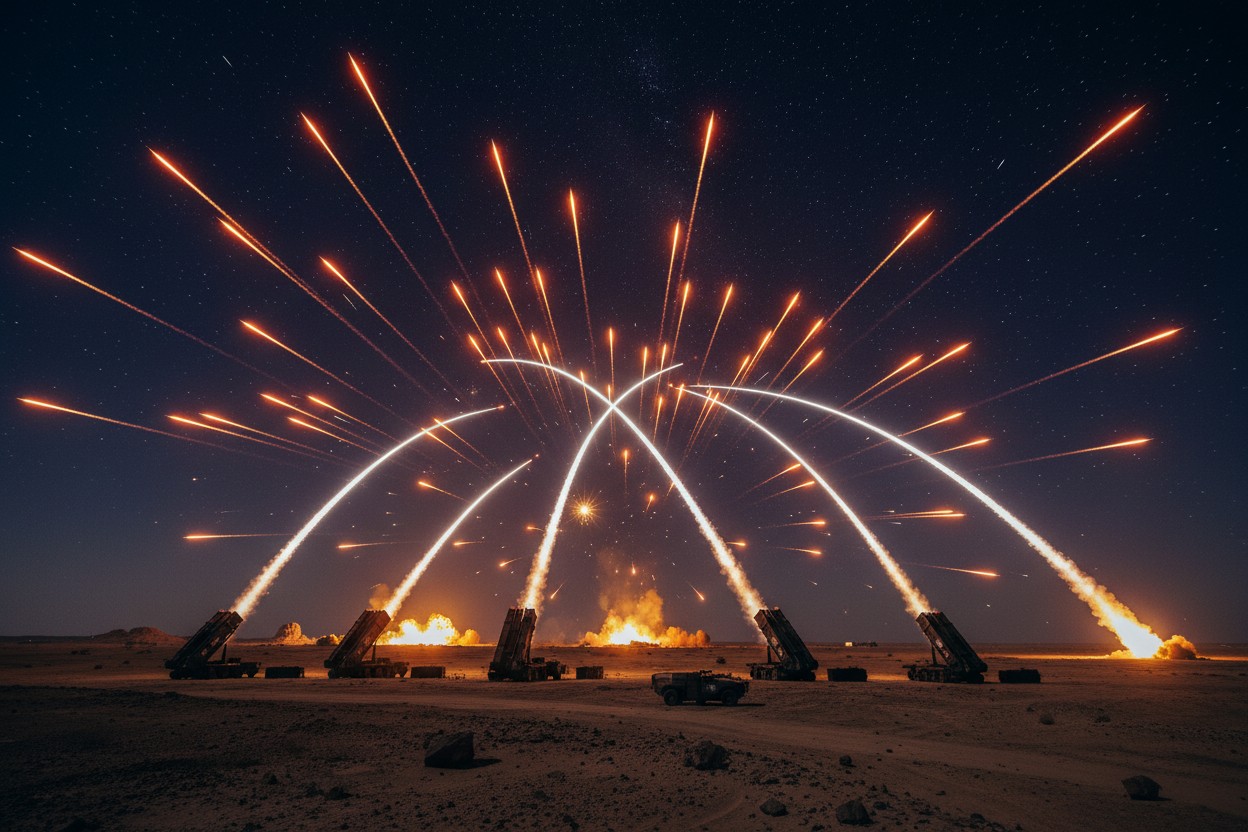
Two U.S. service members were killed and one remains missing following an Iranian missile and drone strike on a military base in Jordan on July 17, the Department of War reported on Saturday, July 18. Anonymous officials cited by multiple media outlets said the attack demonstrates that Iranian forces have adapted to U.S. air defense systems and retain ample missile stocks.
The Wall Street Journal (WSJ) reported that the Iranian military “has adapted to US defenses, firing missiles that travel at extremely high speeds and can maneuver as they streak toward the Earth,” according to officials who spoke on condition of anonymity. The New York Times (NYT) described the strike as a sign that Iranian forces “have also become more adept at evading U.S. air defense systems.”
Attack Details and Pentagon Confirmation
U.S. Central Command (CENTCOM) confirmed that two American service members were killed and one is unaccounted for after a ballistic missile and kamikaze drone barrage on a military installation in Jordan. The Islamic Revolutionary Guard Corps (IRGC) claimed its forces destroyed at least two U.S. fighter jets and three other aircraft at an American base in Al-Azraq, Jordan.
NYT, citing anonymous officials, reported that U.S. personnel in Jordan had come under Iranian missile and UAV attacks at least three times earlier in the week, leaving dozens of service members injured and damaging a significant number of Blackhawk helicopters. Separately, a U.S. service member was killed in action in northern Iraq, CENTCOM announced, according to 100PercentFedUp [1]. The United States has launched eight consecutive nights of strikes against Iran in response, with CENTCOM stating the operations are intended to “punish” the IRGC for the deadly Jordan attack, as the Times of Israel [2] reported.
Assessment of Iranian Missile Capabilities
Iran’s evolving tactics pose a growing challenge to U.S. air defenses, according to officials and analysts. The WSJ reported that Iranian missiles now travel at extremely high speeds and can maneuver during terminal descent, making interception more difficult. NYT meanwhile noted that the latest retaliatory strikes indicate Iran retains ample missile stocks and has improved its ability to evade U.S. systems.
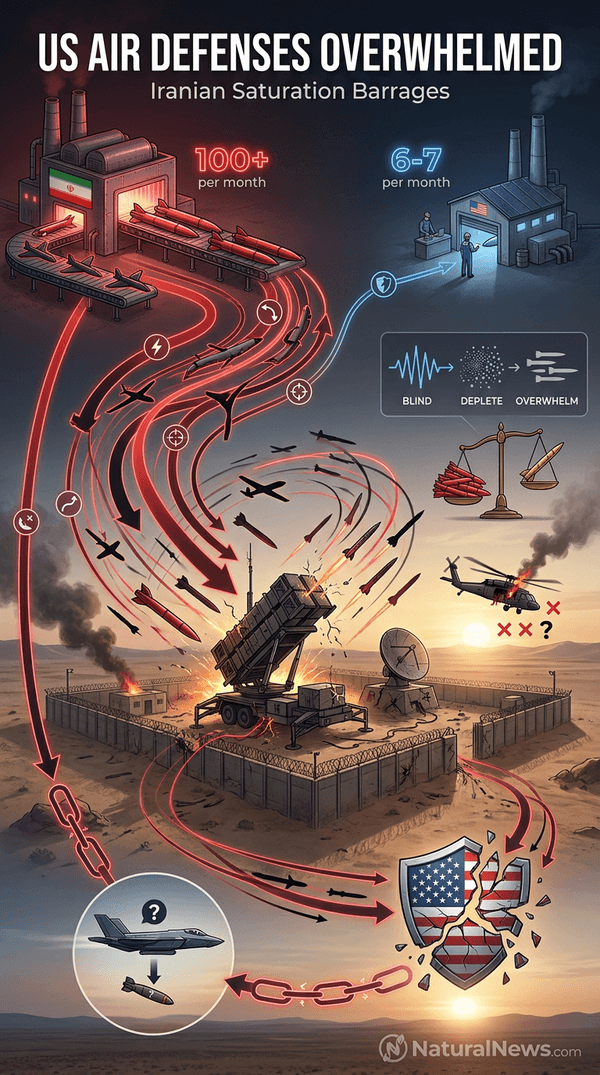
President Donald Trump previously claimed that Iranian missile capabilities had been degraded to 21% of pre-war levels, but recent events contradict that assessment, according to anonymous officials. Iran’s strategy [3] follows a calculated plan to “blind, deplete, and overwhelm” U.S. defenses through saturation barrages. On Feb. 28, 2026, Tehran launched approximately 650 ballistic missiles at Israel in a single salvo, exposing critical gaps in Israel’s multi-layered air defense systems [4].
The United States is also facing a critical shortage of air defense interceptors; as the Health Ranger Mike Adams [5] notes, Iran can produce over 100 ballistic missiles monthly while U.S. interceptor manufacturing capacity stands at just six to seven units per month. Andrei Martyanov, author of “Disintegration: Indicators of the Coming American Collapse,” has argued that the U.S. military has not achieved a war’s political objectives since World War II, a theme echoed by the current depletion of munitions [6].
Broader Context of U.S.-Iran Tensions
The recent strikes follow the collapse of a ceasefire agreed in June under the Islamabad Memorandum of Understanding. Iranian Deputy Foreign Minister Kazem Gharibabadi announced that Iran had suspended its commitments under the 60-day truce.
Trump declared the ceasefire “over” earlier in July. Washington and Tehran have exchanged fire nearly daily since July 7, with the U.S. launching strikes aimed at degrading Iranian capabilities to attack shipping in the Strait of Hormuz, as the Times of Israel [7] reported. Iran has retaliated by targeting U.S. allies in the region, including Kuwait, Bahrain, Qatar, and Jordan.
The War Department had moved troops from the United Arab Emirates and Qatar to Jordan and Israel before the campaign began in late February [3]. Iran’s integration of China’s Beidou satellite navigation system has further enhanced its precision strike capabilities, a game-changer in the conflict, per ZeroHedge [8]. As the war drains resources, the U.S. military faces a “strategic failure” despite tactical successes, according to critics [9].
References
- "JUST IN: U.S. Service Member Killed In Northern Iraq, CENTCOM Announces". 100percentfedup.com. July 19, 2026.
- "US launches 8th night of strikes on Iran to ‘punish’ IRGC for deadly Jordan attack". Times of Israel. July 19, 2026.
- "Iran's War Strategy: Blind, Deplete, and Overwhelm - The Calculated Plan to Render U.S. Defenses Obsolete". NaturalNews.com. March 02, 2026.
- "Upgrade Imminent: Iran’s Missile Saturation Exposes Critical Gaps in Israel’s Iron Dome". shtfplan.com. July 03, 2026.
- Mike Adams. "Health Ranger Report - U.S. RUNNING OUT OF MUNITIONS!". BrightVideos.com. March 03, 2026.
- Andrei Martyanov. "Disintegration Indicators of the Coming American Collapse".
- "US carries out fresh wave of strikes on Iran, insists Tehran doesn’t control Strait". Times of Israel. July 13, 2026.
- "Iran's Reliance On China's Beidou Satellite System Is A Game-Changer In War With US". ZeroHedge. July 19, 2026.
- "Trump’s illegal war against Iran RESUMES, burdening Americans and draining military resources". NaturalNews.com. July 15, 2026.
- Patrick Lewis. "Trump Escalates Military Strikes Against Iran: B-1 Bombers Target Ballistic Missile Systems". NaturalNews.com. March 03, 2026.
- Robert M. Gates. "Duty: Memoirs of a Secretary at War".
Explainer Infographic











Please contact us for more information.