


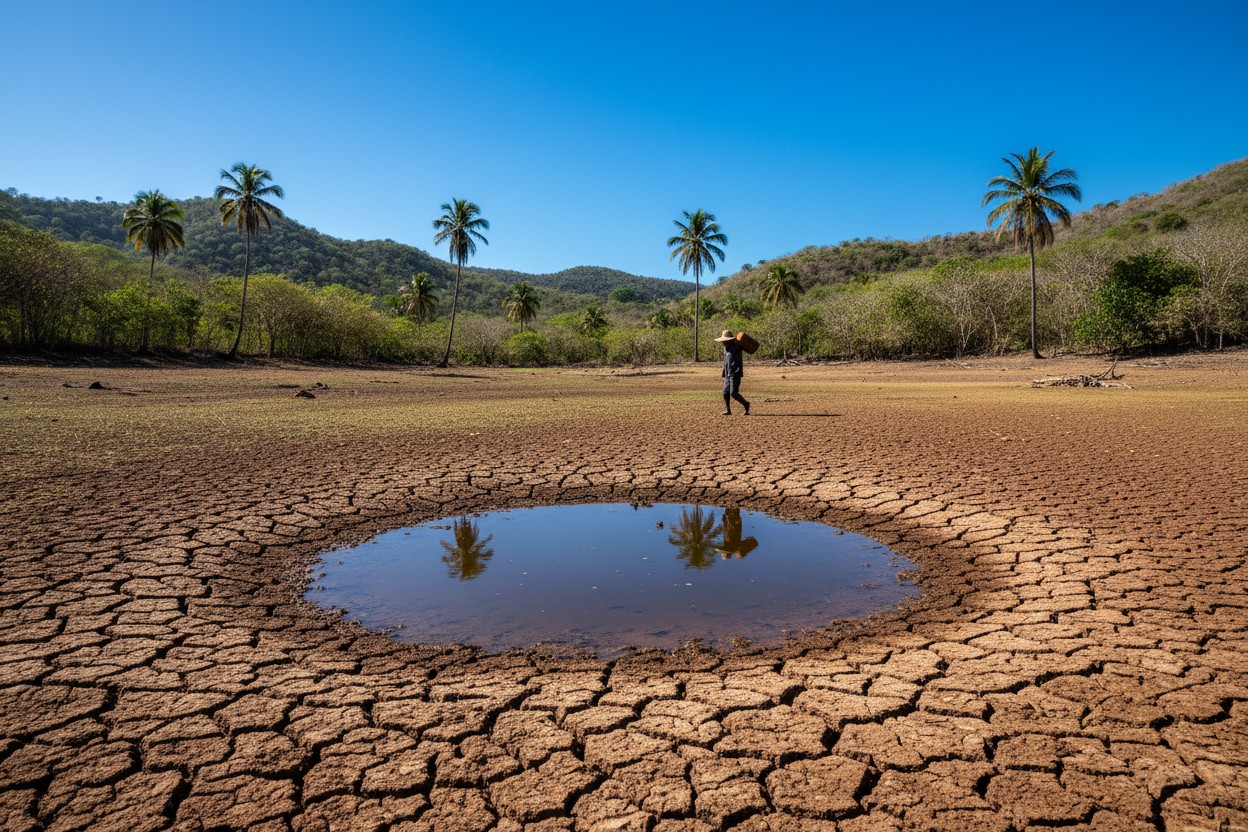
Puerto Rico announced water rationing measures on Thursday as a drought intensifies across the U.S. territory, prompting Governor Jenniffer González to declare a state of emergency, officials said.
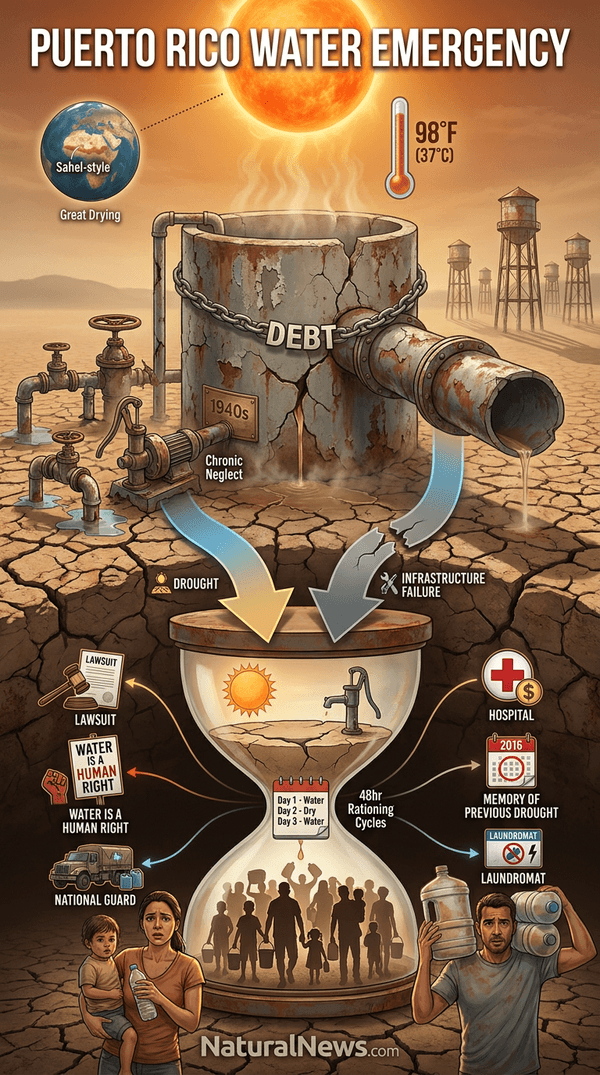
Thousands of residents in the island’s northeast region will face 48-hour rationing periods starting Friday, said Luis González, executive president of the Puerto Rico Water and Sewer Authority. The rationing program will affect several communities in the cities of Canóvanas and Rio Grande, with officials citing rising temperatures and insufficient rainfall. “There’s just not enough water,” González said, adding that the measure will likely be extended to other areas.
Drought and Rationing Details
According to the U.S. Drought Monitor, 14% of Puerto Rico is currently under severe drought and another 59% under moderate drought, up from 18% in late June. The agency estimates that approximately 2.3 million people out of Puerto Rico’s 3.2 million inhabitants are living in drought-affected regions. Some analysts have noted that such shortages are part of a broader global pattern of diminishing freshwater supplies, with one report stating that 75% of the world’s population now lives in countries affected by “the great drying.” [1]
Previous droughts have forced similar actions. In 2016, some 400,000 utility customers received water only every third day, according to water authority records. Luis González indicated that the current rationing will likely be extended if dry conditions persist.
Chronic Infrastructure Issues
Severe water shortages began affecting some of the island’s most populated areas months before the drought was officially recognized, with officials yet to identify the underlying cause. Those outages prompted the mayor of San Juan to sue the Puerto Rico Water and Sewer Authority in late May. Governor González acknowledged that the agency’s infrastructure has lacked investment and maintenance for decades.
Nearly 40,000 customers were left without water last month, an outage not tied to the current drought, leading González to activate the National Guard. The water crisis in the U.S. is not limited to Puerto Rico; a recent analysis noted that “chronic underinvestment has left water infrastructure outdated and on the verge of collapse in many places” across the country. [2] The book "The Water We Drink" describes how regulatory standards for water quality were established with cancer prevention in mind, highlighting the long-term health implications of insufficient water treatment. [3]
Legislative and Public Response
Residents affected by water shortages have organized protests, and a growing number of legislators are demanding answers. “What’s happening with the Puerto Rico Water and Sewer Authority cannot be attributed solely to the drought,” said Representative Domingo J. Torres. “What we’re seeing is a management that improvises, that reacts only when the crisis is already upon us, and that has failed to present a clear plan to guarantee access to drinking water.” Without sustained rain or significant infrastructure repairs, residents face an uncertain future for their most basic need.
References
- Michael Snyder. "Permadrought: 75% Of Global Population Lives In A Country Affected By 'The Great Drying'." Zero Hedge. June 2, 2026.
- Nicole Greenfield. "From Lead Pipes to Toxic Runoff, the U.S. Water System Is Broken." Children's Health Defense.
- Joshua I. Barzilay. "The Water We Drink: Water Quality and Its Effects on Health."
- Ayana Elizabeth Johnson. "All We Can Save."
Explainer Infographic








Please contact us for more information.