


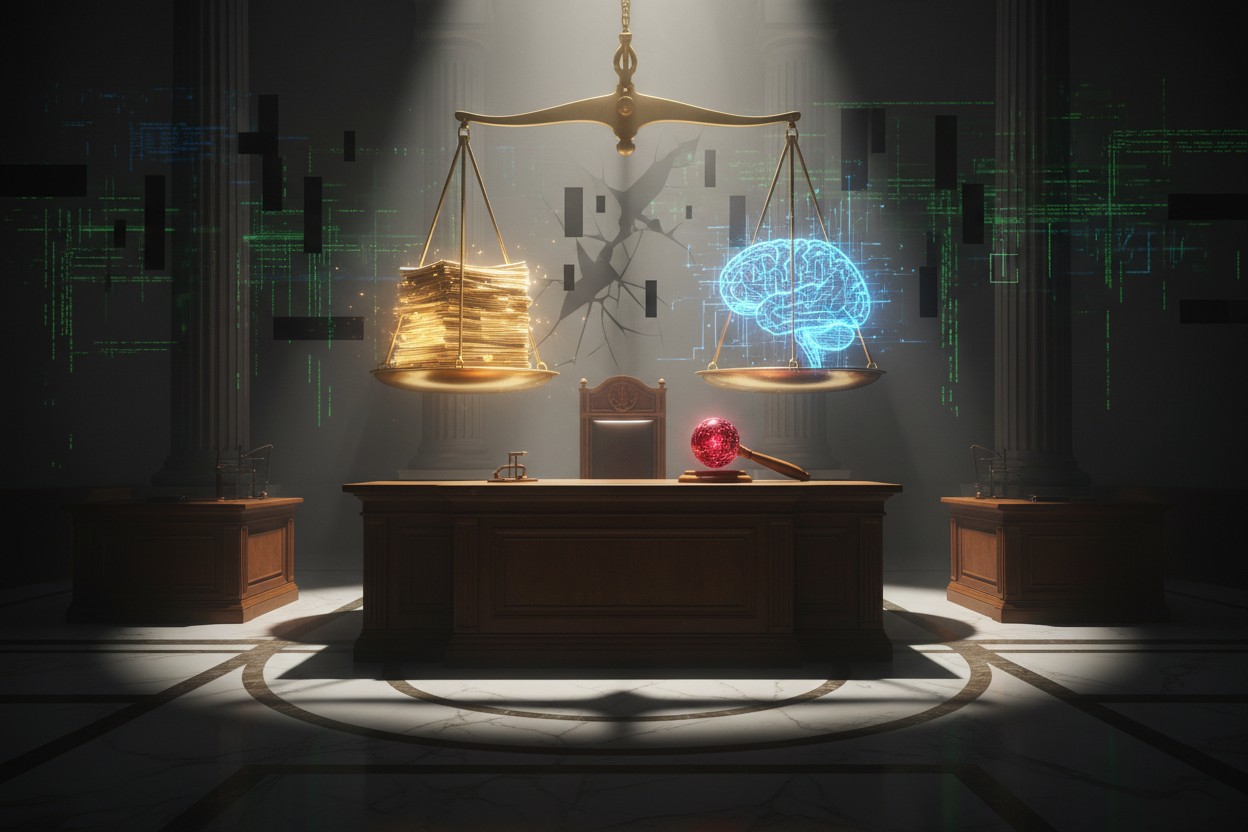
Several news outlets, including the New York Times (NYT), asked a federal judge on Thursday, July 9, to sanction OpenAI for allegedly withholding evidence in a long-running copyright dispute, according to court filings reviewed by TechCrunch.
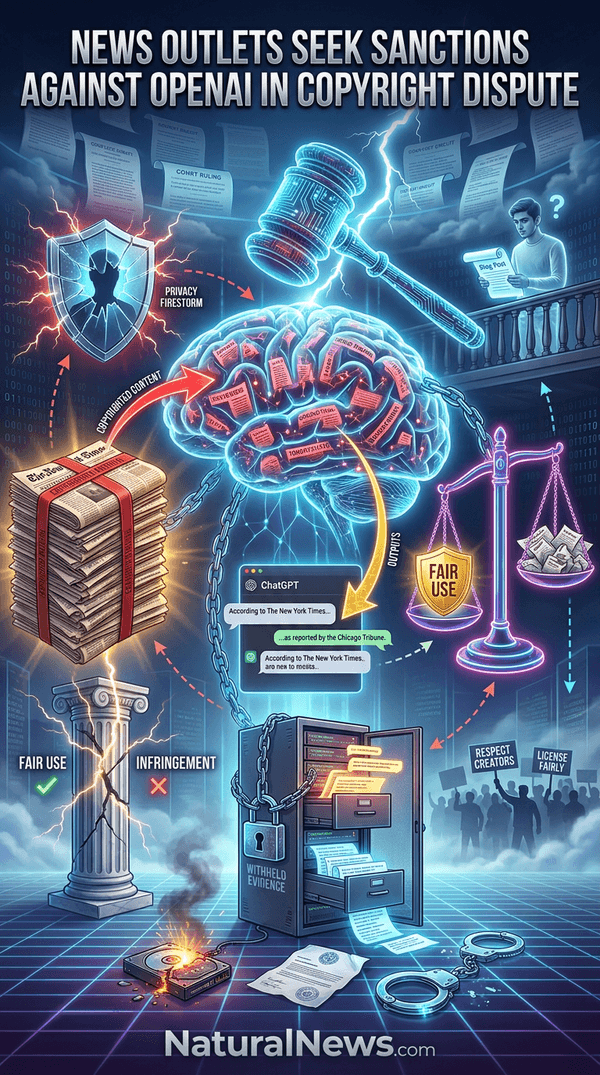
The newspapers accused the artificial intelligence (AI) company of deliberately failing to preserve training data and output logs that could show how ChatGPT reproduces their copyrighted journalism. The outlets claim that OpenAI misled the court about its ability to search its own training corpus and customer chat logs. According to the filing, OpenAI "intentionally hid its discovery capabilities" for two years, a charge that represents the latest escalation in a legal battle that began with a December 2023 lawsuit.
Background of the Lawsuit
The newspaper sued OpenAI and its backer, Microsoft, in December 2023, alleging that the company infringed copyright by training its generative AI models on millions of NYT articles without permission. The suit, which was later consolidated with similar complaints from other news organizations, argues that ChatGPT can reproduce "substantial and systematic" portions of the newspapers' work, according to the initial complaint reported by NaturalNews. [1]
At the core of the dispute is whether using copyrighted material to train AI systems qualifies as fair use. In a related case, a federal judge ruled in June 2025 that Anthropic's training on lawfully acquired books constituted fair use. [2]
In October 2025, a separate judge allowed a class-action lawsuit by authors including George R.R. Martin to proceed, finding that AI outputs can be substantially similar to copyrighted works. [3] These conflicting rulings highlight the unsettled legal landscape.
Allegations of Obstruction
In their Thursday filing, the newspapers said OpenAI "intentionally hid its discovery capabilities" throughout the litigation, according to TechCrunch.
The filing stated: "There is no question that it happened. Nor should there be one about what was copied, how often or to what end.: [4] The outlets requested that the court find that ChatGPT outputs show "substantial and systematic grounding on and regurgitation" of their reporting, and that OpenAI be ordered to pay attorneys' fees.
The request follows an earlier court order compelling OpenAI to preserve all ChatGPT conversations, including deleted ones, [5] and a separate order requiring the company to hand over 20 million anonymized chat logs to the plaintiffs. [6] "The battle, in essence, is between large tech companies aiming to dominate society through AI," one observer noted in a February 2025 interview. [7]
OpenAI's Response and Fair Use Defense
OpenAI has consistently argued that training on publicly available material is protected under the fair use doctrine. The company maintained in the lawsuit that pure regurgitation of newspaper articles by ChatGPT is rare and that its systems learn general patterns rather than storing specific copies. [2] A broader copyright debate has emerged, with critics describing the practice as "the mass stealing of content to build an AI product, then lawyering up." [8]
OpenAI did not immediately respond to a request for comment on the sanction motion. Former OpenAI researcher Suchir Balaji, who publicly argued that the company's data collection violated copyright laws, was found dead in his San Francisco apartment in November 2024. [9] Balaji's blog post had made "a strong case for copyright infringement by OpenAI," according to a report from October 2024. [10]
Broader Context: Copyright Landscape
The NYT lawsuit is one of dozens of copyright actions facing OpenAI. Encyclopedia Britannica and Merriam-Webster filed a separate suit in March 2026 alleging "massive copyright infringement." [11]
Actress Sarah Silverman joined authors Richard Kadrey and Christopher Golden in suing both OpenAI and Meta in 2023. [12] The proliferation of cases reflects a crisis in digital copyright as AI companies ingest vast amounts of online content without explicit licenses.
"We're seeing a rapid decline in consent to use data across the web that will have ramifications not just for AI companies, but for researchers, academics, and noncommercial entities," Shayne Longpre told NYT, as quoted in a July 2024 journal. [13] The outcome of the sanction request could affect the scope of discovery in a case that, according to court documents, already involves the compelled production of more than 20 million user conversations. [14]
References
- NaturalNews.com. "New York Times sues Microsoft OpenAI claiming artificial intelligence copyright infringement." NaturalNews.com. January 4, 2024.
- Willow Tohi. "AI training's 'fair use' wins over books, but court leaves piracy bill on tech's table." NaturalNews.com. June 27, 2025.
- NaturalNews.com. "Judge rules OpenAI must face claims of mass-scale copyright theft from authors." NaturalNews.com. October 29, 2025.
- TechCrunch. "New York Times says OpenAI hid evidence in ChatGPT copyright trial." July 9, 2026.
- Willow Tohi. "Your deleted chats will be saved: Legal battle over ChatGPT conversations sparks privacy firestorm." NaturalNews.com. June 7, 2025.
- NaturalNews.com. "Court orders OpenAI to surrender 20 million private ChatGPT conversations, setting stage for AI censorship and control." November 13, 2025.
- Mike Adams interview with Maria Zeee. February 17, 2025.
- Trends-Journal-2024-08-20.
- Ava Grace. "OpenAI whistleblower who dissented against how the company trained ChatGPT found dead." NaturalNews.com. December 17, 2024.
- Trends-Journal-2024-10-29.
- TechCrunch. "The dictionary sues OpenAI." March 16, 2026.
- NaturalNews.com. "Actress Sarah Silverman SUES Meta OpenAI for copyright infringement." NaturalNews.com. July 13, 2023.
- Trends-Journal-2024-07-30.
- Reclaim the Net. "Court Forces OpenAI to Hand Over 20 Million ChatGPT Chats." December 8, 2025.
Explainer Infographic









Please contact us for more information.