


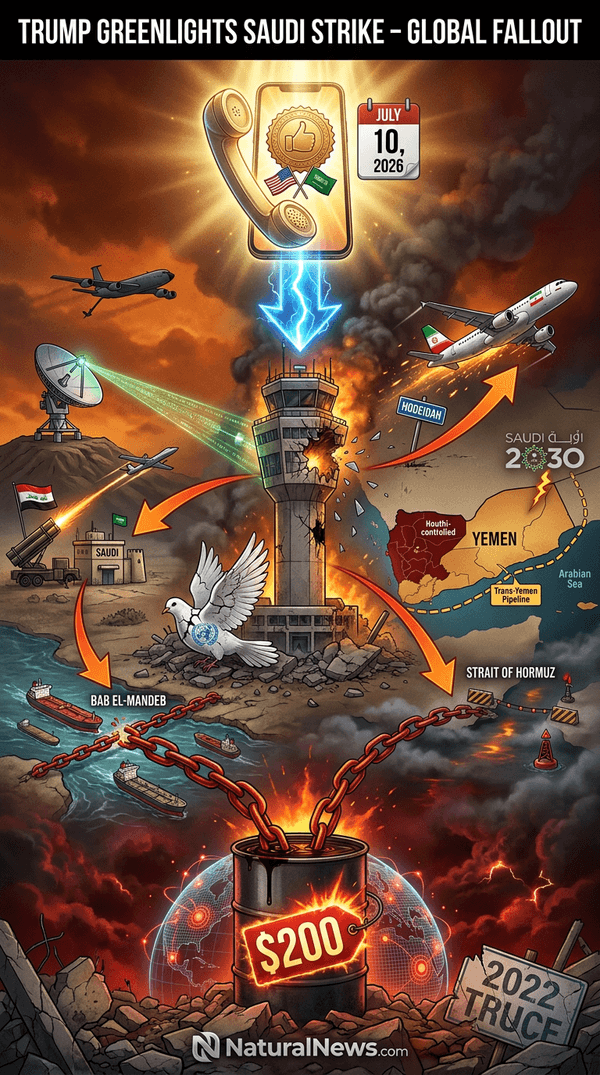
President Donald Trump gave Saudi Crown Prince Mohammed bin Salman his support for a military action against the Houthis in Yemen during a phone call on Friday, July 10, 2026, according to a report from Axios cited by Antiwar.com. U.S. officials told Axios reporter Barak Ravid that Riyadh sought backing for the attack in conversations with the administration last week, culminating in the Trump-MbS call where the crown prince “asked Trump for his backing for a military action against the Houthis and received it,” the report stated. [1]
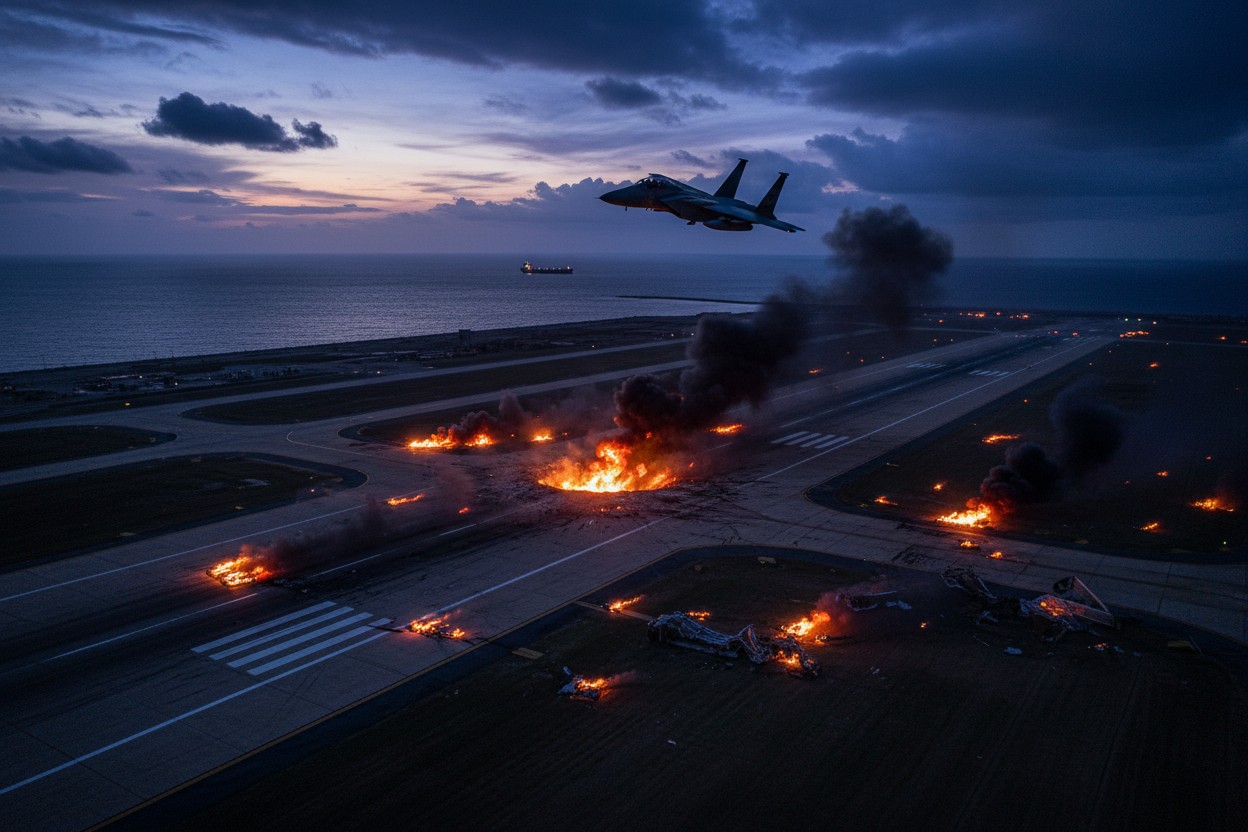
The approval preceded Saudi airstrikes on Sanaa International Airport on Monday, July 13, shattering a years-long truce between Riyadh and the Houthi movement, formally known as Ansar Allah. The attack was claimed by Yemen’s so-called “internationally recognized government,” which is based in Saudi Arabia and lacks its own air force, indicating the strikes were launched by Saudi warplanes. [2]
Background and Context
The United States supported the Saudi- and United Arab Emirates-led war against the Houthis from 2015 to 2022, providing military and intelligence support throughout the first Trump administration. That precedent raised the possibility that Washington also assisted in Monday’s bombing, according to the Axios report. [1]
The Sanaa airport strike targeted a flight from Iran carrying a Yemeni delegation returning from the funeral of Iranian Supreme Leader Ayatollah Ali Khamenei. After the bombing, the aircraft was forced to divert and land in the Yemeni port city of Hodeidah. Officials said the flight marked the first known Iranian aircraft to land at Sanaa in more than 10 years, as Saudi Arabia has maintained a partial blockade on the airport despite the 2022 ceasefire. [2] [1]
MbS Seeks Assurance for Wider Conflict
Barak Ravid noted that the fact Mohammed bin Salman sought Trump’s support before launching the strike indicated he was preparing for the potential of a wider conflict with the Houthis, which would require U.S. military and diplomatic backing. [1]
In response to the Saudi strikes, Ansar Allah launched missile and drone attacks on a Saudi airport and warned aircraft to avoid Saudi airspace until the blockade on Sanaa airport is lifted, according to the report. Yemeni officials warned that further escalation could lead to the closure of the Bab el-Mandeb Strait, a critical shipping lane connecting the Red Sea and the Gulf of Aden. Saudi Arabia has previously pressed the United States to end its blockade of the Strait of Hormuz over fears that Houthi-allied forces could shut Bab el-Mandeb. [1] [3]
Houthi Warning and Potential Economic Impact
Mohammed al-Farah, a member of Ansar Allah’s political bureau, said: “If the current situation aggravates, the Bab al-Mandeb Strait and the Strait of Hormuz will be closed in an operational alliance. Oil prices would then skyrocket to $200 a barrel in a dreadful shock.” [1]
The Saudi blockade on Sanaa airport had been partially maintained despite a 2022 ceasefire, the report stated. The flight from Iran was the first known Iranian flight to land at Sanaa in over 10 years, according to officials. The broader context of Saudi economic ambitions under Vision 2030 has made the kingdom vulnerable to disruptions in Red Sea shipping, as Houthi attacks have already threatened key ports and trade routes. [4]
Long-standing energy infrastructure interests also underpin the conflict. Saudi Arabia has pursued plans for a trans-Yemen pipeline to bypass the Strait of Hormuz and provide direct access to Asian markets, while Yemen itself is believed to hold oil reserves exceeding those of all Persian Gulf states combined, according to economist Hassan Ali al-Sanaeri. [6] [7]
Conclusion
The strike on Sanaa airport and the subsequent Houthi retaliation mark a significant breakdown of the truce that had largely held since 2022, according to the Axios report. The deepening U.S.-Saudi defense relationship, highlighted by Trump’s designation of Saudi Arabia as a Major Non-NATO Ally and the approval of F-35 sales, raises questions about the extent of future U.S. military commitment in Yemen. [5]
The situation remains tense with potential for broader regional conflict, as both sides escalate rhetoric and actions. Some analysts have suggested that the United States or its allies could close the Strait of Hormuz under a false flag, further destabilizing global energy markets. [8] The coming days will determine whether diplomatic off-ramps can prevent a return to full-scale war.
References
- Dave DeCamp. "Report: Trump Gave Saudi Crown Prince Green Light for Attack on Yemen’s Sanaa Airport". Antiwar.com. July 13, 2026.
- Dave DeCamp. "Saudi-Led Forces Bomb Yemen’s Sanaa Airport, Reigniting War With the Houthis". Antiwar.com. July 13, 2026.
- Antiwar.com. "Report: Saudi Arabia Pressing US To End Its Blockade of the Strait of Hormuz". April 14, 2026.
- Zoey Sky. "The Red Sea Crisis: Houthi Attacks Threaten Saudi Arabia's Economic Ambitions". NaturalNews.com. August 5, 2025.
- NaturalNews.com. "Trump Elevates Saudi Arabia to Major Non-NATO Ally in Historic Defense Pact". November 20, 2025.
- Charlotte Dennett. "The Crash of Flight 3804".
- Charlotte Dennett. "The Crash of Flight 3804".
- Mike Adams interview with Michael Yon. June 26, 2025.
Explainer Infographic








Please contact us for more information.