


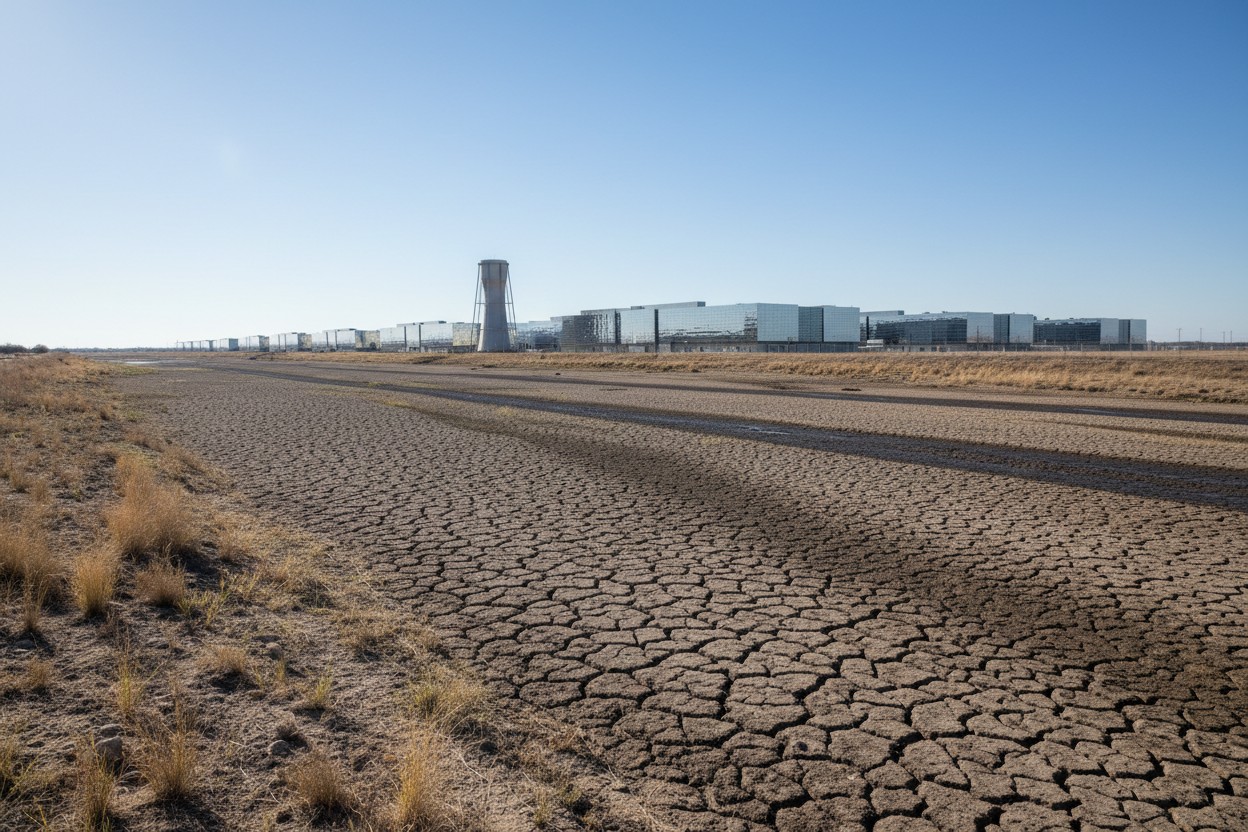
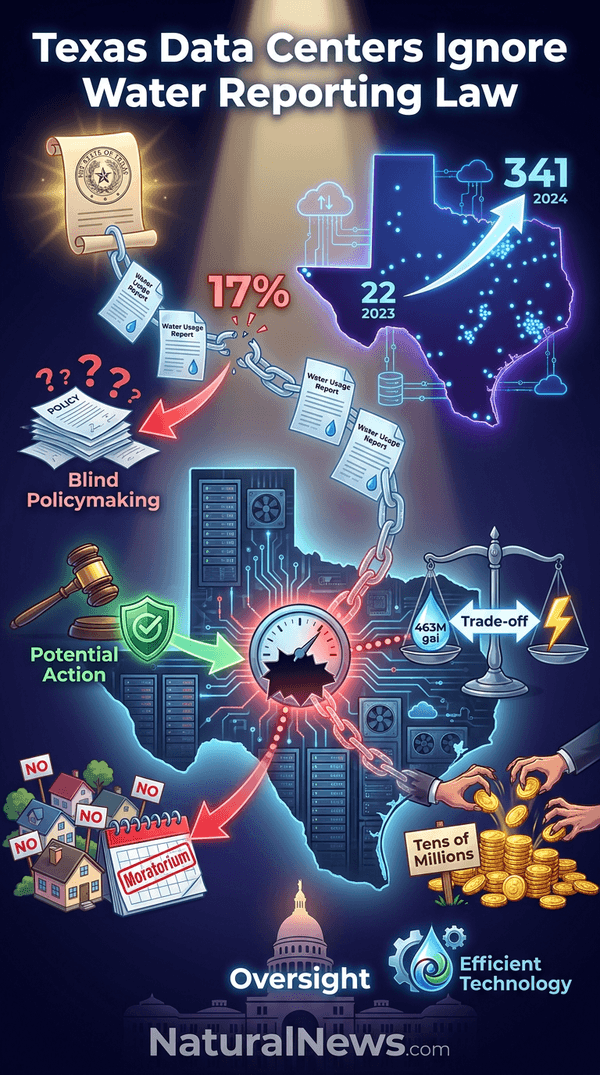
Only 17% of the 341 data centers operating in Texas responded to a survey from the Texas Water Development Board (TWDB) last year, according to officials who testified at a state House committee hearing June 23.
Temple McKinnon, the agency's water supply planning director, told lawmakers that the companies were required by law to respond, but the state agency lacks enforcement power to compel them to do so.
State Rep. Cody Harris (R-Palestine), chairman of the Texas House Natural Resources Committee, indicated that the attorney general's office could take up enforcement. "Transparency of utilization of resources shouldn’t be optional," Harris said during the hearing.
The disclosure requirement was established under state law, but data center operators have largely ignored it, angering lawmakers who say they need the data to craft water supply policies.
Rapid Growth and Lack of Data Complicate Water Planning
The number of data centers in Texas grew from 22 in 2023 to 341 in 2024, McKinnon said. According to an analysis by Cleanview reported by Just the News, the state had 84 operating data centers and 140 planned projects as of April 2026 [1].
Despite this rapid expansion, the draft 2027 State Water Plan currently excludes demand from the water-intensive facilities, McKinnon added.
State Rep. Brad Buckley (R-Bell County) called the 17% response rate "terrible." He said the lack of comprehensive data "leaves us blind in terms of building policy."
Lawmakers expressed frustration that they are crafting a statewide water plan based on only a fraction of the required information. The hearing came as new polling from the University of Texas at Austin found that a majority of Texans do not want data centers built in their communities.
Industry Cites Trade-Offs Between Water and Energy Use
Dan Diorio, vice president of state policy for the Data Center Coalition, told lawmakers there is no one-size-fits-all solution for cooling data centers. He noted the inverse relationship between water and energy use: water-intensive cooling methods typically require less energy, and vice versa.
Beau Schilz from Amazon Web Services stated that if data centers could not use water for cooling, they would consume about 14% more power on average, translating into "hundreds of millions of gallons" of water use elsewhere.
Buckley countered that the industry's failure to report water usage makes it impossible for policymakers to evaluate those trade-offs. "I can't think of a better way to get a one-size-fits-all approach than not reporting your water usage," he said during the hearing [8].
The water used by data centers primarily goes to cooling servers, a process that accounts for the bulk of water consumption at these facilities. According to the TWDB, data centers in Central Texas alone consumed 463 million gallons of water in 2023-2024, enough for thousands of households [2].
Local Officials Seek Authority to Regulate Data Centers
County officials from rural areas pleaded with lawmakers for greater regulatory authority over data center construction, which is concentrated in unincorporated parts of the state.
Hoppy Haden, the county judge in Caldwell County, said the county has "very little statutory ability to control development" and has been forced to offer tax abatements to gain some leverage through development agreements. He estimated the abatements have cost the county "tens of millions" of dollars in tax revenue.
Shawn Nanny, a county commissioner from Tom Green County, said more than 500 residents in his precinct had joined an anti-data center coalition. "These people are organized and driven," Nanny said. "I’ve heard it said that data centers are a matter of national security. What about the security of our homes, families, livelihood, and our safety?"
Texas Gov. Greg Abbott has called for new state oversight, including requiring water-efficient technologies in new data centers and annual water use reporting. Meanwhile, some communities are taking action, with Hill County approving a one-year moratorium on new data center construction [3].
Legislators Vow to Pursue Enforcement and Transparency
More than 100 people signed up to testify at the June 23 hearing, reflecting the intense backlash to the data center boom across Texas. Lawmakers from both parties indicated they would push for stronger enforcement of the existing law.
Harris said he would consider referring the noncompliance to the attorney general’s office.
A separate survey by the Public Utilities Commission, which was voluntary, received responses from only 28 companies representing 92 facilities, Chris Brown, the PUC's program manager for data analysis, told the committee.
State Rep. Trent Ashby (R-Lufkin), who is running for the Texas Senate, noted that the issue has overtaken property tax relief as the top concern among voters. The commission plans to continue pursuing mandatory reporting requirements.
The lack of transparency extends beyond the state level; a national poll by Milltown Partners found that more than 90% of voters who oppose data centers do not live near one, suggesting broader concerns about the resource demands of artificial intelligence (AI) infrastructure [4].
Texas lawmakers said they intend to close the enforcement gap before the next legislative session.
References
- Just the News. "Maps highlight 140 planned data centers in Texas." April 13, 2026.
- Mike Adams. "Brighteon Broadcast News - HUGE MISTAKE." Brighteon.com. August 1, 2025.
- 100PercentFedUp.com. "County In Red State Approves One-Year Moratorium On Construction Of New Data Centers." May 13, 2026.
- Just the News. "Poll: More than 90% of voters opposing data centers don't live near them." June 22, 2026.
- Petra Stone. "Mayors Sound Alarm: AI Data Centers Push U.S. Toward Blackouts and Water Shortages." NaturalNews.com. March 18, 2026.
- NaturalNews.com. "Big Tech has a growing appetite for Americas electricity and water resources." April 28, 2024.
Richard B. Alley. "Earth the operators manual."
- Julian Thornton. "Water loss control manual."
- News.UTexas.edu. "Texas law requires data centers to report water usage. Most aren't complying.". June 24, 2026
- HoustonChronicle.com. "Data Centers Are Growing in Texas, But Big Questions Remain About Water Use". May 6, 2026.
Explainer Infographic









Please contact us for more information.