


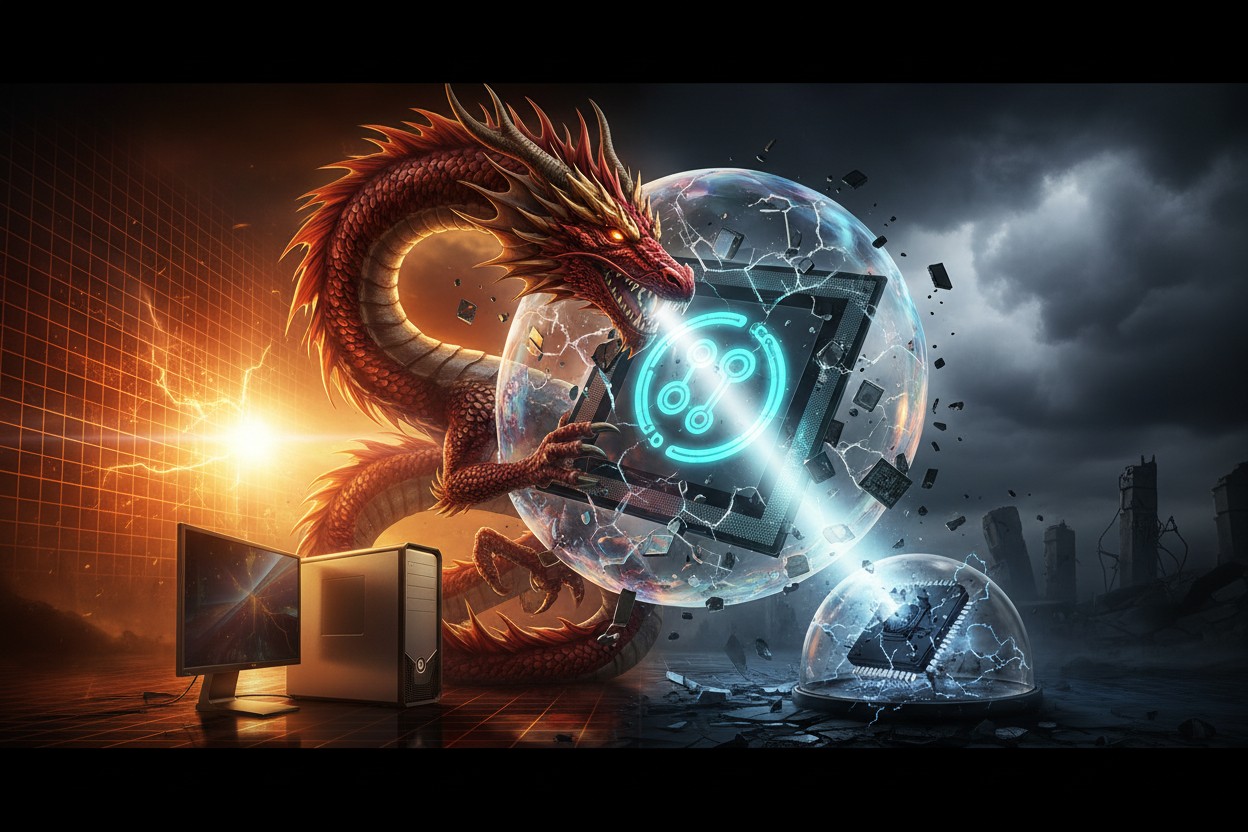
I am an accomplished AI platform developer. I've used all the popular models, and I run a 48-workstation mini data center with various GPUs, running open source models for a variety of tasks. I'm here to tell you that, without question, China's open source models are going to crush the U.S. AI industry, leading sooner or later to a stock valuation collapse as it sinks in that nobody will consistently pay for AI inference from U.S. companies when they can receive nearly the exact same level of capability and intelligence from China's models at either ZERO cost (download the models and run them yourself), or at a tiny fraction of the cost of U.S. models (typically from 1/50th to 1/100th the cost of U.S. models).
In response to this, U.S. AI companies are dramatically raising their prices and switching customer plans to per-token pricing in order to maximize their own revenues. This is only going to work against them and will lead to a mass exodus away from U.S. AI companies. In fact, that exodus has already begun (see below).
But there's something else that's critical to understand here.
You can easily download the open weights of China's frontier AI models like DeepSeek V4, GLM 2.5, etc. But unless you have access to very expensive server hardware costing hundreds of thousands of dollars, you can't run those models locally.
256GB AI Inference Systems Are Coming to the Desktop
In 2027, however, that picture changes dramatically. AMD has announced it will launch "Gorgon Halo" (a revamped Strix Halo) with 192GB of unified memory (160GB can be used as VRAM).
Apple has its "Apple Mac Studio (M3 Ultra) with up to 512GB of unified memory (at 819GB/s memory bandwidth, which is respectable). Unfortunately, due to the global RAM shortage, Apple pulled the 512GB version off the market and now sells a max memory configuration of 256GB (which is still a lot for unified RAM).
Even more interestingly, in 2027, AMD will be rolling out "Medusa Halo" with a rumored 256GB of VRAM and over 512GB/s memory bandwidth). This one will run on LPDDR6 high bandwidth memory, which is scarce and expensive, so these systems won't be cheap, but they'll still be a fraction of the cost of today's Nvidia server GPU setups.
Helping to pry inference shops away from NVIDIA hardware, AMD fractured NVIDIA's CUDA moat by releasing its "ROCm" stack, which replaces CUDA with open source software that allows GPU computing on AMD silicon. It is fully compatible with PyTorch and has already been adopted by Ollama and vLLM (two popular AI inference software providers). No word yet from LM Studio.
At 256GB of local VRAM, you'd be able to run very capable coding models like Qwen3-Coder-480B-A35B. You could even squeeze GLM 5.2 into the system in a 2-bit quant, and I'd imagine that the clever folks at Unsloth are going to come up with even more creative ways to run large models on medium-sized hardware using things like selective layer offloading or advanced pruning algos.
With 256GB, you could easily run MiniMax-M1, or GLM 4.6, or a huge number of other models. And thanks to KV cache compression techniques that keep improving, you no longer need to reserve a huge amount of GPU VRAM for context (meaning the prompt itself plus whatever you provide the model along with the prompt, such as research documents or RAG). DeepSeek was the first company to publish a science paper on this breakthrough, followed by Google a few months later, using a different technique.
And that's the other important point in all this: The best science on AI is now consistently originating in China, not the USA. Whether it's sparse attention algos on the inference side, KV cache compression or "manifold constrained hyper-connections" (mHC) on the model training side, the best breakthroughs in 2026 are no longer originating in America. Many are coming from China, and I predict that in 2027, China surpasses U.S. AI competency and never look back.
The upshot of all this is astounding: China will crush the U.S. AI market by making world-class machine cognition available for (nearly) free, while NVIDIA's competitors (like AMD or Apple) will ship the hardware that allows people to run those models on their own desks, at a fraction of the cost of buying NVIDIA server hardware.
Jensen Huang can announce all the high-end, expensive NVIDIA hardware he wants, but when the AI infrastructure investment bubble bursts, there won't be "other people's money" flowing out of the ground like an oil gusher to fund overpriced hardware. Post-bubble, AI inference hardware has to earn its keep. It has to make economic sense, in other words. And the high-end NVIDIA hardware no longer makes economic sense. (Prediction: Post-bubble, you'll be able to pick up NVIDIA GPUs for ten cents on the dollar...)
Back to the AI models and the extreme competition from China, this is also why Dario Amodei of Anthropic is begging the U.S. government for protectionism policies, claiming that open source is dangerous and needs to be banned. It's like 17th century European candle makers begging the government to outlaw glass windows, claiming they are a security threat.
But Amodei is too late. Hefty U.S. corporate giants are already switching to China's open source models. Coinbase now defaults to using GLM 5.2. Airbnb uses Qwen. Cursor was built using Kimi K2.5. Shopify uses Qwen3.
And of course, my own AI platforms like BrightLearn.ai rely on entirely open source models, along with a colossal, unique in-house index of hundreds of millions of research documents that were cleaned and repaired using open source AI models.
China's Power Grid Infrastructure Advantage
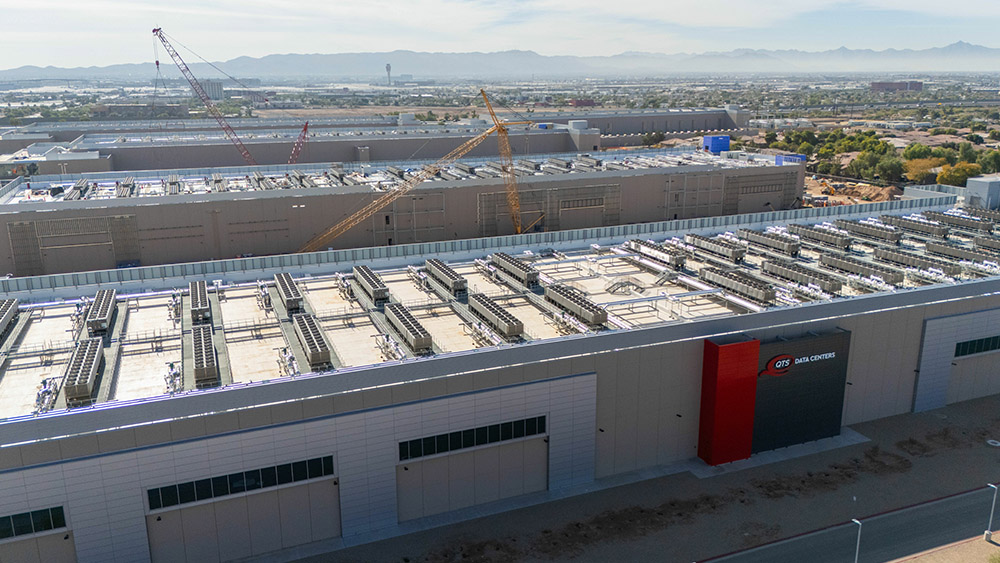
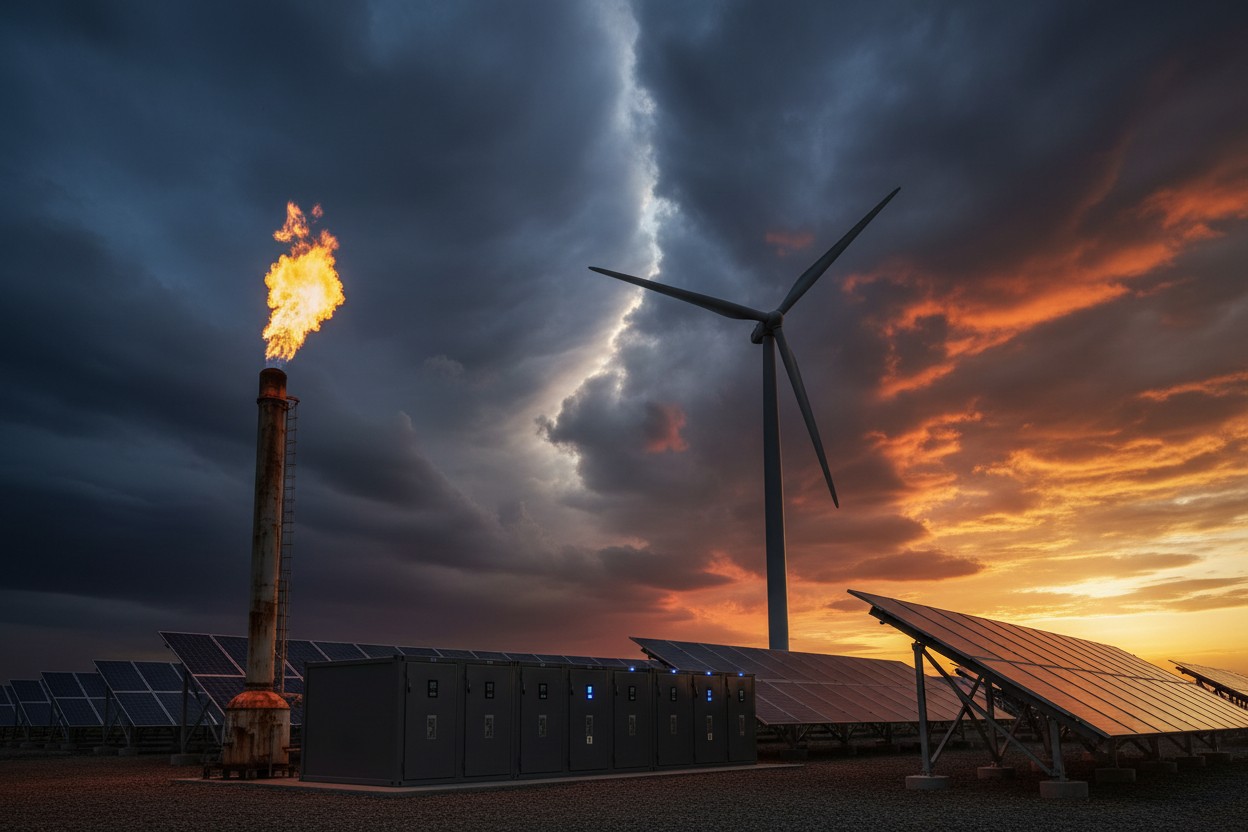
Even if you just consider the cost of cloud-based models, without running them locally, China has a key structural advantage in the fact that its national power grid is more than twice the size of the U.S. combined grids, and that China's power grid is more reliable, scalable and affordable. Electricity rates in Eastern U.S. states are approaching 30 cents / kWh, while in China, commercial users pay less than 12 cents / kWh. (And residential customers pay less than 8 cents.) This means China can build and operate large-scale inference data centers that vastly out-compete U.S. AI companies on a global scale.
It also means China can train models at far lower cost. And where China's lack of access to NVIDIA GPUs used to be an insurmountable barrier to entry, China's Huawei is mass producing microchips on such a scale that it doesn't matter if each individual chip is less powerful than an NVIDIA GPU. Just recently, Zhipu AI (creators of the remarkable GLM-5 family of models) announced it had trained its model end-to-end on 100% Huawei Ascend 910B processors, using no NVIDIA silicon at all.
Tests of GLM 5.2 by community experts show it to actually beat Anthropic's Opus 4.8 on real-world tasks, from coding full software applications to building user interfaces. It is arguably the strongest model yet to come out of China. (I'm actually a fan of DeepSeek-V4 and I use Qwen models every day for a variety of tasks, including their VL Vision Language models.)
In summary, China benefits from several key structural advantages over the USA:
1) One-third the electricity costs of the USA.
2) Open-ended scalability for building data centers.
3) Ability to train and fine-tune models on non-NVIDIA silicon.
4) A large number of highly competent mathematics and engineering graduates every year.
The USA, in contrast, has:
1) A White House that knows nothing about AI and spontaneously bans AI models from public use (such as Anthropic's Fable 5).
2) An Eastern power grid that's completely maxed out and cannot handle any more data centers added to the current loads.
3) A culture of secrecy and greed, rather than knowledge sharing, resulting in a lack of propagation of worthy ideas in the AI space.
4) A financialization cult that prioritizes IPOs and quick profits over building anything that endures over time.
This is why China is already winning the AI wars. And it's why the USA cannot win. It's a cultural fault. The USA is a culture of quick profits, investment schemes, IPO bubbles and public relations spin. None of those things result in stronger AI models, it turns out, and China simply has more engineers, more electricity, more microchip manufacturing capability, a better supply chain for hardware and a proven track record of innovation that repeatedly renders western technology irrelevant.
Outlawing the Models Won't Work
Even if Trump attempts to outlaw Chinese open source models, that action alone would crater the U.S. stock market because so many U.S. business giants already depend on Chinese AI models to cut costs and operate more efficiently. On top of that, any effort to ban Chinese AI models would be met with an instant flurry of First Amendment lawsuits, "Come And Take It" rebellion across the IT industry, and guerilla distribution networks cropping up everywhere.
Any such ban would also prove decisive for China's victory in the race to superintelligence, because taking China's open source models away from U.S. researchers would be like cutting off the arms of competitive tennis players and asking them to win the championship anyway. (Very difficult to serve the ball with your feet alone.)
So, in the end, the U.S. AI industry already screwed itself. And with high-screwage characters like Dario Amodei and Sam Altman currently driving a lot of U.S. government policy, we can rest assured that the beatings will continue until morale improves.
My final advice? Download every Chinese AI model you can from Hugging Face. Better yet, look for uncensored variations that are "abliterated" by dedicated users like Heretic, HuiHui, or Pliny the Liberator who is a world class jailbreaking expert whose knowledge also helps remove guardrails. (Personally, I run Qwen 3.6-27B-Heretic-Uncensored for a lot of tasks.) Keep these downloaded models safe while you wait for the hardware to get shipped that can run those models.
I'm the person who built BrightLearn.ai (the world's most popular book creation engine now serving 13,000+ authors with nearly 70,000 books, all free to download in multiple languages) and BrightAnswers.ai (our deep research AI engine trained on natural health, preparedness, true history, honest money, etc.)
All the AI tools I build are free to use and are open to the world. I believe in open source knowledge, bypassing government censorship and making knowledge free to everyone. Follow me on X at HealthRanger, and read my articles at NaturalNews.com
References
- The Abundance Doctrine: How China's Strategic Innovation Defeats U.S. Economic Strangulation - NaturalNews.com. Mike Adams. February 17, 2026.
- Why China Is Winning the AI Race and Why America May Never Catch Up - NaturalNews.com. March 22, 2026.
- Anthropic's Desperate Smear Campaign: A Pathetic Attempt to Hide China's AI Dominance - NaturalNews.com. Mike Adams. February 26, 2026.
- The U.S. Government Just Handed China the AI Race – Here's Why - NaturalNews.com. June 23, 2026.
- The Trump Administration is Now Restricting Frontier AI Use to Licensed Persons, Declaring War On Your Freedom - NaturalNews.com. June 26, 2026.
- Why China Is Winning the AI Race (and Why America May Never Catch Up) - NaturalNews.com. May 22, 2026.
- China bets $295 billion on homegrown AI infrastructure to close gap with United States - NaturalNews.com. June 10, 2026.
- Chinese AI Matches Mythos In Cybersecurity Tasks With Open-Weight Model - ZeroHedge. June 28, 2026.
- AI's Golden Promises and Dark Risks With Mike Adams - PeakProsperity.com. March 6, 2026.
Explainer Infographic










Please contact us for more information.