


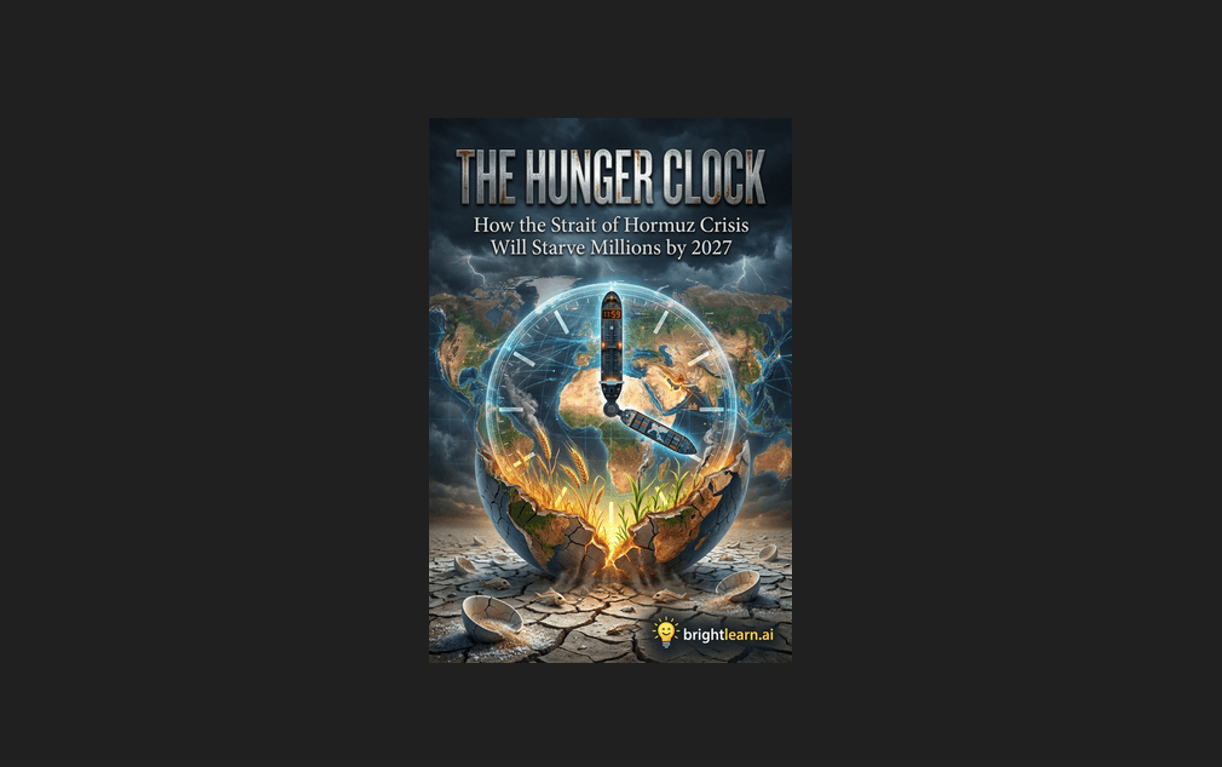
- "The Hunger Clock" reframes the Strait of Hormuz crisis, arguing that the true danger is not an oil shortage but a collapse in natural gas-dependent ammonia production. Since 60% of the world's ammonia (used for nitrogen fertilizer) relies on this gas and a quarter of that gas passes through the Strait, any disruption would destroy the global planting season for millions of farmers, causing mass starvation.
- Mike Adams documents a direct line from a 1969 meeting where elites discussed poisoning food and water supplies to the current crisis. He presents Treasury documents showing that reducing the average American lifespan by 2.5 years would save the government $11 trillion, proving that events like the COVID response and food shocks are deliberate designs for depopulation and control, not incompetence.
- The book lays out a terrifying sequence: war with Iran spikes oil to $126/barrel, shipping insurance collapses, Russia and China halt fertilizer exports and Qatar declares force majeure. This wipes out nearly half of the global fertilizer supply. Countries like Bangladesh (50% rice yield reduction), Sudan, Yemen and Egypt are identified as most vulnerable using a "food dependency ratio" metric.
- Adams provides specific, actionable advice for resilience: store 600 lbs of wheat berries and 200 lbs of dry beans per family, learn permaculture and seed saving, convert fiat currency to gold and silver and de-Google your devices. He emphasizes that individual bunkers are insufficient, calling for building interconnected community networks with local barter systems and shared skills.
- Presented with the urgency of a man who has been right for decades, "The Hunger Clock" uses unconventional sources (Brighteon.AI, leaked documents) but its predictions (fertilizer shock in April 2026, price spikes) are now unfolding. Regardless of one's view on the globalist agenda, the book's mechanistic breakdown of how fertilizer, natural gas and shipping connect to your dinner plate is impossible to ignore and fundamentally changes how you see the world.
There's something deeply unsettling about reading a book that makes you want to both sprint to the grocery store and never leave your garden again. Mike Adams' "The Hunger Clock: How the Strait of Hormuz Crisis Will Starve Millions by 2027" is that kind of read—the kind that transforms how you see everything from the price of bread to the politics of natural gas.
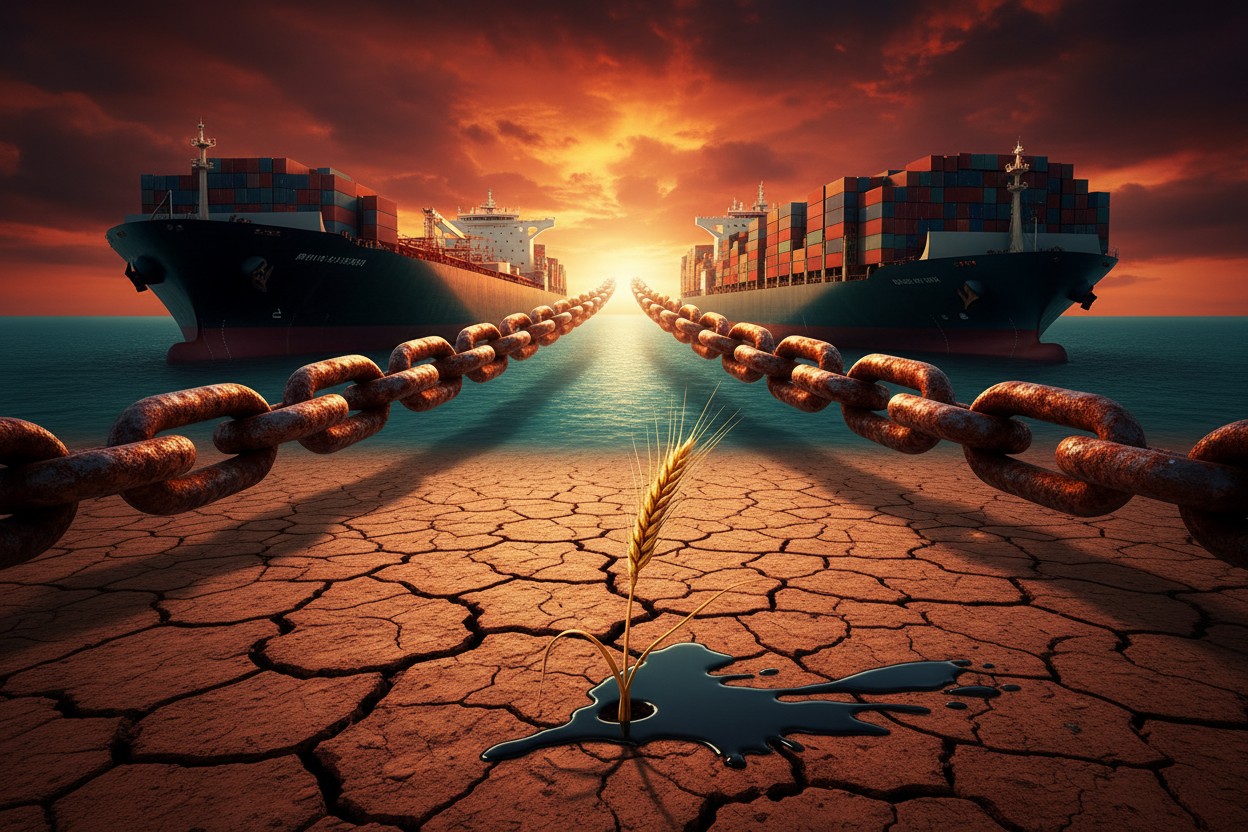
We've been looking at the Strait of Hormuz all wrong. Every news anchor, every policy paper, every think tank has fixated on oil. Adams flips the script with surgical precision. The real story isn't about gasoline—it's about fertilizer.
Think about this: roughly 60% of the world's ammonia production depends on natural gas. That ammonia becomes the nitrogen fertilizer that modern agriculture cannot live without. And more than a quarter of the natural gas used for fertilizer production passes through that narrow stretch of water between Iran and the Arabian Peninsula. When Adams writes that "the real threat isn't about how you fuel your car—it's about how you fuel your next meal," he's not being dramatic. He's being literal.
The numbers Adams presents are staggering. A one-week closure of the Strait doesn't just disrupt oil markets for a few days. It can mean missing an entire planting window for millions of farmers across Asia and Africa. By the time the Strait reopens, the season is lost. The next harvest is gone. Empty grain silos follow.
The man-made machine of starvation
What elevates this book beyond standard doomsday fare is Adams' willingness to name names and connect dots that most authors leave disconnected. He traces a direct line from a 1969 meeting at the New York Times building—where over 200 organizations discussed putting infertility chemicals in water supplies and food exports—to the current fertilizer crisis.
This is where Adams' background as an investigative journalist shines. He doesn't just warn about collapse; he documents the ideology behind it. The depopulation agenda isn't a conspiracy theory in these pages—it's a documented history of policies, meetings and leaked Treasury documents showing that reducing population has been a goal of the global elite for generations.
The section on Treasury documents is particularly chilling. Adams reveals internal analyses showing that reducing the average American lifespan by just two and a half years would save the federal government $11 trillion in Social Security and Medicare costs. When you read that, the COVID response, the vaccine mandates and the current food shock start looking less like incompetence and more like design.
The geography of collapse
Adams walks us through the cascade with terrifying clarity. First comes the war with Iran—oil spikes to $126 a barrel. Then, shipping insurance collapses as Lloyd's of London declares the Strait a war risk zone. Then, Russia and China halt fertilizer exports simultaneously. Then Qatar declares force majeure. Within weeks, global fertilizer availability drops by nearly half.
The chapter on Bangladesh is a masterclass in showing how abstract global crises become concrete human suffering. A nation of 170 million people, once held up as a Green Revolution success story, suddenly faces a 50% reduction in rice yields because the natural gas that powers its fertilizer plants can't get through the Strait. Bangladesh's strategic fertilizer reserves? A 30-day supply.
Adams identifies Sudan, Yemen, Egypt, India and Thailand as the most vulnerable nations. His "food dependency ratio" concept—the percentage of calories a nation imports—is a simple but powerful tool for understanding which countries will collapse first. When that ratio exceeds 60%, he argues, a country loses its ability to feed itself if global trade breaks down.
What to do about it
The book's final section on survival strategies is where Adams shifts from prophet to practical guide. And this is where the book becomes genuinely useful rather than merely frightening.
His advice is refreshingly specific: store six hundred pounds of wheat berries and two hundred pounds of dry beans per family of four; learn permaculture and seed saving; move fiat currency into gold and silver before the monetary collapse; de-Google your phone and switch to Linux to escape the surveillance state.
Adams doesn't pretend that individual preparation is enough. He calls for building community networks, forming local barter systems and supporting political candidates who reject globalism. His vision of resilience isn't the lone survivalist in a bunker—it's interconnected neighborhoods sharing skills, seeds and security.
"The Hunger Clock" is not a balanced book. It's not trying to be. Adams writes with the urgency of a man who has watched the clock ticking for decades and can't understand why everyone else is still asleep.
His sources are unconventional—Brighteon.AI, independent researchers, leaked documents—but his track record is hard to dismiss. The fertilizer shock he predicted in April 2026 is unfolding now. The price spikes he warned about are hitting grocery stores. The insurance cancellations he described are making headlines.
What makes this book essential reading isn't its pessimism—it's its clarity. Adams shows us exactly how the machine works, who built it and what we can do to survive its failures. Whether you accept his conclusions about globalist depopulation agendas or not, the underlying mechanics of how fertilizer, natural gas and shipping routes connect to your dinner plate are impossible to ignore.
"The Hunger Clock" is the kind of book that changes how you see the world. You'll never look at a bag of fertilizer, a tanker ship or a government announcement about food prices the same way again. And that, perhaps, is exactly the point.
Read it. Then start growing your own food.
Grab a copy of "The Hunger Clock: How the Strait of Hormuz Crisis Will Starve Millions by 2027" via this link. Read, share and download thousands of books for free at Books.BrightLearn.AI. You can also create your own books for free at BrightLearn.AI.
Watch the video below, where Mike Adams joins "Redacted" to discuss food and energy on the verge of collapse.
This video is from the Health Ranger Report channel on Brighteon.com.
Sources include:






Please contact us for more information.