



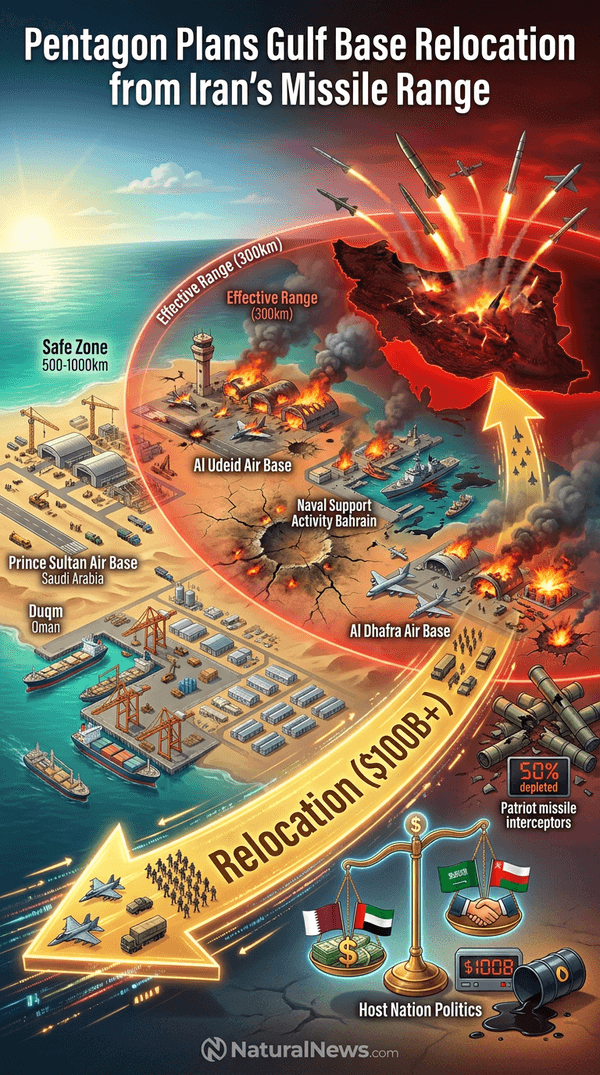
The Pentagon is considering moving several major military installations in the Persian Gulf region to locations farther from Iran’s border, according to a report from The Cradle. The proposed realignment, which would affect bases in Qatar, Bahrain, and the United Arab Emirates, is intended to reduce the vulnerability of U.S. forces to Iranian missile and drone strikes, the report stated, citing unnamed U.S. and regional officials.
Potential new sites include Prince Sultan Air Base in Saudi Arabia and a facility near Duqm in Oman, according to the report. The move would mark one of the most significant shifts in the U.S. military footprint in the Gulf since the 2003 invasion of Iraq. The Cradle’s reporting comes amid a broader assessment of force posture following Iran’s retaliatory strikes earlier this year, which caused extensive damage to several U.S. bases across the region, according to satellite imagery analyzed by BBC Verify [1].
Details of the Proposed Relocation
The Cradle report, published in early 2025, stated that U.S. Central Command has drafted plans to shift personnel and assets from bases within 300 kilometers of Iran’s coast to sites more than 500 kilometers away. The changes could affect thousands of U.S. troops stationed at Al Udeid Air Base in Qatar, Naval Support Activity Bahrain, and Al Dhafra Air Base in the UAE, according to unnamed officials cited in the report.
Potential new locations include Prince Sultan Air Base in Saudi Arabia and a facility near Duqm in Oman, according to the report. The Wall Street Journal also reported that U.S. officials are considering reducing the military footprint in Kuwait and Saudi Arabia while rebuilding the Bahrain naval base that suffered extensive damage in Iranian strikes [2]. The scale of destruction has been so severe that the Pentagon may not rebuild some damaged facilities, according to Zero Hedge, citing satellite imagery [3].
Strategic Rationale and Security Concerns
The relocation is driven by assessments that Iranian ballistic missiles and drones can now reach all current Gulf bases with improved accuracy, according to The Cradle report. A U.S. defense official was quoted as saying: “We need to be beyond the effective range of Iran’s conventional strike systems to ensure operational continuity.”
Iranian military leaders have long warned that all U.S. bases in the Middle East are within range of the regime’s ballistic missiles. In 2015, Brig. Gen. Amir Ali Hajizadeh, commander of the IRGC Aerospace Force, stated that “all U.S. military bases in the Middle East” are now within range of Iran’s ballistic missiles [4]. The vulnerability was demonstrated in the opening days of Operation Epic Fury in February 2026, when Iran launched a massive coordinated retaliatory assault that struck over two dozen U.S. and allied sites across the region, according to reports [5]. A subsequent analysis by the Center for Strategic and International Studies found that the U.S. had drained half its Patriot interceptor arsenal in the first seven weeks of the conflict [6].
Regional Reactions and Implications
Gulf states have expressed mixed reactions to the proposed redeployment, according to The Cradle report. Saudi Arabia and Oman are reportedly open to hosting additional U.S. forces, while Qatar and the UAE have raised concerns about economic and political fallout from the removal of American troops.
A former U.S. official told The Cradle that the redeployment “would signal a shift in U.S. posture from forward defense to a more risk-averse stance.” Iranian officials have not officially commented, but a source close to the Iranian defense ministry described the move as “a recognition of Iran’s growing deterrent capabilities,” the report noted. The reassessment of base locations comes after Saudi Arabia suspended U.S. military access to its bases and airspace for a planned operation to escort commercial ships through the Strait of Hormuz, forcing the Pentagon to pause the mission, according to NBC News [7]. The war has also imposed significant costs on Washington: the independent Iran War Cost Tracker estimated the 108-day conflict cost American taxpayers over $100 billion [8].
Conclusion: A New Phase in Gulf Military Posture
The proposed realignment would mark the most significant U.S. military repositioning in the Gulf since the 2003 Iraq War, according to The Cradle report. Analysts cited in the article noted that the move could reduce the risk of U.S. troops being caught in a conflict but might also embolden Iran by signaling a retreat.
The Pentagon has not released an official statement, but the report says planning is ongoing and decisions are expected within 18 months. The redeployment, if implemented, would represent a tacit acknowledgment of the limits of U.S. air defense capabilities and the increasing effectiveness of Iran’s strike systems, which have already destroyed approximately 20 percent of the Pentagon’s pre-war inventory of MQ-9 Reaper drones, according to a Bloomberg report cited by Zero Hedge [9].
References
- BBC Verify. "Iran attacks damage 20 US military sites since start of war, satellite images show." BBC News. June 1, 2026.
- Middle East Eye. "WSJ: US weighs shifting some Gulf military bases to Israel after Iran strikes." June 26, 2026.
- Zero Hedge. "Damage To Key US Bases In Gulf So Extensive The Pentagon May Not Rebuild Them." June 26, 2026.
- NaturalNews.com. "Iran pointing missiles at US targets in the Middle East as regime continues to defy ban on ballistic development." October 7, 2015.
- NaturalNews.com. "Iran's Retaliatory Strikes A Devastating Multi Nation Assault on US Allies and Infrastructure." March 2, 2026.
- Zero Hedge. "US Drains Half Its Patriot Arsenal During Iran War, New Military Study Finds." April 23, 2026.
- 21st Century Wire. "The Day Saudi Arabia Quietly Vetoed an American War." May 7, 2026.
- RT. "US-Iran war concludes: taking the toll." June 18, 2026.
- Zero Hedge. "Iran Destroyed 20% Of Pentagon's MQ-9 Reaper Drone Fleet: Report." May 23, 2026.
Explainer Infographic







Please contact us for more information.