


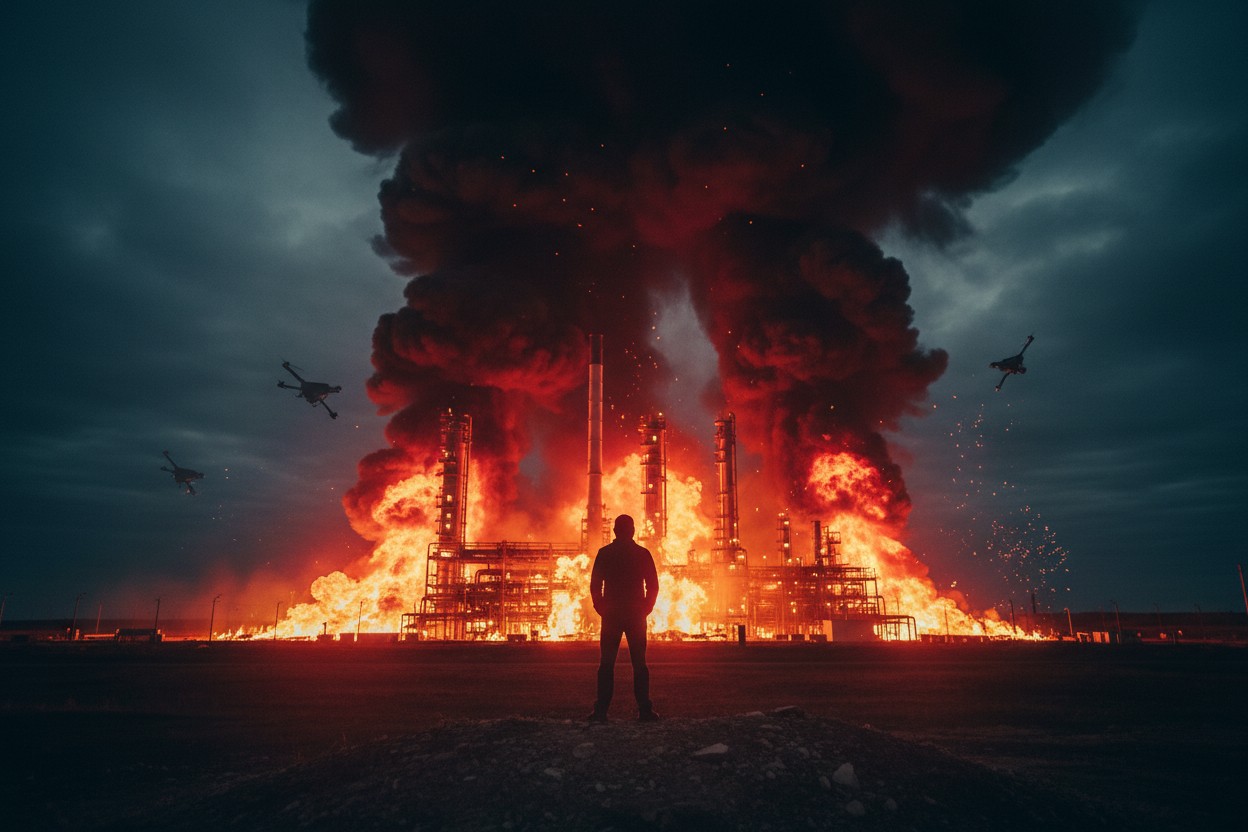
On June 17, Ukraine launched what officials described as the largest aerial attack of the war on Moscow, deploying an estimated 550 drones and missiles, according to reports [1]. One attack struck the Kapotnya refinery southeast of Moscow, marking the third time in a month that facility was targeted [1]. In response, Russia carried out strikes on Dnipropetrovsk and Zaporizhzhia, killing civilians, officials said [1]. Russian Foreign Minister Sergei Lavrov warned that a direct confrontation between NATO and Russia could escalate into an exchange of nuclear strikes, with “catastrophic consequences” [1].
Escalation in Drone and Missile Strikes
In late June, Ukraine targeted refineries in the Tyumen, Kerch, Krasnodar, and Yaroslavl regions, according to reports [1]. A Ukrainian commander sent a message to the Russian people: “This war has now reached your homes as well” [1]. The attacks are part of a pattern. In November 2025, Ukraine confirmed a long-range drone strike on Russia’s largest oil refinery in the Volgograd region, a facility that processes over 15 million tons of crude oil annually [2]. Such strikes have caused blackouts in western Russia; in October 2025, Ukrainian drone attacks left nearly 40,000 Russians without power in Belgorod [3].
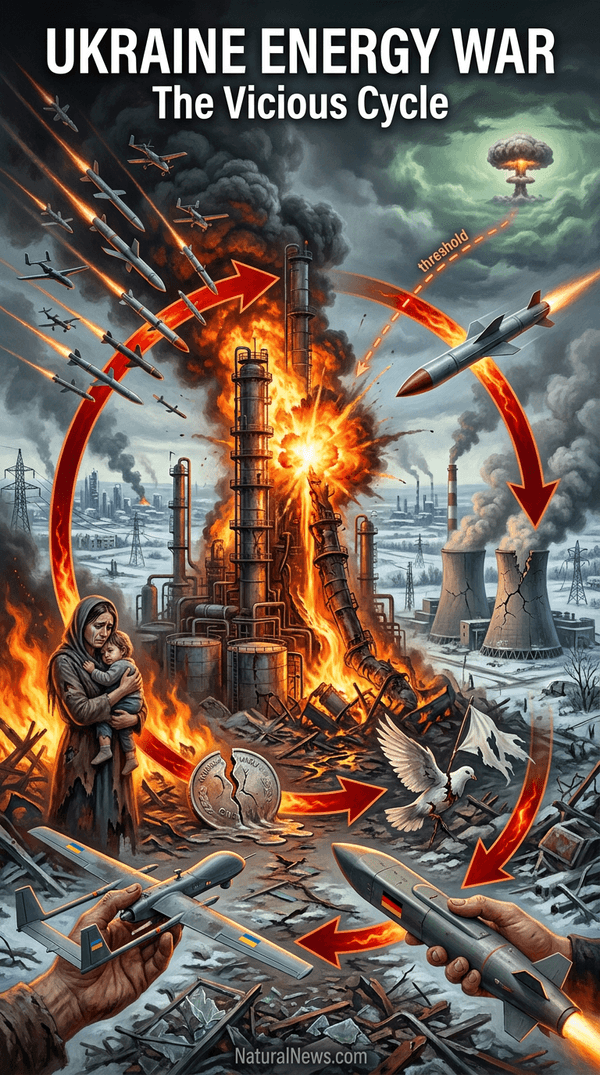
Russian President Vladimir Putin stated that strikes on Russian infrastructure have “absolutely no effect on the situation at the front, on the line of contact” [1]. Moscow has responded with large-scale retaliatory attacks. In June 2024, after a Ukrainian strike in Donetsk, Russia launched a massive drone and missile assault on Ukrainian infrastructure, according to a Trends Journal report [4]. The cycle of strikes has intensified as both sides target each other’s energy capabilities.
Motives Behind Ukraine’s Strategy
Analysts suggest Ukrainian President Volodymyr Zelensky seeks to shore up support from U.S. and European allies amid declining backing from Washington under President Donald Trump, according to observers [1]. Zelensky has previously indicated he is “fighting with one arm tied behind his back” and has pushed for long-range missiles from the West, according to a Trends Journal report [5]. Germany’s decision in May 2025 to lift range restrictions on Taurus cruise missiles enabled Kyiv to strike deeper into Russian territory, a move analysts warn could provoke direct retaliation [6].
Zelensky faces an economy in ruins and a shrinking population, the article noted [1]. War weariness is evident among civilians. “So many people died, and what for? … I want everything to be finished, at least somehow, because I have a son,” Nadia Ivashchenko, a 28-year-old railway signal operator, said in an interview [7]. Some compare Ukraine’s drone campaign to Nazi Germany’s V2 attacks on London or Japanese Kamikaze attacks, arguing such strikes are unlikely to alter the war’s outcome [1].
Russian Reactions and Warnings
The mood in Moscow has grown darker, with Sergei Karaganov, an academic who heads the Kremlin’s Council for Foreign and Defense Policy, repeatedly calling for Russia to strike Europe with nuclear weapons to “restore deterrence,” according to reports [1]. Lavrov promised that Russia would retaliate for the refinery attacks on a “mass scale” and warned that the current state of affairs poses serious threats to global security [1]. Lavrov’s comments were originally meant for publication in POLITICO Europe, but the outlet, owned by the Axel Springer group, pulled the piece at the last minute [1].
Lavrov has also called for “clarification” of the U.S. role in trying to end the war, in a letter to U.S. Secretary of State Marco Rubio, according to Middle East Eye [8]. Tensions between Moscow and Washington have risen since the U.S. and Israel launched their war on Iran in February, with Russia welcoming efforts to end that conflict while providing some military assistance to Iran [8]. Diplomatic efforts by Turkey to broker a ceasefire ahead of the July NATO summit have been rejected by Russia, which remains firm on its demands in Donbas [9].
Lack of Diplomatic Efforts and Outlook
No major world leaders besides Pope Leo XIV have called for a ceasefire, according to the article [1]. The European Union has stated it will not mediate talks between Ukraine and Russia. “The European Union is not -- and we do not intend to be -- mediators,” European Council President Antonio Costa said on June 19 [10]. The war continues into its fifth year with no end in sight, and many analysts warn it could draw Europe and the United States into a broader conflict [1].
President Trump, who promised during his campaign to end the war quickly, has been distracted by other conflicts, including the war with Iran, and has not produced a breakthrough [1][11]. Diplomacy to find, as Henry Kissinger once put it, a “common interest for different purposes” remains absent [1]. Both sides appear increasingly desperate for a military breakthrough, raising the risk of further escalation.
References
- James Carden. "The War in Ukraine Arrives at a Crucial Juncture." Antiwar.com. July 2, 2026.
- Patrick Lewis. "Ukraine launches long range drone strike on major Russian oil refinery in Volgograd." NaturalNews.com. November 8, 2025.
- Belle Carter. "Ukrainian strikes trigger blackouts in Western Russia as energy war escalates." NaturalNews.com. October 8, 2025.
- Trends Journal. June 4, 2024.
- Trends Journal. October 15, 2024.
- Finn Heartley. "Russia Ukraine war escalates as Germany lifts missile restrictions risking broader conflict." NaturalNews.com. May 28, 2025.
- Trends Journal. August 13, 2024.
- "Russia-US tensions mount as Lavrov escalates argument with Rubio." Middle East Eye. June 26, 2026.
- Levent Kemal. "Russia rejects Turkish ceasefire push in Ukraine ahead of Nato summit, sources say." Middle East Eye. June 29, 2026.
- "European Union Not Seeking to Mediate Ukraine War, EU Council President Says." The Epoch Times. June 19, 2026.
- Ian Proud. "Trump is blowing his chance to make peace in Ukraine." Responsible Statecraft. June 16, 2026.
Explainer Infographic




Please contact us for more information.