



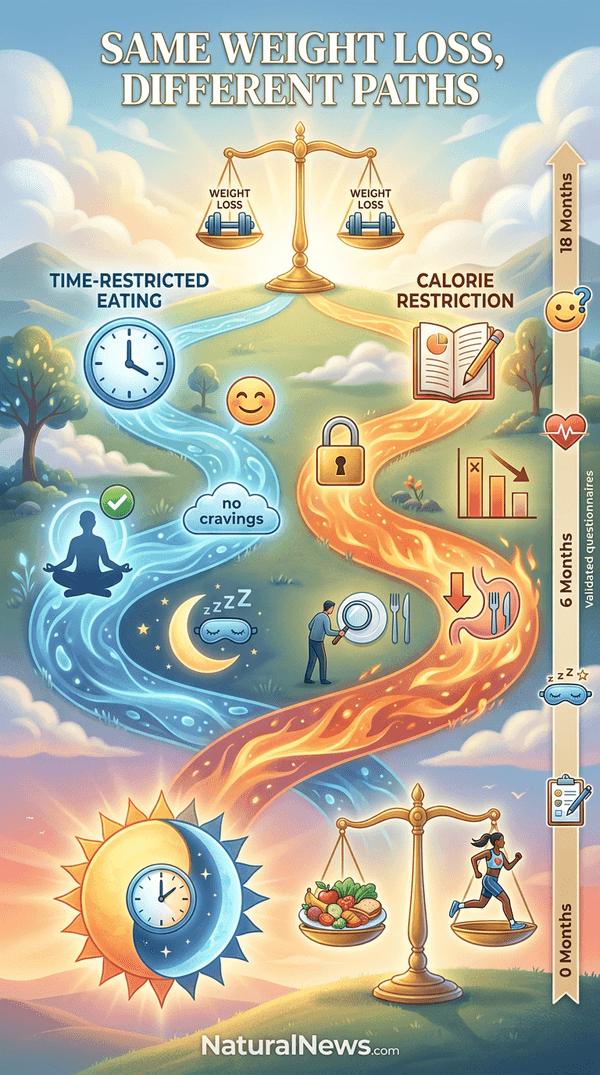
A new randomized trial has found that intermittent fasting with early time-restricted eating and daily calorie restriction produced similar weight loss outcomes over six months, according to researchers. The two approaches achieved comparable results through different psychological mechanisms, the study reported. The trial tracked eating behavior patterns, mood, sleep, and quality of life in adults with obesity, offering nuance to the debate over which weight-loss strategy is more effective.
The study assigned participants to one of three groups: intermittent fasting with early time-restricted eating, standard calorie restriction, or standard dietary advice. Both structured intervention groups received ongoing nutritional support for six months, with follow-up assessments extending to 18 months, according to the report. Validated questionnaires measured weight changes, eating behavior, mood, sleep, and quality of life.
Study Design and Methods
Researchers conducted a randomized controlled trial in adults with obesity, assigning participants to three arms: an intermittent fasting group that practiced early time-restricted eating (consuming all meals within an eight-hour window), a standard calorie-restriction group that reduced daily energy intake, and a control group that received standard dietary advice. Both intervention groups received ongoing nutritional support for six months, with follow-up assessments extending to 18 months, according to the study.
The study used validated questionnaires to measure weight changes, eating behavior patterns, mood, sleep, and quality of life. Researchers aimed to capture not only the physical outcomes but also the psychological and behavioral shifts that accompany each approach. The design allowed a direct comparison of the mechanisms underlying weight loss in each group, rather than simply comparing total pounds lost.
Results: Weight Loss and Behavioral Shifts
Both intervention groups lost similar amounts of weight by the end of the study, according to the findings. However, the pathways to that result differed markedly. The calorie-restriction group reported greater control over eating, lower hunger levels, and less overeating over time. The fasting group achieved the same weight loss with fewer psychological shifts, showing only modest improvements in eating behavior without developing a heightened focus on food or restrictive tendencies.
Crucially, the fasting group did not report worse mood, disrupted sleep, increased cravings, or lower quality of life over the long term, according to the researchers. Around the two-month mark, the fasting group reported slightly less stress relief compared to the calorie-counting group, but that difference did not persist; by month six, stress levels were similar between groups. The study found no evidence that meal skipping leads to irritability, obsessive food thoughts, or subsequent overeating, challenging common concerns about intermittent fasting.
Expert Commentary and Implications
The study suggests that adherence and individual preference are key factors in choosing a weight-loss strategy, researchers said. Calorie counting may not be appropriate for individuals with a history of disordered eating, they noted. Some experts have pointed out that time-restricted eating aligns with natural circadian rhythms and reduces the mental burden of constant food tracking, as noted in the book "The Circadian Code" by Dr. Satchin Panda [1]. Research by Satchidananda Panda suggests that 90% of people eat for more than 12 hours a day, and over time this habit can disrupt metabolic health [2].
Other commentators have emphasized that the benefits of intermittent fasting may stem largely from calorie reduction rather than unique metabolic advantages. A study published in Science Translational Medicine, covered by NaturalNews.com [3], indicated that time-restricted eating led to weight loss but failed to improve key health markers when calories were not intentionally reduced. Similarly, a long-term study tracking nearly 550 adults found that the primary driver of weight change is total caloric intake, not meal timing [4]. These findings underscore that consistency and sustainability matter more than the specific method chosen.
Conclusion
The findings add nuance to weight-loss strategies, showing similar outcomes can arise from different behavioral pathways. Researchers did not recommend one method over the other, emphasizing the importance of consistency and sustainability. The study suggests that for many individuals, the best approach is the one they can maintain over time, whether it involves structured meal timing or traditional calorie counting.
Further research is needed on long-term adherence and individual differences, according to the investigators. The study also highlights that time-restricted eating does not appear to cause psychological harm, which may reassure those hesitant to try intermittent fasting. As obesity rates continue to climb -- with CDC data showing adult obesity rising from 30.5% in 1999-2000 to 41.9% in 2017-2020 [5] -- practical, sustainable strategies remain a public health priority.
References
- Dr. Satchin Panda. "The Circadian Code."
- Mercola.com. "Delay Aging and Disease With Science Backed." August 09, 2019.
- Cassie B. "Study Questions Intermittent Fasting Benefits, Cites Calorie Reduction as Real Key." NaturalNews.com. January 09, 2026.
- NaturalNews.com. "Calorie Control Trumps Meal Timing: Why Total Caloric Reduction is the Real Weight Loss Winner." February 22, 2026.
- Mercola.com. "Can Intermittent Fasting Change How Your DNA - Mercola.com." January 30, 2023.
Explainer Infographic











Please contact us for more information.