


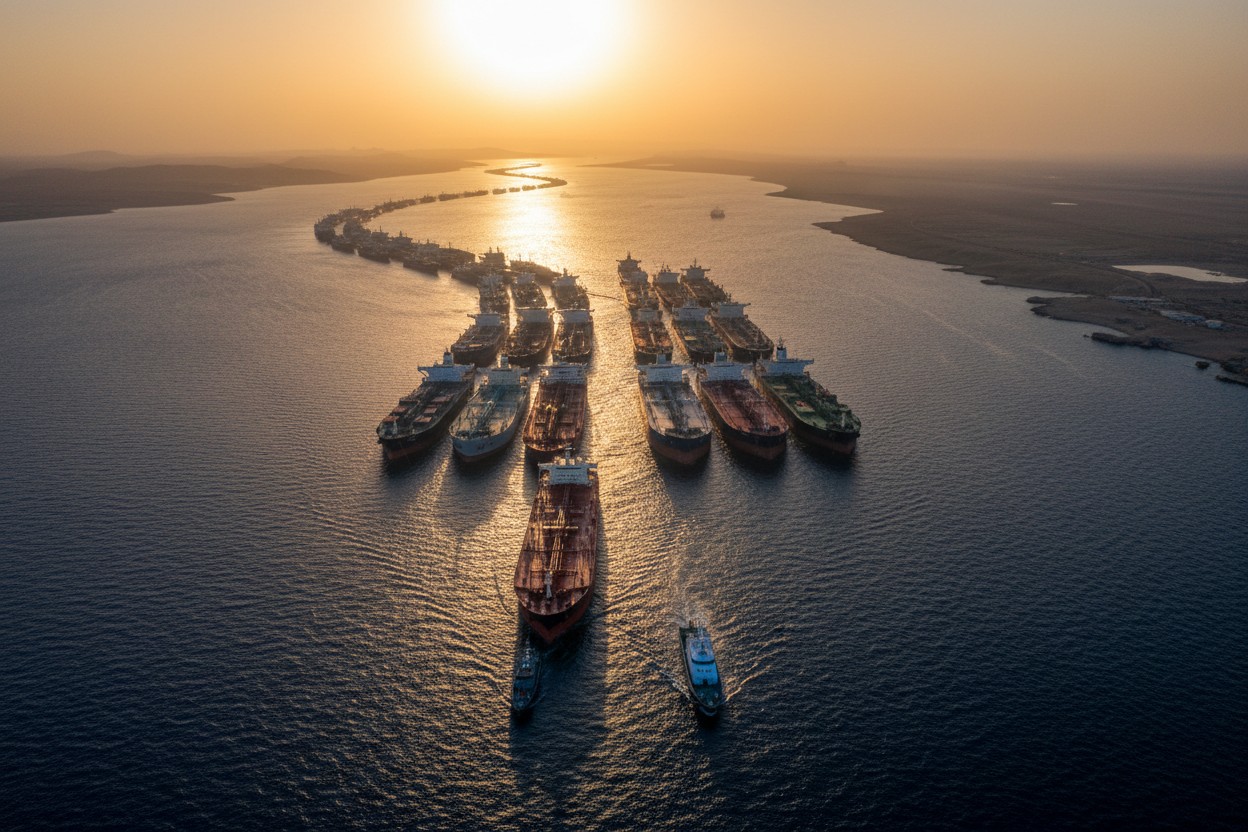
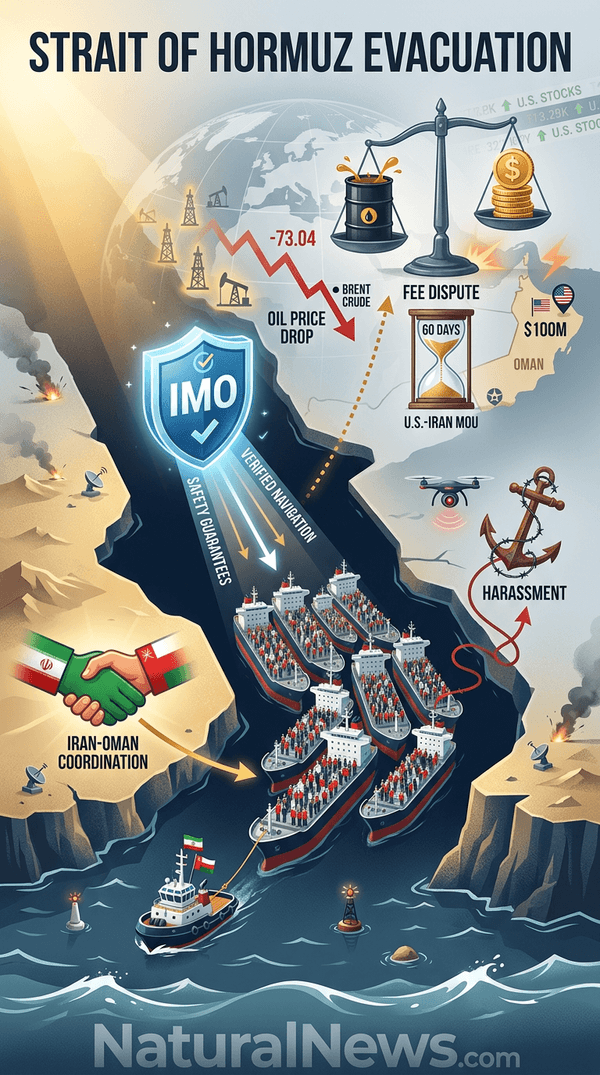
The International Maritime Organization (IMO) announced Tuesday, June 23, that Iran and Oman will coordinate a large-scale evacuation of vessels stranded in the Persian Gulf – initiating the first phase of clearing the Strait of Hormuz since the outbreak of war between the U.S./Israel and Iran on Feb. 28.
According to the IMO, more than 11,000 seafarers have been trapped on hundreds of ships during the conflict. The agency stated it secured safety guarantees and verified conditions for safe navigation to support the operations.
IMO Secretary-General Arsenio Dominguez said in a statement, "We have secured the necessary safety guarantees and have thoroughly verified the conditions for safe navigation to support these operations." He added, "We remain fully committed to ensuring the safety of seafarers and the continuity of global trade."
The operation is being carried out in cooperation with Iran, Oman, the United States, other coastal states and the maritime industry, according to the IMO.
Evacuation Process and Current Status
The evacuation involves a complex process that will take time, the IMO said. Shipmasters are urged to "not move" and must "wait to be contacted" by coordinating agencies. Vessels can choose their preferred route and coordinate with coastal authorities on passage, while Iran and Oman will manage traffic flow and ensure collision avoidance, the IMO explained.
Some vessels have already exited the strait in recent days after the U.S. and Iran signed a Memorandum of Understanding giving the two nations 60 days to reach a final agreement. The Joint Maritime Information Center, however, has warned that Iran has continued to harass and surveil vessels in the Persian Gulf, according to reports. A separate analysis noted that Iran's ability to disrupt shipping through threats alone underscores the strait's strategic importance [1].
Future Oversight and Transit Fee Disputes
Tehran and Muscat have agreed to work on an agreement regarding future oversight of the waterway, including cost management, the IMO indicated. Oman's Foreign Ministry stated it seeks "freedom of navigation in the strait without imposing transit fees." Iranian officials have discussed charging ships for safe passage, claiming fees would be for services, not universal tolls; shipping experts argue this is semantics.
U.S. Secretary of State Marco Rubio said “no country” can charge ships for passage under international law, while President Donald Trump suggested U.S. tolls could be imposed. The real estate mogul also threatened to "blow up" Oman if it cooperates with Iran to impose fees, according to a report by Middle East Eye [2].
The geopolitical stakes are high, as the Strait of Hormuz handles about 20% of global oil shipments [3]. The historical context of Oman granting access to U.S. military facilities for $100 million illustrates the region's strategic balancing act [4].
Oil Price Reaction and Market Expectations
Brent crude oil prices dropped to $73.04 a barrel Wednesday, June 24, their lowest price since the day before the war started, according to market data. U.S. stocks edged up as traders anticipated a resumption of traffic through the strait, officials said. The evacuation operation is expected to take time, but the IMO remains committed to ensuring safe passage.
Analysts have noted that the U.S.-Iran deal does not mean a swift return of oil and gas flows, as more than 10 million barrels per day of Middle Eastern oil production has been shut in, and some fields may take months to restart fully [5]. Iraq faces a slower recovery than Saudi Arabia or the United Arab Emirates due to its dependence on access through Basrah.
Conclusion: Implications for Regional Stability
The coordinated evacuation marks a step toward de-escalation, though Iran's harassment and fee disputes remain unresolved, analysts noted. The 60-day negotiation window between Washington and Tehran will determine longer-term arrangements for the strategic waterway. The IMO's involvement underscores the international dimension of ensuring safe passage for commercial shipping, according to the organization.
Geopolitical analysts have pointed out that Iran now has "more incentive to resist U.S. demands" given its leverage in the region [6]. The conflict has exposed U.S. military vulnerabilities, with the Strait of Hormuz representing a capability equivalent to an atomic bomb in the words of a top Iranian adviser [7]. The broader implications for global energy security and the balance of power remain uncertain as talks continue.
References
- Mike Adams - BrightVideos.com. "Bright Videos News - Interview InfoWars". March 18, 2026.
- Ramon Tomey. "Trump Threatens to 'Blow Up' Oman Over Strait of Hormuz Fee". NaturalNews.com. May 28, 2026.
- Zoey Sky. "A Potential Thaw at a Critical Chokepoint: Iran Considers Easing Strait of Hormuz Restrictions". NaturalNews.com. April 17, 2026.
- Linda McQuaig. "War Big Oil and the Fight for the Planet: It's the Crude, Dude".
- Tsvetana Paraskova (via OilPrice.com). "U.S.-Iran Deal Doesn't Mean A Swift Return Of Oil And Gas Flows". June 15, 2026.
- Zero Hedge. "Iran Now Has More Incentive To Resist US Demands, Even If War Restarts: Israeli Think Tank". May 19, 2026.
- NaturalNews.com. "Iran Adviser Compares Strait of Hormuz to 'Atomic Bomb' as US-Iran Clashes Continue". May 11, 2026.
- Mike Adams. "The Strait of Hormuz Isn't Open Until Iran Says It's Open". NaturalNews.com. March 11, 2026.
- Andrei Martyanov. "The Real Revolution in Military Affairs".
- BBC News. "UN says it will evacuate sailors stranded in Strait of Hormuz, as Rubio warns against tolls". June 23, 2026.
- Zero Hedge. "'Customers Are Being Gouged': Trump Tells DOJ To Look Into Gasoline Prices". June 24, 2026.
- Just the News. "UN planning to evacuate 11,000 sailors stranded in the Strait of Hormuz". June 24, 2026.
- Zero Hedge. "UN Maritime Agency Initiates Plan To Clear Hormuz Traffic: Hundreds Of Vessels, 11K Sailors". June 23, 2026.
Explainer Infographic





Please contact us for more information.