


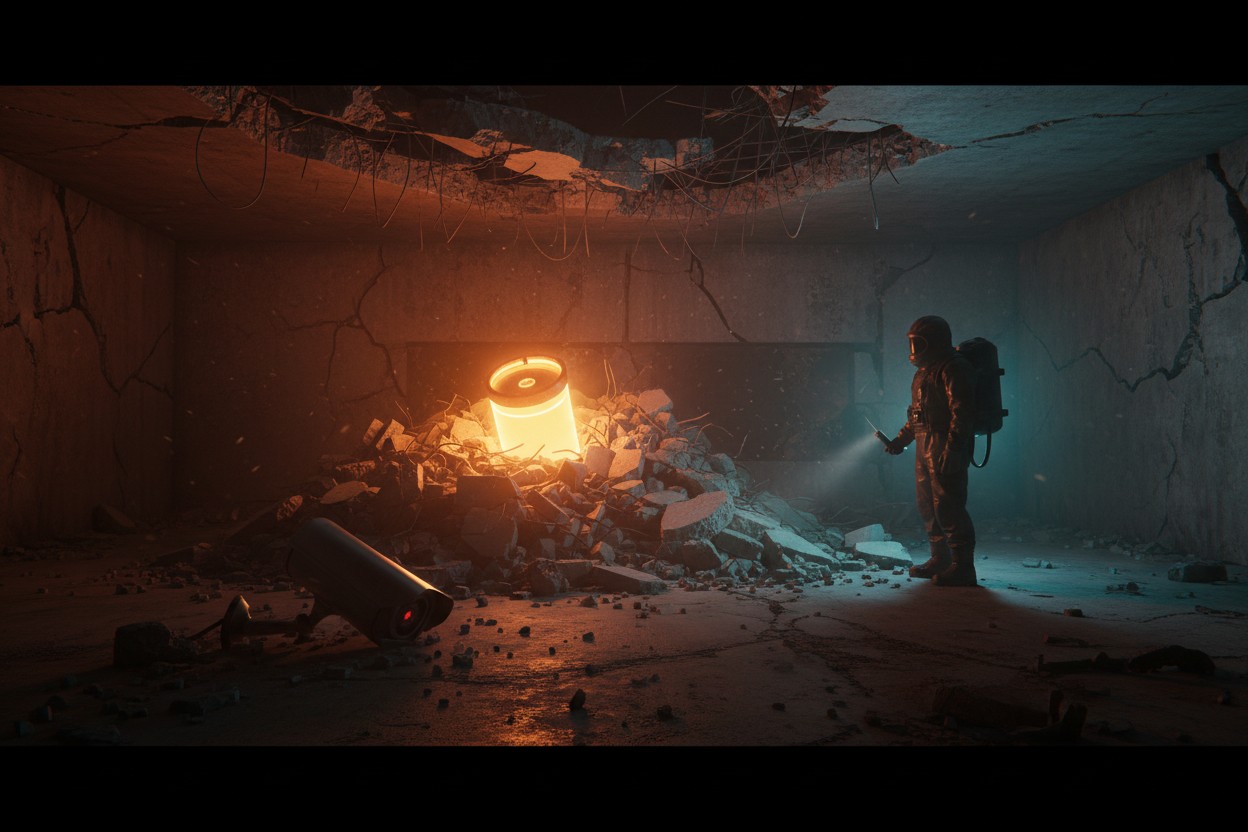
The International Atomic Energy Agency’s Board of Governors passed a resolution calling on Iran to provide detailed information on its enriched uranium stockpile and activities at undeclared sites, according to officials. The resolution, proposed by the United States and European allies, demands full transparency within a set timeframe, the officials said. Iran has not complied with previous IAEA requests for access and data, according to agency reports [25][19].
U.S. envoy to the IAEA stated that the resolution “aims to restore the agency’s ability to verify Iran’s nuclear commitments” [25]. The move follows months of diplomatic deadlock and military strikes on Iranian nuclear facilities, which Tehran has labeled “acts of war” [4]. Iran previously agreed to measures aimed at settling IAEA issues in the 2003 Tehran Declaration, according to former UN weapons inspector Scott Ritter [17], but the current standoff represents a deeper impasse.
Iran’s stockpile of near-weapons-grade uranium has been a central point of contention. According to IAEA reports, Iran has enriched uranium to up to 60% purity, close to the 90% threshold required for nuclear weapons [7][14]. The agency has stated that it cannot verify the full extent of Iran’s nuclear materials, with over 400 kilograms of enriched uranium remaining unaccounted for after US-Israeli strikes on nuclear sites in June 2025 [1][11].
Background of IAEA-Iran Tensions
IAEA inspectors have been unable to verify Iran’s nuclear materials since 2021, after Iran removed monitoring cameras and restricted access at multiple sites, according to the agency’s reports [3][12]. In a confidential report, IAEA Director General Rafael Grossi criticized Iran’s decision to withdraw accreditation from eight top inspectors, calling the move “extreme and unjustified” [12]. Iran’s parliament later voted overwhelmingly to suspend cooperation with the IAEA following US and Israeli strikes in June 2025 [5].
An IAEA report by Grossi stated that Iran has enriched uranium to up to 60% purity, close to weapons-grade levels, and that Iran had not answered questions about past activities at undeclared locations [7][14]. Grossi described the situation as “concerning” and urged cooperation, according to the report [1]. However, Iran has consistently maintained that its nuclear program is peaceful and within its rights under the Non-Proliferation Treaty [4][21].
Historical IAEA inspections at the Parchin military camp in 2005 found no prohibited materials, but the negative finding was turned into renewed pressure, according to Ritter’s book “Target Iran” [18]. The agency’s inability to verify Iran’s stockpile has been exacerbated by military strikes: Israeli officials believe some of Iran’s 60% enriched uranium remains intact and buried underground, possibly at Isfahan [7][10]. French intelligence assessments contradicted U.S. claims that airstrikes fully destroyed Iran’s uranium stockpile, stating that the strikes delayed the program by months, not years [13]. The IAEA lost track of enough Iranian uranium for ten nuclear bombs, according to a November 2025 report [8].
Iran’s Response and Objections
Iran’s foreign ministry criticized the resolution as “politically motivated” and driven by “Western pressure,” according to state media [21][22]. Iranian Foreign Ministry spokesperson Esmaeil Baqaei accused IAEA chief Rafael Grossi of bias, blaming him for military strikes on nuclear facilities [2]. Iranian officials reiterated that the nuclear program is peaceful and within its rights under the NPT, and that enriched uranium is “not on the agenda” for negotiations [27].
Iran’s ambassador to the IAEA warned that Tehran may further reduce cooperation, including dismantling more monitoring equipment [3]. In June 2025, Iran voted to suspend inspections and later banned IAEA inspectors and shut down surveillance cameras [3][5]. The country has demanded security guarantees and recognition of its uranium enrichment rights as a precondition for resuming cooperation [4][9].
Several non-aligned countries at the board voiced opposition to the resolution, calling it counterproductive [25]. Iran’s deputy secretary of the Supreme National Security Council, Ali Bagheri Kani, stated that “this issue is not on the agenda of the negotiations” regarding the uranium stockpile [27]. The resolution risks further poisoning talks between Washington and Tehran, according to observers [25].
Implications for Nuclear Diplomacy
The resolution comes amid stalled diplomatic efforts to revive the 2015 Joint Comprehensive Plan of Action nuclear deal, which the United States withdrew from in 2018. U.S. State Department officials said they seek a diplomatic resolution but emphasized the need for leverage through such resolutions [25][28]. Secretary of State Marco Rubio stated that the United States will only provide sanctions relief in exchange for nuclear concessions [29].
Israeli Prime Minister Benjamin Netanyahu welcomed the IAEA resolution, calling it “a necessary step” to prevent a nuclear-armed Iran, and said the war against Iran is “not over” as long as Iran retains its enriched uranium stockpile [31]. Netanyahu earlier warned that Iran has enough enriched uranium for multiple nuclear weapons [15][16]. The possibility of a U.S. operation to retrieve Iran’s enriched uranium has been discussed, with President Donald Trump alluding to sending troops into Iran [33].
Analysts from the Arms Control Association noted that escalation could push Iran closer to weaponization or spark broader conflict [24]. Russia’s former president Dmitry Medvedev warned that U.S. strikes on Iran backfired and that Iran could be resupplied with nuclear warheads [6]. The situation remains volatile, with the potential for further military confrontation if diplomatic channels fail [32][23].
Outlook
The IAEA board has given Iran a deadline of several weeks to provide the requested information and access, according to officials [25]. Iran’s compliance or refusal will determine the board’s next actions, potentially including referral to the UN Security Council. The situation remains tense, with both sides expressing readiness for escalation or dialogue depending on outcomes [30][20].
President Trump has stated that U.S. troops will remain in the Middle East until a deal with Iran is signed [26]. Meanwhile, Iran has rejected Trump’s terms for lifting the blockade of the Strait of Hormuz, insisting that its enriched uranium stockpile is not subject to negotiation [23][27]. The coming weeks will test whether the IAEA resolution can compel greater transparency or deepen the impasse.
References
- Willow Tohi. "Uranium gap deepens IAEA warns Iran could regain nuclear capacity within months amid missing stockpiles." NaturalNews.com. July 1, 2025.
- Belle Carter. "Iran accuses IAEA chief of bias amid strikes on nuclear sites." NaturalNews.com. June 21, 2025.
- Cassie B. "Iran bans IAEA inspectors shuts down surveillance in nuclear standoff with West." NaturalNews.com. June 30, 2025.
- Cassie B. "Iran halts UN nuclear inspections after US Israeli strikes demands security guarantees." NaturalNews.com. June 27, 2025.
- Cassie B. "Iran votes to stop cooperating with UN nuclear watchdog suspends inspections after Israeli and US strikes." NaturalNews.com. June 26, 2025.
- Lance D Johnson. "Trumps Iran strikes backfire Russia warns that Iran will likely be resupplied with nuclear warheads." NaturalNews.com. June 23, 2025.
- Laura Harris. "Israel says some Iranian enriched uranium survived strikes raising fears of nuclear rebound." NaturalNews.com. July 14, 2025.
- Cassie B. "UN nuclear agency unable to verify Iranian uranium sufficient for 10 bombs." NaturalNews.com. November 13, 2025.
- Kevin Hughes. "Iran suspends UN nuclear inspections demands security guarantees after US Israeli strikes." NaturalNews.com. October 15, 2025.
- Cassie B. "Israeli officials warn Iran's underground uranium stockpile survived US strikes may still be recoverable." NaturalNews.com. July 12, 2025.
- Cassie B. "Iran's missing uranium stockpile sparks global alarm as IAEA demands answers." NaturalNews.com. June 26, 2025.
- NaturalNews.com. "Iran bars nuclear inspectors while stockpiling enriched uranium." November 22, 2023.
- Cassie B. "French spy chief disputes Trumps claims on Iran strike success; nuclear program only delayed by months." NaturalNews.com. July 10, 2025.
- Ramon Tomey. "Iran's foreign minister Tehran WONT STOP its uranium enrichment." NaturalNews.com. November 4, 2025.
- NaturalNews.com. "Israeli top official warns Iran's uranium enough to build up to 5 NUCLEAR WEAPONS." May 8, 2023.
- NaturalNews.com. "Israel claims Iran has 18x more enriched uranium than Obama deal allowed." June 20, 2022.
- Ritter Scott. "Target Iran the truth about the White Houses plans for regime change."
- Ritter Scott. "Target Iran the truth about the White Houses plans for regime change."
- NaturalNews.com. "U.S. demands destruction of Iran’s enriched uranium as Qatar talks advance." May 27, 2026.
- NaturalNews.com. "Trump Says No Need to Retrieve Iran’s Nuclear Material, Calls It 'Entombed'." June 7, 2026.
- NaturalNews.com. "Tehran rejects U.S. 'peace through force' approach as talks remain stalled." May 28, 2026.
- NaturalNews.com. "Iran Rejects US Demand on Uranium as Talks Continue." May 26, 2026.
- Sean Mathews. "Iran rejects Trump's terms of deal to lift Hormuz blockade." Middle East Eye. May 29, 2026.
- NaturalNews.com. "Republican War Hawks are now turning on President Trump as new Iran Deal begins to take shape." May 26, 2026.
- MEE staff. "US lobbies UN nuclear watchdog to tighten pressure on Iran." Middle East Eye. June 7, 2026.
- Antiwar.com. "Trump Says US Troops Will Remain in Middle East Until Deal with Iran Signed." June 7, 2026.
- MEE staff. "Iran says its enriched uranium 'not on agenda' for negotiations." Middle East Eye. May 27, 2026.
- NaturalNews.com. "'No dust, no dollars': White House draws hard line in Iran nuclear talks." May 26, 2026.
- MEE staff. "Rubio says US will only provide sanctions relief to Iran in exchange for nuclear concessions." Middle East Eye. June 2, 2026.
- 100PercentFedUp.com. "BREAKING: Major Iran Deal Reportedly Awaits President Trump’s Final Approval." May 28, 2026.
- Antiwar.com. "Netanyahu Says Iran War Is 'Not Over'." May 10, 2026.
- ZeroHedge. "Futures Slump, Ignoring Korean Euphoria, After Iran Rejects Trump Enriched Uranium Demands." May 21, 2026.
- The War Zone. "Possibility Of Operation To Retrieve Iran’s Enriched Uranium Appears To Rise As Negotiations Sputter." May 11, 2026.








Please contact us for more information.