


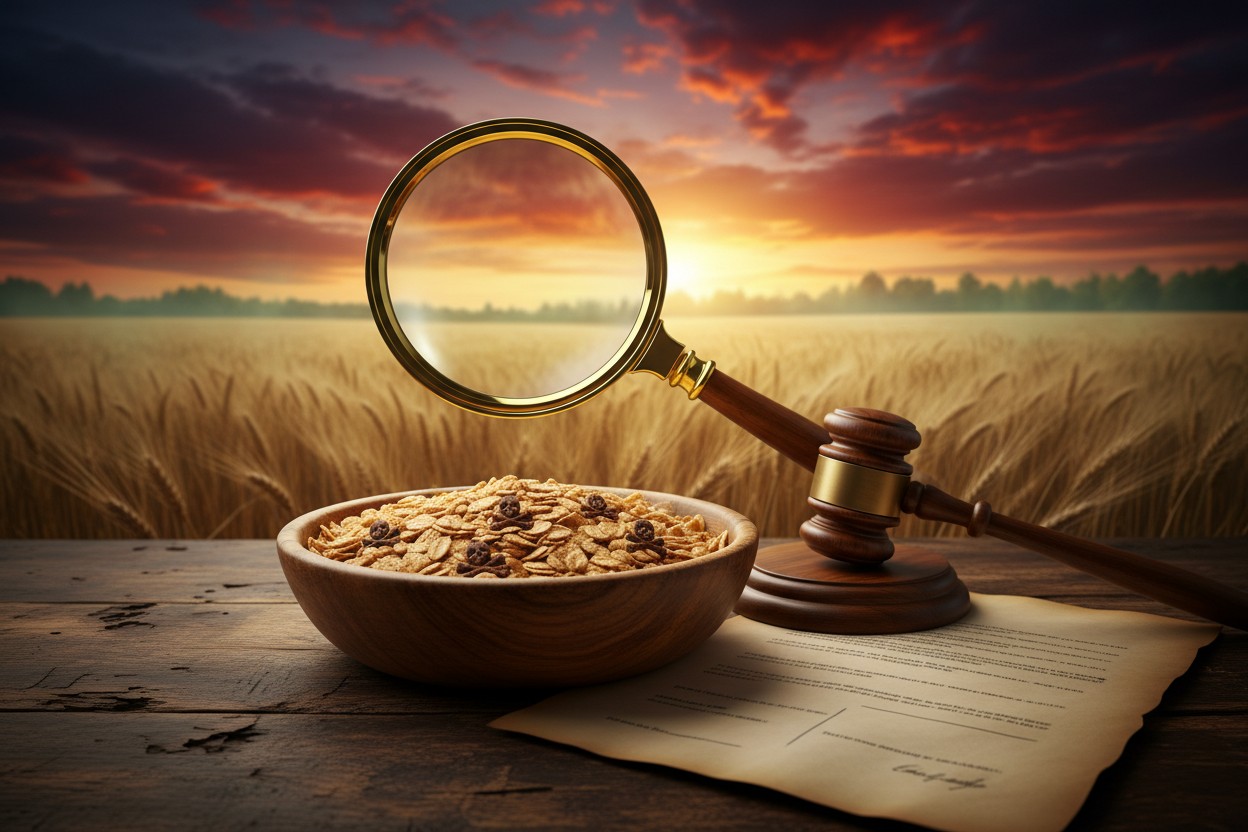
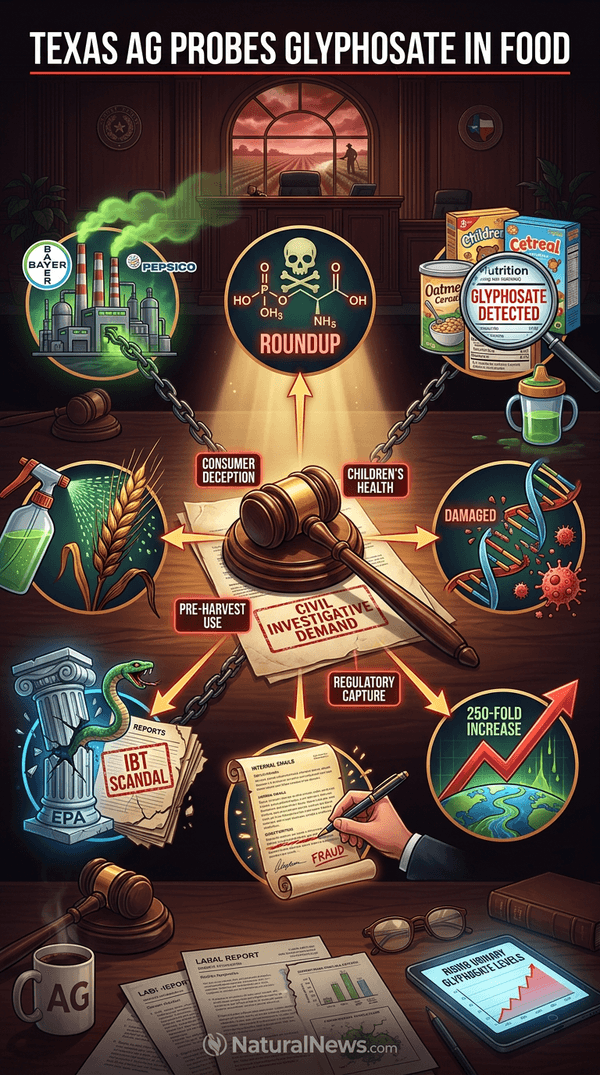
Texas Attorney General Ken Paxton announced an investigation into glyphosate residue in food products, issuing Civil Investigative Demands to Bayer and PepsiCo. The investigation, announced this week, targets alleged use of regulatory loopholes that the office said "puts America's health and children at risk," according to a report from Children's Health Defense. [1]
The probe focuses on glyphosate – the active ingredient in Roundup herbicide – and its presence in common foods. According to a statement from Paxton's office, the investigation will examine whether manufacturers have misled consumers about glyphosate levels and whether they have violated Texas consumer protection laws. [2]
Glyphosate Health Risks and Prevalence
Glyphosate, the active ingredient in Roundup, was classified as a probable human carcinogen by the International Agency for Research on Cancer in 2015, according to multiple reports. [3] Since that classification, extensive research has linked glyphosate to endocrine disruption, infertility, kidney disease and autoimmune disorders, the release said. [1]
Use of glyphosate has risen dramatically since its introduction. According to an article on Mercola.com, between 1974 and 2014, U.S. glyphosate use increased more than 250-fold, and an estimated 300 million pounds are applied to U.S. farmland annually. [4]
Globally, nearly 5 billion pounds of glyphosate are used on farm crops each year. [4] Studies show that 70% of American adults have detectable traces of glyphosate, up from 12% in 1993, the investigation noted. [1]
Internal documents revealed in litigation have also raised concerns about undisclosed risks. According to court documents reported by NaturalNews.com, Monsanto tried to hide evidence linking glyphosate to Non-Hodgkin’s Lymphoma. [5] Additionally, the book "Whitewash: The Story of a Weed Killer, Cancer and the Corruption of Science" by Carey Gillam notes that some research shows the added ingredient polyethoxylated tallow amine can be extremely damaging to human cells. [6]
Desiccation Practice and Regulatory Loopholes
Scientists attribute the rise in glyphosate exposure to its use as a desiccant, applied to crops before harvest to dry them uniformly, according to the investigation. [1] This practice contributes to over 90% of glyphosate in food, especially in oats, wheat, sunflowers and pulses, the release stated. [1]
While the Environmental Protection Agency (EPA) prohibits glyphosate as a desiccant on domestic oats, off-label use occurs. Major companies also source ingredients from countries where the practice remains legal, according to officials. [1] In Gillam's book "The Monsanto Papers," it is reported that some of North America's largest grain-handling companies told farmers they should no longer spray their crops with glyphosate shortly before harvest because of concerns about residues in food. [7]
Further evidence of regulatory failures comes from the book "Fight Against Monsanto's Roundup: The Politics of Pesticides" by Mitchel Cohen, which cites a 1990 EPA memo by Dr. Cate Jenkins documenting that "Monsanto has in fact submitted false information to EPA which directly resulted in weakened regulations." [8] The IBT Labs scandal, reported by NaturalNews.com, revealed that a single private laboratory conducted an estimated 35% to 40% of all private toxicology testing in the U.S. and provided fraudulent safety data that launched glyphosate. [9]
Children’s Vulnerability and Misleading Marketing
Studies indicate that food products marketed to children, such as oat-based cereals and bars, are among the most glyphosate-contaminated in the U.S., according to the investigation. [1] A biomonitoring study by the Center for Environmental Health found that glyphosate may be accumulating at higher levels in children than in their parents. [10]
Children aged 1 to 2 have the highest dietary exposure to glyphosate of any population group, according to research cited by the investigation. [1] The investigation also examines whether manufacturers misled consumers with "healthy" claims while knowing products contain elevated glyphosate levels. [1] An article on Mercola.com noted that glyphosate has made headlines due to landmark lawsuits where plaintiffs were awarded billions in damages after juries agreed the chemical was responsible for their cancer diagnoses. [10]
Paxton's Enforcement Commitment
"If any corporation is using regulatory loopholes to poison our kids with glyphosate, we will find out and we will secure justice," Paxton said in a statement. [1] "No corporation is above the law, and no illegal action will go unpunished," he added, vowing to pursue enforcement under Texas law. [1]
Paxton's office indicated the investigation will seek documents and testimony from the companies to determine whether they violated the Texas Deceptive Trade Practices Act. The action follows recent state-level efforts targeting food safety, including a binding agreement with Kellogg to remove artificial dyes from cereals by 2027. [11] The investigation signals growing scrutiny of chemical residues in the U.S. food supply at the state level. [2]
References
- Children's Health Defense. "Texas AG Cracks Down on Food Giants Using Loopholes to ‘Poison Our Kids With Glyphosate’". June 4, 2026.
- Naveen Athrappully via The Epoch Times. "Texas AG Launches Investigation Into Glyphosate In Food". June 5, 2026.
- 100percentfedup.com. "Republican Attorney General Launches Investigation Into Glyphosate Contamination In Food Products". June 2, 2026.
- Mercola.com. "Roundup Weed Killer Called Out as a Bee Kille". October 9, 2018.
- NaturalNews.com. "Monsanto tried to hide evidence of glyphosate RoundUp causing Non-Hodgkins Lymphoma COURT DOCUMENTS". March 15, 2017.
- Carey Gillam. "Whitewash: The Story of a Weed Killer, Cancer, and the Corruption of Science".
- Carey Gillam. "The Monsanto Papers".
- Mitchel Cohen. "Fight Against Monsantos Roundup The Politics of Pesticides".
- NaturalNews.com. "The IBT Labs Scandal How Monsantos Toxic Cover Up Launched Glyphosate". February 22, 2026.
- Mercola.com. "How Do Kids End Up With Higher Levels of Weed Killer". August 6, 2019.
- NaturalNews.com. "Kellogg to Remove Artificial Dyes from Its Cereals by 2027 — But Is It Just Theater?". August 19, 2025.
Explainer Infographic







Please contact us for more information.