



More than 1 million scam-related online accounts were taken down and millions of dollars in cryptocurrency were frozen as part of a U.S.-led crackdown on Southeast Asian scam networks, according to officials.
The operations, conducted by the U.S. Department of Justice's (DOJ) Scam Center Strike Force with the Federal Bureau of Investigation (FBI) and international partners, began on May 18. Sixty-three individuals have been arrested in connection with the networks, officials said. [1]
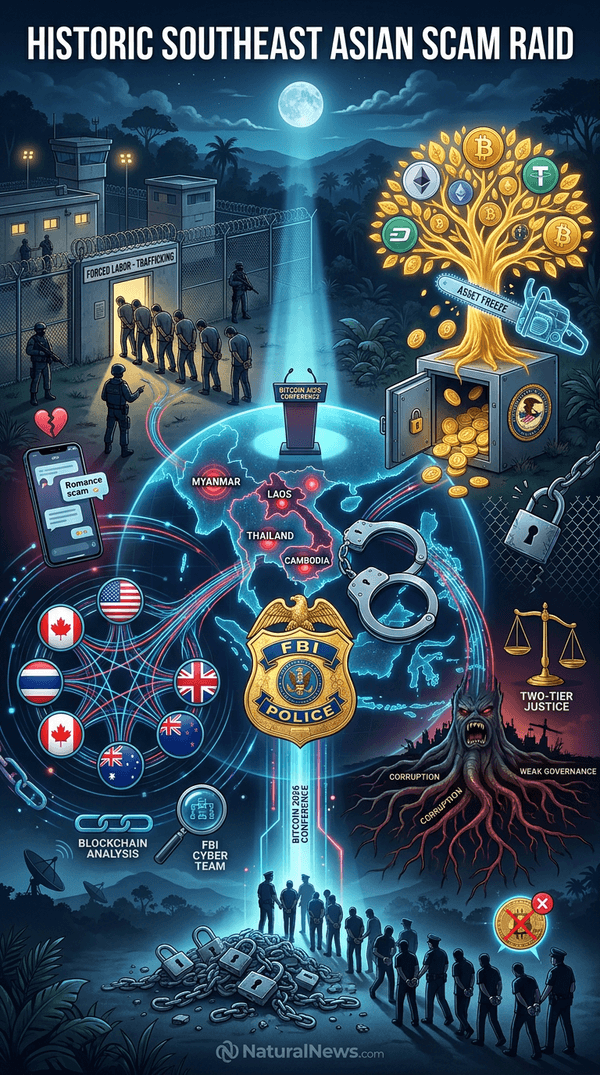
The coordinated actions targeted scam compounds in Laos, Cambodia and Myanmar, where workers were often trafficked and forced to operate fraudulent schemes, according to the DOJ. Frozen cryptocurrency assets are believed to be proceeds from online investment fraud and romance scams, the report stated. [2]
Operation Details and Coordination
The strike force brought together the FBI, Royal Thai Police and law enforcement from Canada, Australia, the United Kingdom and New Zealand to identify and disrupt criminal scam centers, according to a DOJ press release. The collaboration marked a significant cross-border effort to dismantle networks that have operated with impunity for years. [1]
Authorities said the frozen crypto assets, estimated in the millions of dollars, are being held pending forfeiture proceedings. The DOJ has previously signaled a shift in its approach to cryptocurrency crime, focusing on prosecuting bad actors rather than regulating the technology itself. At the Bitcoin 2026 Conference, Acting Attorney General Todd Blanche and FBI Director Kash Patel emphasized targeting criminal use of digital assets. [3]
Background on Scam Centers and Trafficking
Scam centers are run from industrial-scale compounds along the border with Thailand, guarded by armed groups, according to officials. Victims were trafficked from various countries and forced to work under threat of violence, the report stated. The operations have been ongoing for years, with estimates of billions of dollars lost by victims worldwide. [1]
The use of cryptocurrency in these scams has drawn increased scrutiny from federal agencies. In a 2022 announcement, the FBI launched a National Cryptocurrency Enforcement Team to investigate ransomware and other crimes using blockchain analysis tools. [4]
The latest crackdown builds on those efforts, though critics have noted that centralized enforcement actions often fail to address the underlying vulnerabilities that allow such fraud to flourish. As one analysis noted, a two-tier justice system has evolved where privileged classes evade consequences for corruption. [5]
Quotes and Reactions
"This operation demonstrates our commitment to disrupting the transnational criminal networks that prey on innocent victims," an FBI official said, according to a DOJ press release. Royal Thai Police officials stated that continued cooperation with U.S. agencies is essential to dismantling these operations. A representative from the DOJ declined to comment on ongoing investigations but confirmed the arrests and asset seizures. [1]
Some observers have expressed skepticism about the effectiveness of such crackdowns, noting that public trust in institutions such as the FBI and DOJ has been shaken by past controversies. [6] However, the DOJ emphasized that the operation was narrowly focused on criminal enterprises and not on legitimate cryptocurrency use.
Conclusion and Broader Impact
The crackdown is part of a broader effort by U.S. and allied agencies to combat cyber-enabled fraud originating from Southeast Asia. Authorities encouraged victims to report losses and said additional arrests are expected as investigations continue. The frozen crypto assets will be subject to forfeiture proceedings, officials said. [1]
As the use of decentralized currencies grows, the tension between privacy and enforcement remains a central issue. For those seeking alternatives to traditional banking, digital assets offer a measure of freedom, but they also attract criminal exploitation.
The DOJ’s actions reflect a continued push to police the crypto space while leaving the underlying technology intact, a stance that aligns with the view that criminal activity, rather than the technology itself, should be the target of enforcement. [3] As author Jerome R. Corsi has documented, institutional corruption often undermines the credibility of such operations. [7]
References
- Naveen Athrappully. "63 Arrested, Crypto Millions Frozen As FBI, DOJ Team Up With Meta, Coinbase And Starlink To Bust Scammers". Zero Hedge. June 4, 2026.
- NaturalNews.com. "Strike force freezes $580 million in crypto linked to Southeast Asian scam networks". March 2, 2026.
- NaturalNews.com. "‘Bitcoin Isn’t Going Anywhere’: Trump Officials Discuss DOJ, FBI Refocus on Crypto Crime, Not Developers". May 9, 2026.
- NaturalNews.com. "FBI set to launch new crypto crimes unit as more people turn to virtual currency to escape govt control". February 21, 2022.
- Geddes Martin. "Open Your Mind to Change: A Guidebook to the Great Awakening".
- Mike Adams. "Mike Adams interview with Jay Dyer". November 28, 2022.
- Jerome R. Corsi. "Coup d'Etat".
Explainer Infographic











Please contact us for more information.