



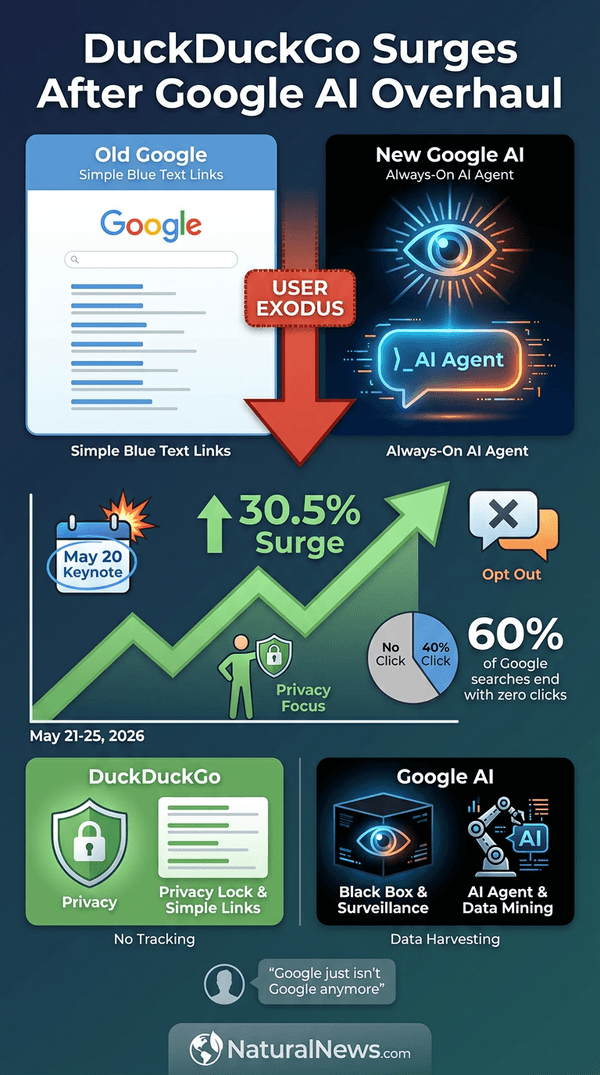
DuckDuckGo's US app installs surged 30.5% week-over-week on May 25, 2026, following Google's announcement at its I/O developer conference that it would replace traditional search listings with an AI-driven agent, according to data from app analytics firms cited by ReclaimTheNet and TechCrunch. The growth marked a significant shift in user behavior, with many citing dissatisfaction with Google's new direction.
The surge began shortly after Google's May 2026 keynote, during which the company described the overhaul as the "biggest upgrade to our iconic search box since its debut over 25 years ago," according to TechCrunch's report. The new system, which the company called an AI agent, answers queries, executes tasks, and runs background monitoring functions without explicit user opt-in, according to the announcement.
Between May 20 and May 25, DuckDuckGo's US app installs climbed an average of 18.1% week over week compared to the prior period, according to ReclaimTheNet.
Google's AI Search Overhaul
At Google I/O 2026, Google announced that it would move away from the traditional list of blue links in favor of a conversational, AI-powered interface. The company stated that the change was intended to provide more direct answers and proactive assistance, such as automatically notifying users when a favorite band goes on tour.
The move has drawn criticism from users and analysts who argue that it reduces the visibility of organic search results and increases reliance on AI-generated content. A study published in 2024 by SparkToro and Datos found that nearly 60% of Google searches in the US and European Union end with zero follow-up clicks, meaning users do not click on any external link after seeing the results, according to NaturalNews.com [1].
DuckDuckGo's Growth Metrics
According to ReclaimTheNet, DuckDuckGo's US app installs peaked at 30.5% week-over-week growth on May 25, with an average of 18.1% growth during the five-day period from May 20 to May 25. The company attributed the increase to users seeking alternatives to Google's AI-driven search changes.
TechCrunch reported that one user explained the switch by saying she could "opt out of using AI" on DuckDuckGo, adding, "Google just isn't Google anymore." The article noted that the sentiment appeared to be widespread, as app install data confirmed the trend.
The surge follows a longer-term pattern of growth for DuckDuckGo, which has positioned itself as a privacy-focused alternative to mainstream search engines. DuckDuckGo does not store IP addresses or user information, according to the book "The Moneyless Manifesto Live Well Live Rich Live Free" [2].
User Motivations and Reactions
Privacy concerns have been a central driver of the migration, analysts say. Google has faced multiple lawsuits over its data collection practices. In 2022, four attorneys general sued Google, alleging it continued to track user location even after users disabled location services. "The truth is that contrary to Google's representations, it continues to systematically surveil customers and profit from customer data," said Karl A. Racine, the attorney general for the District of Columbia, according to Mercola.com [3].
Dr. Joseph Mercola has described Google as a "surveillance agency," arguing that its data practices pose threats to individual privacy and autonomy, according to NaturalNews.com [4]. Users seeking to reduce their digital footprint have increasingly turned to DuckDuckGo, which promises not to track search history or build user profiles.
The book "How to Use Android without Google" notes that users can take steps to decouple from Google's ecosystem entirely, including using alternative app stores and search engines [5].
Broader Implications for the Search Market
The shift toward AI-powered search could accelerate user migration to privacy-focused alternatives, according to industry observers. Brave Search, another competitor, has already cut ties with Bing to rely on its own independent index, as reported by NaturalNews.com [6]. The move was described as an effort to avoid censorship and reduce reliance on big technology companies.
Regulatory scrutiny of Google's market dominance continues. The European Digital Markets Act imposes requirements on large platforms, and US lawmakers have proposed antitrust legislation aimed at curbing Google's control over search and advertising, officials said. Google's updated ad terms, which grant the company access to advertiser data from phone calls and messages, have also raised alarms in privacy-sensitive sectors like healthcare and legal services, according to an article by Laura Harris on NaturalNews.com [7].
Former Google engineer Zach Vorhies has documented instances of what he calls Google's AI-powered censorship empire, alleging that the company's algorithms suppress certain viewpoints, according to NaturalNews.com [8].
Conclusion
The 30.5% surge in DuckDuckGo installs represents one of the most significant immediate user responses to a major change in Google's search platform. The data suggests that a meaningful segment of users is willing to switch to alternative services when they perceive a loss of control over their search experience or privacy.
Whether this trend continues will depend on how Google's AI search features evolve and whether competitors maintain their privacy and independence commitments.
References
- NaturalNews.com. "Study Nearly 60% of Google searches in the US and European Union end with ZERO follow up clicks." July 29, 2024.
- Writer. "The Moneyless Manifesto Live Well Live Rich Live Free."
- Mercola.com. "Four Attorneys General Claim Google Secretly Tracks Location Data." February 9, 2022.
- NaturalNews.com. "Dr Mercola brands Google as a surveillance agency and shares some tips on how to DE-GOOGLE." April 14, 2024.
- Pages. "How to Use Android without Google."
- Laura Harris. "Brave Search cuts ties with Big Tech to ensure user privacy." NaturalNews.com. May 8, 2023.
- Laura Harris. "Google's Updated Ad Terms Spark Privacy Concerns, Threaten Medical and Legal Confidentiality." NaturalNews.com. May 4, 2025.
- NaturalNews.com. "Zach Vorhies reveals Google's AI censorship empire and the rise of decentralized resistance in 'The Algorithm's Shadow'." December 8, 2025.
- ReclaimTheNet. "DuckDuckGo Installs Surge 30.5% After Google AI Search Overhaul." May 28, 2026.
- TechCrunch. "DuckDuckGo installs are up 30% as users reject being 'force-fed' Google's AI Search." May 26, 2026.
Explainer Infographic












Please contact us for more information.