



A growing body of research indicates that regular almond consumption is associated with improvements in several cardiovascular risk markers, according to multiple peer-reviewed studies and meta-analyses.
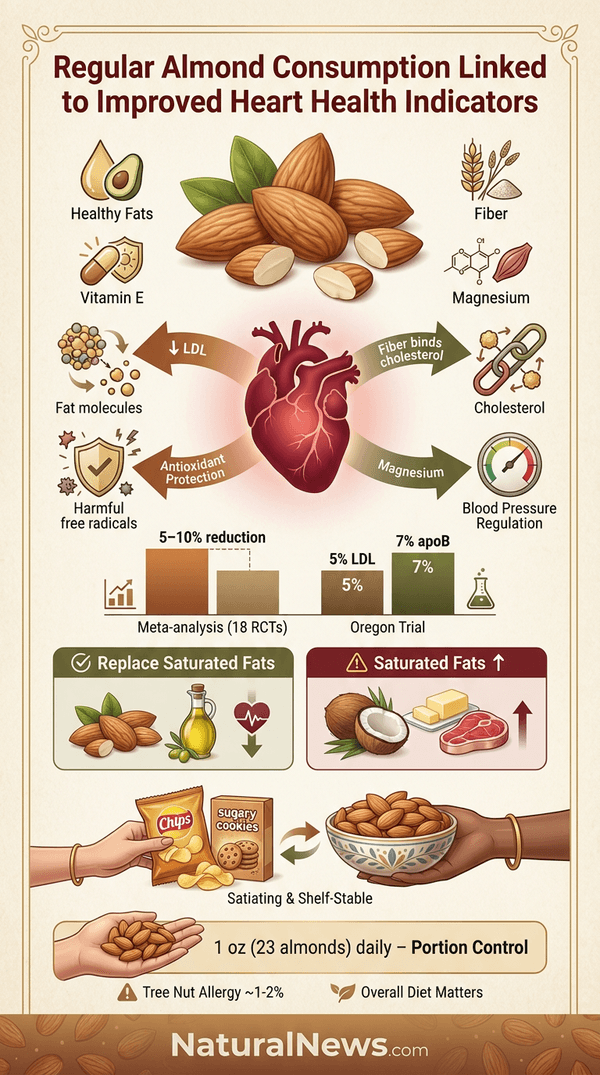
Almonds, the most consumed tree nut worldwide, provide a nutrient-dense source of healthy fats, fiber, vitamin E and magnesium – which collectively support heart health, researchers reported. [1] [2] A systematic review and meta-analysis published in the Journal of Nutritional Science analyzed 18 randomized controlled trials involving 837 participants and found that almond consumption improved blood lipid levels, including reductions in total cholesterol and low-density lipoprotein (LDL) cholesterol. [3]
Separate research from Oregon State University, published in June 2025, showed that eating 2 ounces of almonds daily reduced LDL cholesterol, waist circumference and gut inflammation in individuals with metabolic syndrome. [4] These findings align with earlier epidemiological work indicating that frequent nut intake lowers inflammation and reduces the risk of heart disease. [5]
Study Design and Key Results
The meta-analysis examined data from 18 published randomized controlled trials, each with a minimum duration of four weeks, in which participants consumed almonds as part of their diet. According to the review, almond consumption led to statistically significant reductions in total cholesterol and LDL cholesterol, with no adverse changes in high-density lipoprotein (HDL) cholesterol or triglycerides. [3]
The Oregon State trial specifically enrolled adults with metabolic syndrome and assigned them to a daily snack of 2 ounces of whole almonds or a calorie-matched control snack. After six weeks, the almond group showed a 5% reduction in LDL cholesterol and a 7% decrease in apolipoprotein B, a marker of cardiovascular risk, the researchers reported. [4]
In a separate study cited in the book "The End of Heart Disease," participants who consumed a diet with almonds as the primary fat source experienced a 7% lower total cholesterol compared to a diet rich in coconut fat. [6] The varying magnitude of cholesterol reduction across studies appears to depend on factors such as participants' baseline cholesterol levels, background diet, and the dose of almonds consumed, according to a nutrition and health perspective on almonds published in the Journal of the Science of Food and Agriculture. [7]
Researcher and Participant Perspectives
Researchers involved in the Oregon State trial stated that the results provide additional evidence that almonds can be a practical dietary strategy for improving cardiovascular health in at-risk populations. The study authors noted that adherence to the almond snack was high among participants and that no adverse effects were reported during the six-week intervention period. [4]
A review by Canadian researchers, published in the Journal of Nutritional Science, similarly concluded that incorporating almonds into a balanced diet may help maintain healthy blood lipid levels. [8] The authors emphasized that the findings should be considered alongside other heart-healthy lifestyle factors, including physical activity and avoidance of processed foods high in sugar and unhealthy fats.
Broader Context and Limitations
Past research has consistently linked nut consumption with reduced cardiovascular disease risk. A comprehensive review in Nutrients highlighted that nuts contain mono- and polyunsaturated fats, plant sterols, fiber and antioxidants that contribute to cholesterol lowering and reduced inflammation. [1] The book "Understanding Nutrition" notes that replacing saturated fats with unsaturated fats from sources such as nuts and fish is a recommended dietary strategy for protecting heart health. [9]
However, several limitations exist in the current evidence base. Many of the almond studies, including the meta-analysis and the Oregon State trial, were funded in part by the Almond Board of California, industry officials acknowledged. [7]
Some experts, speaking to independent media outlets, cautioned against viewing almonds as a standalone treatment for high cholesterol and urged consumers to consider the overall dietary pattern rather than isolated foods. The studies also did not fully account for participants' total dietary intake, making it difficult to isolate almond-specific effects.
Implications for Dietary Guidance
The cumulative evidence suggests that almonds can be a valuable component of a heart-healthy diet, offering a natural alternative to pharmaceutical interventions for managing cholesterol levels. As one analysis noted, individuals seeking to avoid the side effects of statin drugs may find almonds an effective dietary option. [10] Almonds provide a uniquely balanced mix of heart-healthy fats, fiber, protein, and essential nutrients in a convenient snack form, according to a review of almond benefits. [11]
Dietary guidelines recommend consuming nuts as part of a balanced diet for cardiovascular health. Further long-term studies are needed to determine the sustained effects of almond consumption and to establish optimal serving sizes, the authors stated. Current recommendations suggest a daily handful, about 1 to 1.5 ounces, as a practical serving that can be incorporated into meals or eaten as a snack.
References
- Victor R Preedy, Ronald Ross Watson, Ronald Ross Watson. "Nuts and Seeds in Health and Disease Prevention".
- National Institutes of Health. "Almonds and Cardiovascular Health: A Review". PMC.
- NaturalNews.com. "Assessing the effects of consuming almonds on fasting blood lipid levels". January 23, 2019.
- Oregon State University. "Daily almond snack improves health of people with metabolic syndrome". June 10, 2025.
- Mayo Clinic. "Nuts and your heart: Eating nuts for heart health".
- Dr Joel Fuhrman. "The End of Heart Disease".
- Chung-Yen Chen, Karen Lapsley, Jeffrey Blumberg. "A nutrition and health perspective on almonds". Journal of the Science of Food and Agriculture. 2006.
- NaturalNews.com. "Take better care of your heart by eating more almonds". January 28, 2019.
- Whitney Eleanor Noss. "Understanding nutrition".
- NaturalNews.com. "Almonds Aid Weight Loss and Lower LDL Cholesterol". January 27, 2009.
- NaturalNews.com. "Power of almonds: The nut that does it all for your overall wellness". October 18, 2024.
- NaturalNews.com. "8 Powerful nuts that naturally lower cholesterol and boost heart health". April 11, 2026.
Explainer Infographic





Please contact us for more information.