


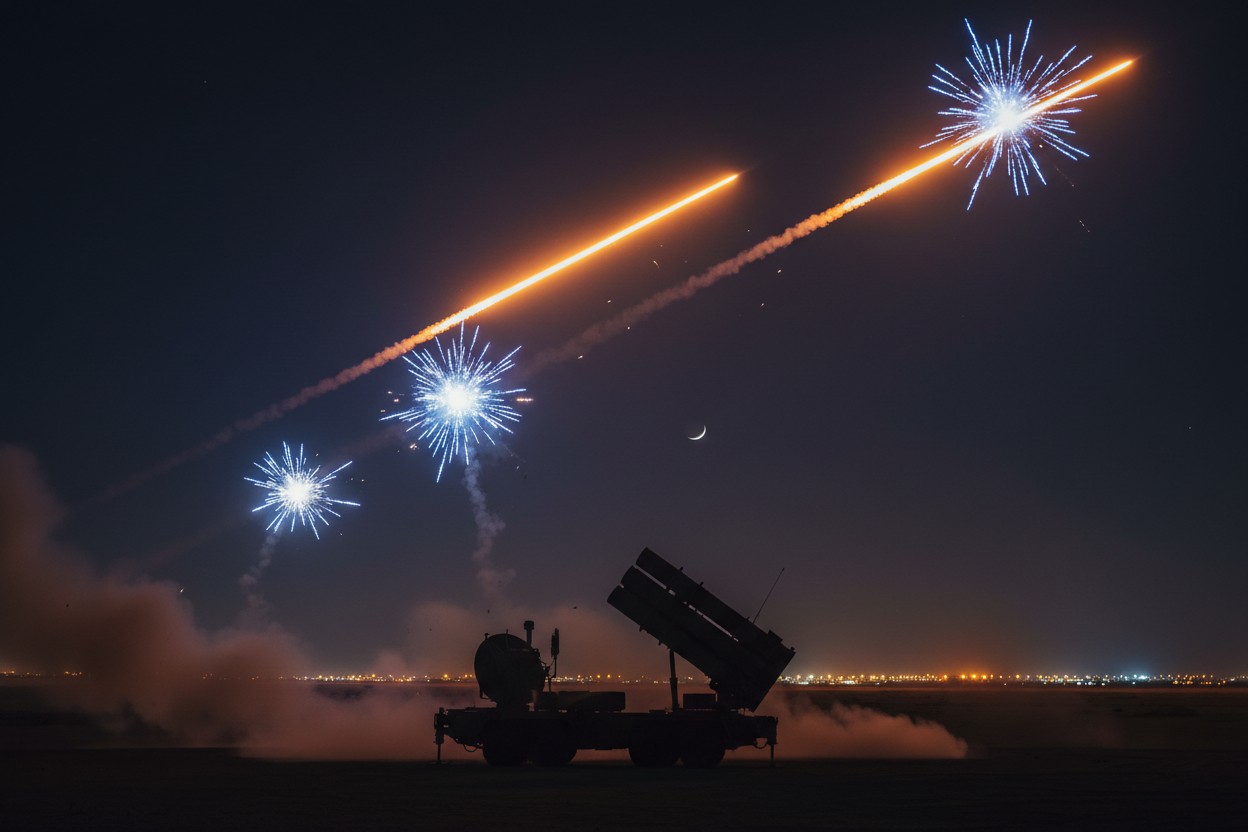
Iran launched ballistic missiles and drones toward Kuwait late Wednesday night, an attack that U.S. Central Command characterized as an “egregious ceasefire violation.” According to CENTCOM, Kuwaiti forces successfully intercepted the ballistic missiles, while U.S. forces shot down the incoming drones. The exchange marked the latest breach of a fragile ceasefire between the United States and Iran, as negotiations over a broader peace deal continued in Qatar.
“This egregious ceasefire violation by the Iranian regime occurred hours after Iranian forces launched five one-way attack drones that posed a clear threat in and near the Strait of Hormuz,” CENTCOM said in a post on X. The statement underscored the volatility of the region, where the strategic waterway remains a key flashpoint between the two nations.
Interception Details and Official Statements
Kuwaiti air defenses intercepted the Iranian ballistic missiles without reported casualties, according to Kuwaiti officials. U.S. forces separately neutralized five one-way attack drones near the Strait of Hormuz, CENTCOM reported. A sixth drone launch from an Iranian ground control site was also thwarted by American forces, the command added. The coordinated interception highlighted the layered air-defense capabilities maintained by the United States and its Gulf partners. [1][2]
CENTCOM stated that U.S. and regional partners “remain vigilant and measured” as they continue to defend forces and interests from what the command called “unjustified Iranian aggression.” The Pentagon provided no immediate details on the type of drones or the specific assets used in the interception, but prior reports have documented the use of Patriot and THAAD systems across the region. [3]
Iran’s Justification for the Strike
Iran’s Islamic Revolutionary Guard Corps said on Thursday that the strikes on Kuwait were in retaliation for a U.S. attack on an Iranian ground control site near Bandar Abbas airport, a coastal city on the Strait of Hormuz, according to The Washington Post as cited by Just the News. The IRGC’s statement framed the missile and drone launch as a proportional response to what it described as an American violation of the ceasefire. [2]
The United States has not confirmed striking the ground control site, though CENTCOM acknowledged conducting “self-defense strikes” on Iranian targets earlier in the week. Those strikes, which the military said targeted missile launch sites and boats attempting to lay mines, further complicated the already tenuous truce. [3][4]
Context: Ceasefire and Strait of Hormuz Tensions
CENTCOM’s characterization of the Kuwait attack as a ceasefire violation came just hours after Iranian drones posed a threat in and near the Strait of Hormuz, a narrow passage through which about one-fifth of the world’s oil supply transits. The waterway has been a persistent flashpoint since the war began in late February 2026, with Iran periodically attempting to disrupt shipping and U.S. forces responding with defensive strikes. [1][4]
The broader conflict, now in its fourth month, has seen Iran employ a strategy that analysts describe as “blind, deplete, and overwhelm” – using waves of missiles and drones to saturate air defenses and raise the cost of hosting U.S. military installations for Gulf states. In late February, Iran launched retaliatory missile strikes across five Gulf countries, including Kuwait, after a joint U.S.-Israeli operation. [5][6] The cumulative effect has been a significant strain on regional security and energy markets.
Regional and U.S. Response
Kuwait’s Foreign Ministry condemned the strikes as a “blatant violation of sovereignty and security,” according to statements reported by regional media. The ministry affirmed Kuwait’s right to take measures to preserve its security, though it did not immediately announce any new defensive deployments. [7] The incident deepened concerns among Gulf states about being drawn into the U.S.-Iran conflict, with some capitals reassessing their military alignments. [8]
In Washington, CENTCOM reiterated that it “remains vigilant and measured” while defending forces and interests. The Pentagon did not announce any new retaliatory strikes in the immediate aftermath of the Kuwait attack, but U.S. forces have conducted multiple rounds of “self-defense” strikes in southern Iran over the preceding days. [3] The episode underscores the difficulty of sustaining a ceasefire while both sides continue to accuse each other of violations.
Conclusion
The attempted missile strike on Kuwait represents another volatile chapter in the U.S.-Iran confrontation, highlighting the fragility of the current ceasefire and the persistent risk of escalation. As diplomatic talks in Qatar continue, the ability of both sides to refrain from further provocations will determine whether the broader war can be brought to a close or whether the region slides deeper into conflict.
References
- NTD. "US Military Says Iran Violated Ceasefire With Missile Attack on Kuwait." May 28, 2026.
- Kevin Killough. "Iran's attempted missile strike on Kuwait a 'egregious ceasefire violation': CENTCOM." Just the News. May 28, 2026.
- BBC News. "US forces fire 'defensive strikes' on Iran targeting military site and threat to Strait of Hormuz." May 28, 2026.
- The War Zone. "Another Day Of Uncertainty In The Strait After U.S. Claims Strikes On Iranian Minelayers." May 26, 2026.
- NaturalNews.com. "Iran's War Strategy: Blind, Deplete, and Overwhelm - The Calculated Plan to Render U.S. Defenses Obsolete." March 2, 2026.
- Laura Harris. "Iran Launches Retaliatory Missile Strikes across Gulf after U.S.-Israel Operation, Bases Targeted." NaturalNews.com. February 28, 2026.
- ZeroHedge. "Iran Targets US Base In Kuwait With Missile & Drones - Gulf Allies Denounce 'Terrorist Attacks.'" May 28, 2026.
- Garrison Vance. "Gulf States Reassess Stance as US-Israel Conflict with Iran Enters Fourth Week." NaturalNews.com. March 24, 2026.
- WikiLeaks and Julian Assange. "The WikiLeaks Files: The World According to US Empire."











Please contact us for more information.