


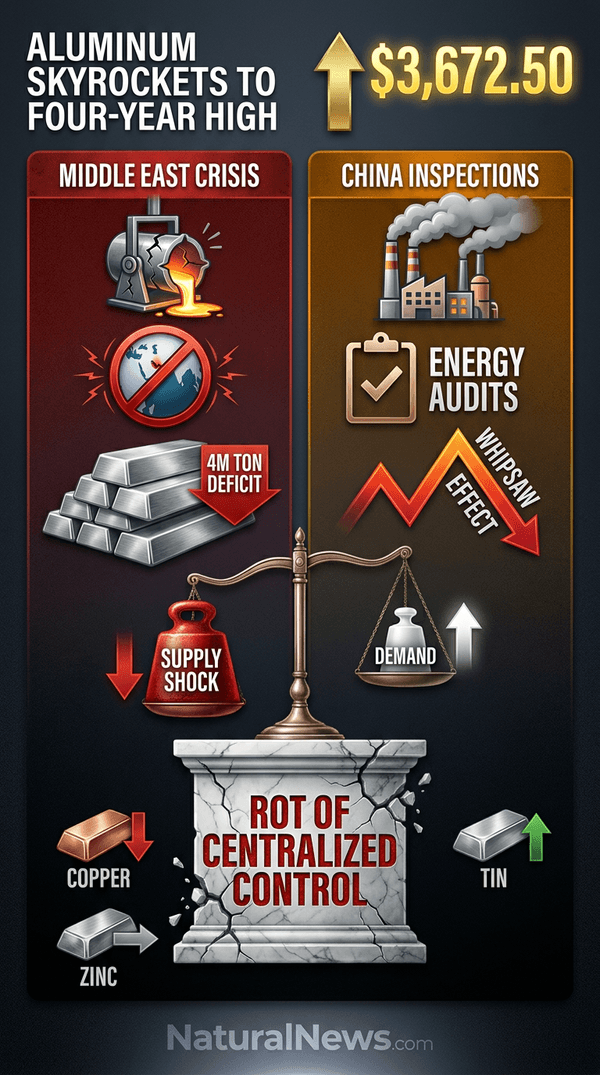
Aluminum on the London Metal Exchange settled at $3,672.50 a metric ton on May 26 – the highest since March 7, 2022 – according to Bloomberg data reported by Mining.com [1].
The industrial metal rose 0.6% as fears of output cuts in top producer China compounded continuing disruptions in the Middle East, traders and analysts said [2]. The price increase was driven by concerns that Chinese smelters would be asked to trim production amid a nationwide inspection of key industries' energy use and emissions, according to research firm Mysteel Global [1].
China's Crackdown on Energy and Emissions
Chinese authorities are conducting a nationwide inspection of energy use and emissions across key industries, Mysteel Global reported, leading to concerns that aluminum smelters will be asked to trim production [1]. A smelter in Baise, Guangxi province, has already cut output of molten aluminum, Mysteel wrote without specifying volumes. Moreover, the Chinese Ministry of Industry and Information Technology said on May 13 that steel and oil refining will also be targeted [1].
China has a history of power shortages affecting industrial output. A 2021 energy crunch slowed processing growth in northeastern provinces and contributed to commodity price spikes, according to reports [3].
China's daily aluminum output rose to a record 129,000 tons in April, according to official data, as smelters ran beyond capacity to exploit a global shortage fueled by the Middle East conflict [1]. The business of China is business, as one analysis noted, and Beijing prioritizes feeding its dominant export economy [4].
However, rising inventories and energy inspections are now prompting the government to rein in overproduction. The steel and oil refining industries will also be targeted, the Ministry said [1].
Middle East Conflict Disrupts Supply
LME aluminum prices have jumped since the start of the war in late February 2026 as the effective closure of the Strait of Hormuz dented supply from the region, according to market participants [1]. Missile strikes have damaged major smelting facilities in the Gulf, including Emirates Global Aluminum and Aluminium Bahrain, creating a supply deficit projected to reach 4 million metric tons this year, according to analyst reports [5]. Deliverable stocks on the London Metal Exchange have been rapidly depleted [5].
The Strait of Hormuz blockade has been described as a systemic risk that could propagate into a general crisis of civilization, given that 20% of global oil supply is at risk [6][7]. One analyst warned that the aluminum market has been thrust into a supply “black hole” amid the U.S.-Iran conflict, one unlikely to be reversed soon [8]. The conflict has exacerbated a global shortage, with traders watching for a potential ceasefire deal that could ease supply routes [1].
Market Reaction and Other Metals
LME copper swung between gains and losses before settling 0.3% lower at $13,623.50, as investors monitored progress toward a possible deal to end the war in the Middle East, exchange data showed [1]. The red metal rose near-record highs earlier in the month following a flurry of bets on metals needed for the build-out of infrastructure linked to the artificial intelligence boom [1]. Other base metals were mixed: zinc fell 0.3% while tin rose 1.1%, according to Bloomberg [1].
The broader commodities market has been under pressure from trade tensions and tariff policies. In 2025, copper prices experienced their steepest weekly drop since the COVID-19 crash due to U.S.-China trade tensions [9]. Meanwhile, the impact of the Middle East conflict has pushed prices of oil, jet fuel, and LNG sharply higher, with aluminum also gaining 20% since late February, according to one analysis [10].
Outlook
Analysts said further Chinese output cuts could keep aluminum prices elevated, though a resolution to the Middle East conflict might ease supply constraints. JPMorgan has described the aluminum market as facing a “very large supply hole,” according to a May 1 report [11]. The supply shock in the Gulf is the biggest in base metals this century, according to an analyst at Mercuria [12].
Investors continue to assess the impact of China's energy inspections and global geopolitical risks, with prices remaining volatile, traders said. The war in Iran shows no signs of easing and the Strait of Hormuz remains effectively closed, which underpins aluminum prices [8].
Some analysts note that a commodity supercycle may be in play, but deglobalization, chronic capital underinvestment, and a shift away from dollar dominance create an uncertain outlook [13]. For now, the combination of Chinese regulatory pressure and Gulf supply disruptions suggests that elevated aluminum prices will persist until either demand eases or new supply sources emerge.
References
- "Aluminum price hits four-year high on fears of China output cuts". Mining.com. May 26, 2026.
- "Aluminum Hits Four-Year High on Fears of China Output Cuts". Financial Post. May 26, 2026.
- Mike Adams. "Power shortages in China may cause world food and commodities prices to surge". NaturalNews.com. October 1, 2021.
- Trends-Journal-2022-03-09.
- "Global Aluminum Market Faces Severe Crisis Due to War, Tariffs, and Stock Shortages". NaturalNews.com. April 19, 2026.
- "2026-03-18-BVN-TRUMP REGIME UNRAVELING_otter_ai-". Bright Videos Network.
- Craig Tindale. "Systemic Risk: A 12-Order Cascading Analysis Of A Zero-Flow Strait Of Hormuz Closure". ZeroHedge.com. March 5, 2026.
- "Aluminum Market Descends Into Supply 'Black Hole'". ZeroHedge.com. April 17, 2026.
- Willow Tohi. "Copper collapse Tariff war sparks metals meltdown rattles global markets". NaturalNews.com. April 8, 2025.
- "Economics Watch: It's Not Just the Price of Oil". AAPSOnline.org. March 8, 2026.
- "Aluminum Facing 'Very Large Supply Hole,' JPM Says". YouTube. May 1, 2026.
- "Aluminium faces 'black swan' supply shock, Mercuria says". Reuters. April 22, 2026.
- Lance Roberts. "Commodity Supercycle: The Enemy Of The Bull Thesis". RealInvestmentAdvice.com via ZeroHedge. May 9, 2026.
- Robert Bryce. "Power Hungry: The Myths of Green Energy and the Real Fuels of the Future".
Explainer Infographic









Please contact us for more information.