


- The health secretary signed a limited PREP Act declaration for a hantavirus outbreak on a cruise ship.
- Critics accuse Kennedy of betraying his past opposition to vaccine liability protections.
- The declaration covers only one experimental drug and expires in July.
- Kennedy defends the action as narrow and not connected to vaccines or Big Pharma.
- The outbreak has caused 12 cases and three deaths, with no pandemic threat.
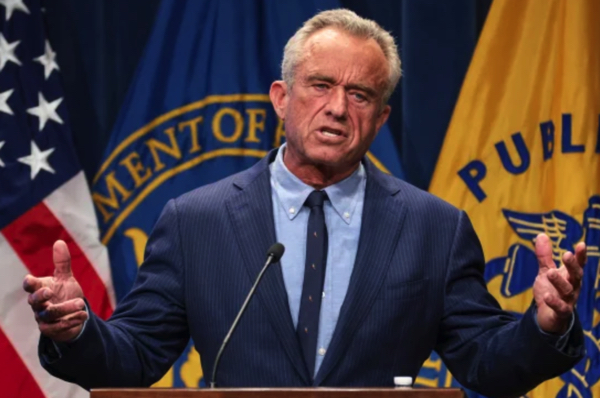
U.S. Health Secretary Robert F. Kennedy Jr. signed a "targeted PREP Act" declaration last week to develop countermeasures for a hantavirus outbreak linked to a cruise ship, where 12 cases and three deaths have been confirmed. The move has ignited fierce criticism from allies in the medical freedom movement who accuse Kennedy of betraying his past opposition to the very same liability protections he once condemned during the COVID-19 pandemic.
The declaration covers only one generic drug — favipiravir, an experimental antiviral — and expires July 18. Kennedy defended the action as narrow in scope, writing on X: "This action helps remove barriers to research and response efforts while we continue monitoring the recent outbreak linked to the South Atlantic cruise ship."
But critics were immediate and sharp. Del Bigtree, founder of the Informed Consent Action Network and former communications director for Kennedy's 2024 presidential campaign, took to X with a pointed rebuke: "Bobby, I remember so many inspiring strategy discussions during your campaign. Providing liability protection to corporate interests for a virus that killed 3 people out of 7 billion was not one of them."
A history of opposition
During the COVID-19 pandemic, the PREP Act became a flashpoint for medical freedom activists. It granted blanket liability protection to vaccine manufacturers including Moderna, Pfizer and Novavax, while those who reported vaccine injuries struggled to receive recognition or compensation. The Biden administration pushed the COVID-19 PREP Act protections forward to the end of 2029, even after declaring the pandemic over, and Kennedy has not rescinded that declaration despite calls to do so.
The PREP Act authorizes the health secretary to issue a declaration exempting manufacturers and distributors from legal liability for injuries caused by vaccines or treatments addressing a public health emergency. Kennedy's critics now argue that signing even a narrow PREP Act declaration contradicts his previous stance that such powers violate the Constitution.
Toby Rogers, Ph.D., a medical freedom analyst, similarly accused Kennedy of abandoning his principles. The backlash intensified after a social media user posted a recent interview in which Kennedy criticized the government for dismantling "the entire Constitution of the United States" through emergency powers assumed during COVID-19, including violating the Seventh Amendment's guarantee of a jury trial by protecting vaccine manufacturers from liability.
Kennedy's defense
Kennedy pushed back forcefully against his critics. "Don't believe Internet fearmongers. @HHSGov defends public health AND supports medical freedom — period," he wrote on X. He emphasized that the declaration applies to one drug, is time-limited, and makes the drug available for people who want to take it voluntarily. He clarified that the HHS action does not involve vaccines, does not "pave the way for a new mRNA vaccine," and does not "provide Big Pharma with new, limitless protections from liability."
Some defenders argued the declaration is far less sweeping than critics claim. Dr. Robert Malone, writing on Substack, said: "Frankly, compared to what Americans lived through in 2020 and 2021, this declaration barely rises above the level of bureaucratic housekeeping with lawyers attached."
California attorney Rita Barnett-Rose acknowledged the declaration is much narrower than the COVID-19 declaration, but added: "It is reasonable to ask why PREP immunity was needed at all when existing legal and medical systems already appeared fully capable of handling the situation." She warned that the legal language allows for future amendments and contains stockpile provisions and broad protections for manufacturers and distributors.
The hantavirus outbreak
The outbreak drew international attention after multiple people on the cruise ship M/V Hondius contracted the Andes strain of hantavirus, and three passengers died. The WHO was notified May 2 of a cluster of severe acute respiratory illness among passengers and crew. The vessel left Ushuaia, Argentina on April 1, carrying 147 people from 23 countries.
The WHO estimates between 10,000 and 100,000 hantavirus infections occur globally each year, making it a relatively rare disease. Seventeen Americans and one British person exposed to the virus were quarantined in Nebraska or Georgia. Unlike COVID-19, hantavirus lacks the rapid genetic mutation that drives widespread transmission, and it is widely acknowledged the current strain does not pose a pandemic threat.
Broader implications
The PREP Act has drawn sustained criticism from GOP lawmakers and medical freedom advocates who point to its expansive use during the COVID-19 pandemic. Congressional Republicans, including Reps. Thomas Massie (R-Ky.) and Paul Gosar (R-Ariz.), have introduced legislation to repeal it. According to HHS, existing PREP Act declarations already cover smallpox, mpox, Zika, anthrax, viral hemorrhagic fevers and more.
Kennedy has previously pushed to strip vaccine manufacturers of their liability shields. Yet for a movement built on distrust of emergency powers and pharmaceutical influence, even one targeted declaration raises uncomfortable questions about where the line gets drawn — and whether the principles that fueled a political campaign can survive the realities of governing.
Sources for this article include:











Please contact us for more information.