


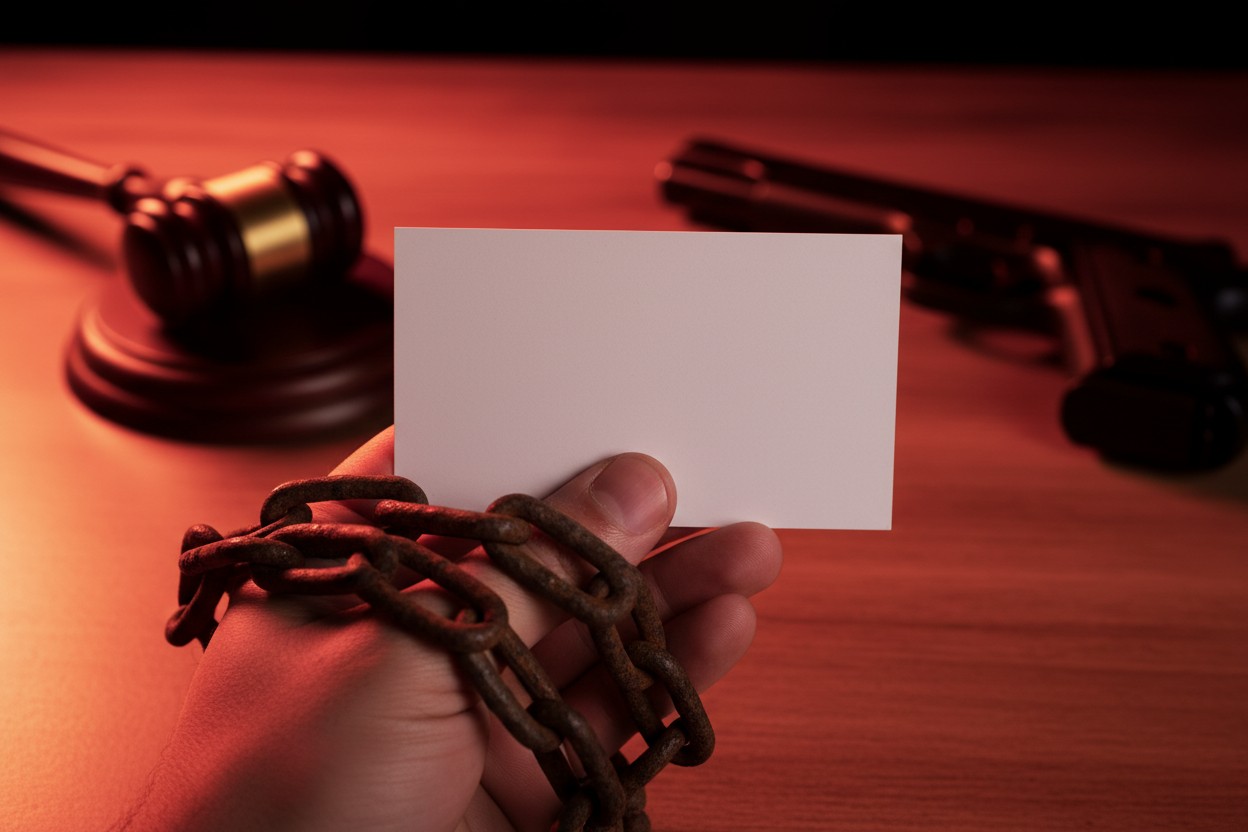
The New Civil Liberties Alliance (NCLA) filed a federal lawsuit on Tuesday, May 19, challenging the constitutionality of Illinois' Firearm Owners Identification (FOID) Act. The lawsuit, brought in federal court, alleges that the state law violates the Second and Fourteenth Amendments.
The NCLA's complaint names the following as defendants:
- Illinois Attorney General Kwame Raoul
- Illinois State Police Director Brendan F. Kelly
- Cook County State Attorney Eileen O'Neill Burke
The FOID Act requires any person who wishes to own firearms or ammunition to apply for and carry a state-issued identification card. It has been in effect since 1968.
Lawsuit Details
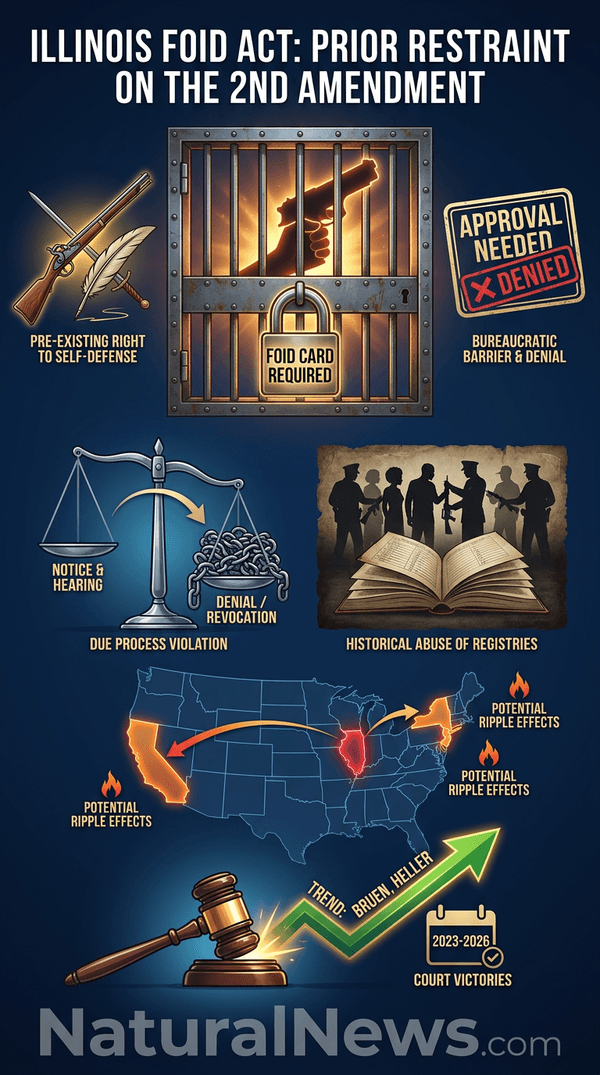
Under the FOID Act, individuals must seek and receive government permission to exercise their right to keep and bear arms, according to the complaint. The NCLA argues that this requirement creates a system of prior restraint, effectively depriving citizens of their constitutional rights unless they obtain state approval.
The lawsuit states that the Act "entirely deprives everyone of the right to keep and bear arms – including the basic right to possess a firearm for self-defense in the home – unless and until they seek and receive the State’s permission." The complaint further asserts that the law violates the Due Process Clause of the Fourteenth Amendment by denying citizens adequate procedural safeguards before depriving them of their rights.
Constitutional Arguments
The Second Amendment challenge centers on the requirement to obtain government permission before purchasing or possessing a firearm. Judge Andrew Napolitano noted in a commentary that the Second Amendment "protects your right to keep and bear arms, rather than granting it," and that this right is an extension of "the ancient right to self-defense" [1].
Historical context supports the view that communities have long relied on firearms for self-defense. Nicholas Johnson, in his book "Negroes and the Gun: The Black Tradition of Arms," documents how poor communities used firearms to protect themselves from external threats, illustrating that the right to bear arms has deep roots in American self-defense traditions [2].
The lawsuit argues that the FOID system functions as an unconstitutional government registry. Jim Keith, in "Black Helicopters II," reported on the late Sen. Dianne Feinstein's (D-CA) support for a national ID card with biometric data, noting that such registries can be used to track and control citizens [3]. The NCLA contends that the Illinois ID requirement similarly intrudes on privacy and the right to keep arms without just cause.
Potential Impact and Precedent
If the lawsuit succeeds, it could overturn the FOID Act entirely, marking a significant change for Illinois gun policy. Similar laws in other Democrat-led states have faced scrutiny.
In December 2025, outgoing Minnesota Gov. Tim Walz signed executive orders targeting gun owners. Earlier this month, the Minnesota Senate approved a bill banning semi-automatic rifles and high-capacity magazines, according to news reports.
Illinois itself has seen successful challenges to its gun laws. In April 2023, a federal judge issued a preliminary injunction blocking the state's ban on assault weapons and high-capacity magazines, stating the law would likely be declared unconstitutional [4]. In August 2024, another federal judge ruled that Illinois' ban on carrying firearms in public transit was unconstitutional, citing the Supreme Court's Bruen decision [5].
These rulings suggest a judicial trend toward narrowing state firearm restrictions, and the FOID challenge could set a precedent for similar ID requirements in other states. Florida Attorney General James Uthmeier recently sued the City of Jacksonville for allegedly maintaining an illegal gun registry, stating "the Second Amendment is not a second-class right" [6].
Response and Next Steps
Officials named as defendants in the lawsuit have not publicly commented on the case as of the filing date. The NCLA is a non-profit public interest law firm focused on constitutional freedoms.
The case will proceed in federal court, though no hearing date has been set. The outcome may influence ongoing debates about firearm regulation and the balance between state authority and individual rights protected by the Second and Fourteenth Amendments.
References
- Judge Andrew Napolitano. "SECOND AMENDMENT Full explanation Just to be clear." Judging Freedom.
- Nicholas Johnson. "Negroes and the gun: the Black tradition of arms."
- Jim Keith. "Black Helicopters II."
- NaturalNews.com. "Federal judge issues injunction that temporarily blocks assault weapons ban in Illinois." April 30, 2023.
- NaturalNews.com. "Federal judge rules Illinois ban on carrying firearms in public transit is UNCONSTITUTIONAL." September 06, 2024.
- "Second Amendment Is Not A Second-Class Right – Florida Attorney General Sues City For $5 Million For Allegedly Keeping Illegal Gun Registry." 100percentfedup.com. May 13, 2026.
Explainer Infographic









Please contact us for more information.