
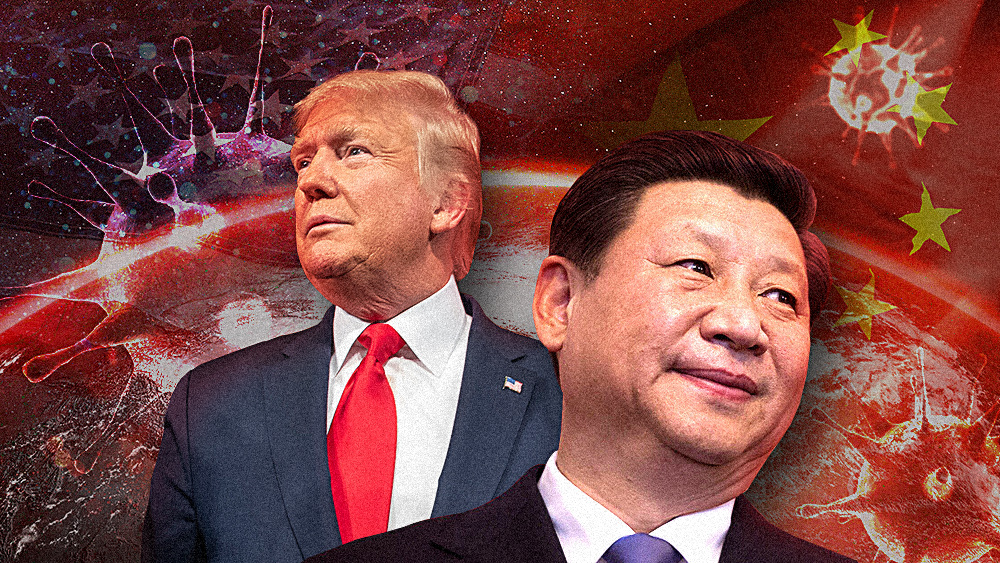
- China agreed to buy $17 billion per year of U.S. beef and poultry through 2028.
- U.S. agricultural exports to China crashed from $38 billion in 2022 to $8 billion in 2025 due to Trump’s tariffs.
- Soybean purchases collapsed from $18 billion to $3 billion; China diversified to Brazil and Argentina.
- Trump offered tariff reductions on Chinese goods, possibly linked to TikTok deal negotiations.
- China demands access to U.S. high-tech goods; Washington refuses on national security grounds.
- Two new trade boards were created, but details remain vague.
- Farmers face additional pressure from Iran war disrupting fertilizer shipments via Strait of Hormuz.
The soybean bloodbath
According to U.S. Department of Agriculture data, China’s imports of American agricultural goods peaked at $38 billion in 2022, buoyed by $18 billion in soybean purchases. By 2025, those figures had cratered to a combined $8 billion, with soybeans alone dropping to $3 billion. China, the world’s largest soybean importer, simply stopped buying from the United States last year after Trump hiked tariffs on Chinese goods. Instead, Beijing turned to Brazil and Argentina, locking in long-term supply contracts that gave those South American nations a strategic foothold in protein markets. The $17 billion beef and poultry pledge does not restore soybeans to their former glory. It compensates for a fraction of the losses while locking American farmers into a deal that depends on China’s willingness to honor commitments—commitments that Beijing has not officially confirmed in writing.
The beef deal itself carries echoes of past promises. China let licenses for hundreds of U.S. beef plants expire last year, and the import value for 2025 fell to less than $500 million, down from a peak of $2.14 billion in 2022. Poultry exports dropped from $1 billion to $286 million over the same period. The White House now claims that plants run by Tyson and Cargill will regain access, but it is not immediately clear how much beef American businesses will actually sell. The U.S. would “actively work” to address China’s concerns over detention of dairy products, seafood, and potted bonsai exports, while China would “likewise actively work” to register beef processing facilities and allow poultry from certain states. This diplomatic language masks a fundamental asymmetry: China holds the cards on market access, and Trump is offering tariff reductions on “a specific range of products” without specifying which ones.
The TikTok tariff trap and the technology standoff
Trump’s willingness to offer tariff reductions on Chinese goods is no accident. It connects directly to the April 5 deadline for ByteDance to divest from TikTok or face a nationwide ban. Speaking from the Oval Office on March 26, the president stated, “Every point in tariffs is worth more than TikTok,” suggesting he would lower tariffs to expedite the deal. “Considering the role China will play in this, a possible approval might be involved, and I believe they will agree. Perhaps, I might offer them a tariff reduction or something similar to expedite the process because every reduction in tariffs is worth more than TikTok.” This statement reveals a transactional worldview where national security concerns over data privacy and Chinese ownership of a platform used by 170 million Americans become bargaining chips for agricultural trade relief.
Yet Beijing’s demands cut deeper than beef. Xu Tianchen, a senior economist at the Economist Intelligence Unit in Beijing, posed the critical question: “What is he going to offer in exchange?” China wants access to advanced U.S. high-tech goods, including semiconductors and artificial intelligence components. Washington refuses on national security grounds, creating a standoff that no $17 billion beef pledge can resolve. Trump’s new 25 percent tariff on foreign vehicle imports, announced the same week, further illustrates his strategy of wielding tariffs as weapons while simultaneously offering them as rewards. The doubling of tariffs on all Chinese imports to 20 percent earlier this month set the stage for negotiations, but it also deepened the hole American farmers must climb out of.
The hidden cost: War, fertilizer, and the Strait of Hormuz
While the White House focused on beef and poultry, a more existential threat looms for American agriculture. The war that the U.S. and Israel launched against Iran has curtailed shipping through the Strait of Hormuz, a vital trade corridor that has restricted global fertilizer supplies and sent those prices soaring. Farmers already squeezed by lost Chinese markets now face higher input costs that could erase any gains from the new beef deal.
The American Soybean Association, which urged Trump to prioritize soybeans in trade talks, acknowledged the fragility of the situation. Scott Metzger, the association’s president, stated the group would like to see “additional soybean purchases this marketing year, as well as continued progress toward fulfilling future purchase commitments,” adding that “greater certainty and consistency in the marketplace help provide farmers with the confidence they need as they make decisions.” Certainty, however, remains elusive. China has diversified its sources, and the U.S. has not secured long-term guarantees beyond the beef pledge.
The two new boards
Trump and Xi agreed to set up separate boards of trade and investment during the Beijing summit, but offered few details on how they would differ from existing trade dialogues. The Board of Trade would manage “non-sensitive goods,” while the Board of Investments would address investment-related issues. China’s Ministry of Commerce stated that the two sides agreed “in principle” to reduce tariffs on products “of respective concern at equivalent scale.” This language is deliberately vague, allowing both sides to claim progress while deferring hard decisions.
For farmers watching from the heartland, the boards represent another layer of bureaucracy atop a broken system. The USDA data showing China on track to fulfill its previous soybean commitment of 12 million metric tons by the end of the marketing year on August 31 remains well below the 25 million to 30 million metric tons purchased in past years. The numbers do not lie, but the press releases do.
Sources include:



Please contact us for more information.