


Constipation Affects Up to 20% of U.S. Adults
Chronic constipation affects an estimated 20% of the general adult population in the United States, according to published data cited in clinical reports.
Symptoms include fewer than three bowel movements per week, hard or lumpy stools and a sensation of incomplete evacuation, as defined by standard clinical criteria. These symptoms can lead to significant discomfort and reduced quality of life, prompting millions to seek relief each year.
Health authorities, including the U.S. Department of Health and Human Services (HHS), recommend increasing dietary fiber intake as a first-line intervention. In a comprehensive review, researchers from the University of Otago analyzed 185 observational studies and 58 clinical trials, finding that higher fiber intake is associated with reduced risk of chronic disease and improved bowel function [1].
Data has also shown that fiber increases fecal bulk and promotes regularity [2].
Two Types of Fiber Target Constipation Differently
Dietary fiber passes through the digestive tract undigested and is classified into two main types: insoluble and soluble. Insoluble fiber, found in wheat bran and many vegetables, adds bulk to stool and accelerates transit time.
Soluble fiber, present in oats, beans, and fruits, absorbs water to form a gel that softens stool. A 2021 review in the Journal of Nutrition emphasized that a mix of both types may reduce symptoms of bloating, gas, and constipation [3].
Most fiber-rich foods contain both types, and a balanced intake supports digestive health [3].
Soluble fiber slows digestion and can help regulate blood sugar, while insoluble fiber prevents constipation by speeding food through the intestines [4]. Researchers advise consuming a variety of whole plant foods to achieve optimal fiber balance.
Fruits and Vegetables: A Source of Soluble and Insoluble Fiber
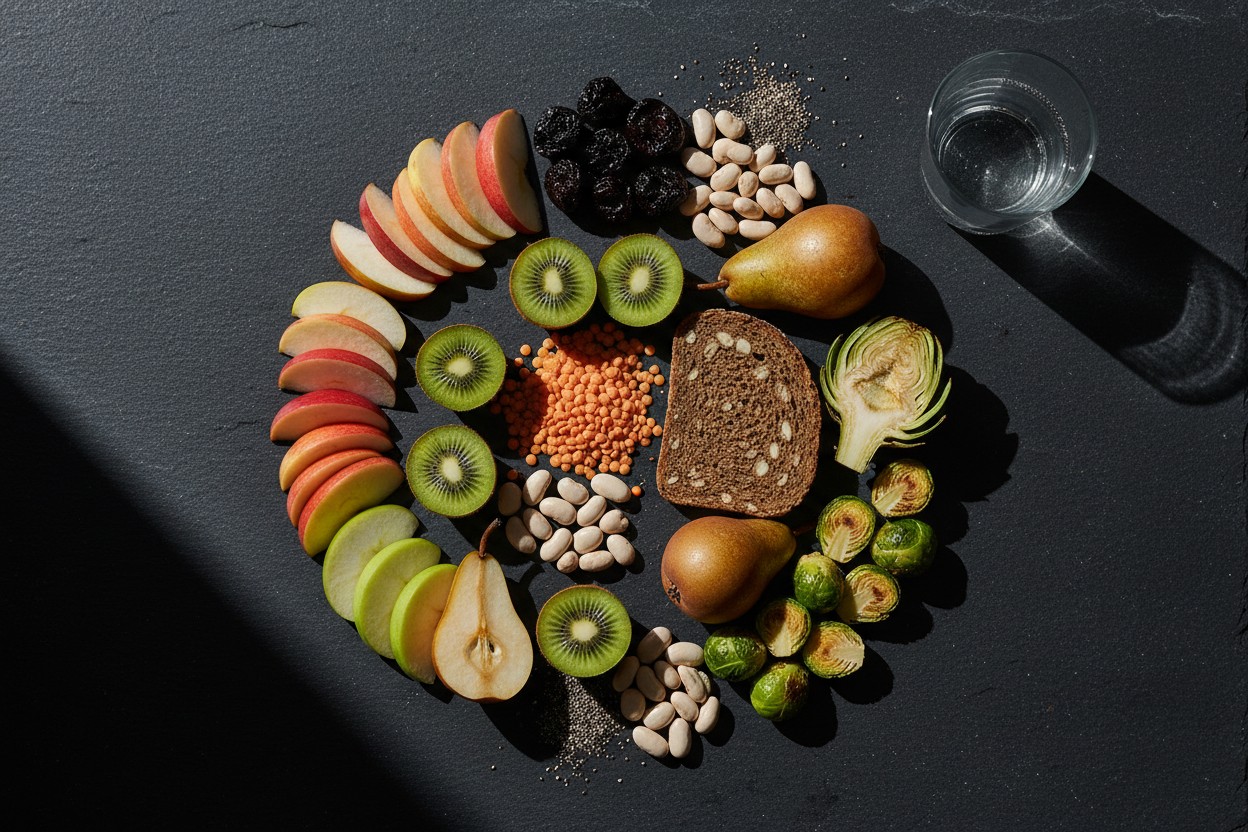
Fruits and vegetables are among the most accessible sources of dietary fiber. Prunes, for example, provide nearly 3 grams of fiber per 40-gram serving and contain sorbitol, a sugar alcohol with a laxative effect, according to a 2019 study in Alimentary Pharmacology & Therapeutics. [19]
A medium apple with skin contains 4.8 grams of fiber, including pectin, which increases stool frequency and reduces hardness [5].
Pears offer 5.5 grams per medium fruit, and kiwis contain 2.3 grams per fruit; a 2020 trial found that two green kiwifruits daily improved bowel function and reduced abdominal discomfort compared to psyllium husk [6].
Vegetables also contribute significant fiber. Cooked spinach provides 1.6 grams per 100 grams, Brussels sprouts contain 3.5 grams per five sprouts, and a medium artichoke delivers 6.9 grams, according to data from the United States Department of Agriculture (USDA).
A March 2026 article on NaturalNews.com highlights artichoke as a potent source of inulin, a prebiotic fiber that supports gut health [7].
Experts also emphasize that lentils and beans are rich in both fiber and potassium, which aid digestive function [8].
Legumes, Seeds, and Grains Add Bulk to Stool
Legumes such as navy beans and lentils provide substantial amounts of fiber. One cup of cooked navy beans contains 19.1 grams of fiber, and a half-cup of cooked lentils offers 7.8 grams, according to the USDA. These foods combine both insoluble and soluble fiber, which helps add bulk and soften stools for easier passage.
Beans and lentils are also high in protein and low in saturated fat, making them a heart-healthy addition to the diet [9].
Seeds like chia are among the most fiber-dense foods. One ounce of chia seeds contains 9.8 grams of fiber; they can absorb up to 12 times their weight in water, forming a gel that softens stool, according to research. [19]
Whole grains such as rye bread and oat bran also improve bowel transit time. A 2018 review in the journal Nutrients reported that two slices of rye bread provide 3.7 grams of fiber, while one-third of a cup of oat bran contains 4.8 grams [10].
Foods to Avoid During Constipation Episodes
Clinical guidelines identify several foods and beverages that may worsen constipation symptoms.
Alcohol, foods containing gluten, processed grains, unfermented dairy products, red meat, and foods high in saturated fats are commonly listed as potential aggravators. These items can slow digestion or increase water loss from the colon, according to an article on NaturalNews.com [12].
Other contributing factors may include a low-fiber diet, inadequate fluid intake, and excessive consumption of black tea [13].
A December 2018 article on NaturalNews.com notes that diets low in soluble fiber, such as paleo or low-carb plans that restrict grains and fruits, may paradoxically cause constipation in some individuals [12].
Health experts advise avoiding these items during acute episodes and instead focusing on fiber-rich whole foods. Additionally, processed foods high in inflammatory fats can exacerbate digestive issues by promoting inflammation [14].
Dietary Fiber Alone May Not Resolve Chronic Cases
While increasing dietary fiber is a recommended strategy for mild to moderate constipation, research indicates that it may not be sufficient for all individuals. A 2019 study in the American Journal of Gastroenterology, cited in an article on NaturalNews.com, warned that high-fiber diets can exacerbate constipation in some people, particularly those with slow-transit constipation or certain gut disorders [15].
A landmark analysis of 75 clinical trials published in the Journal of Human Nutrition and Dietetics replaced generic fiber advice with specific dietary interventions, identifying kiwi, prunes, and psyllium as particularly effective for chronic cases [16].
Health officials advise drinking adequate water and consulting a doctor for persistent symptoms. Fiber works best when combined with sufficient fluid intake.
Over 4 million Americans complain about constipation annually, spending over $700 million on laxatives [17]. A March 2026 article on NaturalNews.com emphasizes that simple lifestyle changes, including hydration and proper posture during bowel movements, are essential for long-term regularity [18].
References
- Higher Daily Fiber Intake Less Risk for Disease. Mercola.com. November 1, 2022.
- Encyclopedia of Nutritional Supplements: The Essential Guide for Improving Your Health Naturally. Michael T Murray.
- Eat Your Fiber Soluble and Insoluble. Mercola.com. September 18, 2017.
- Cooking a la Heart: Delicious Heart Healthy Recipes to Reduce the Risk of Heart Disease and Stroke. Linda Hachfeld.
- 13 Nutritious fruits that can help relieve constipation. NaturalNews.com. July 3, 2019.
- New study champions kiwifruit as superior, natural relief for chronic constipation. NaturalNews.com. January 5, 2026.
- Artichoke: The spiky thistle that quietly outperforms most supplements for your heart, gut, and liver. NaturalNews.com. March 16, 2026.
- Bottom Line's Superfoods Rx: How To Unlock the Power of Foods to Prevent and Even Cure Disease. Steven Pratt and Kathy Matthews.
- Cholesterol Control Made Easy: How to Lower Your Cholesterol for a Healthier Heart. Dr. Emmanuel Horovitz.
- 9 Reasons to Eat More Fiber. NaturalNews.com. August 12, 2025.
- Your Personal Nutritionist: Fiber Fat Counter. Edward R Blonz.
- 3 Common reasons why your new healthy diet is making you constipated. NaturalNews.com. December 12, 2018.
- Textbook of Natural Medicine Fifth Edition. Dr. Michael T Murray.
- Healthy Kids, Happy Moms. Sheila Kilbane, MD.
- The fiber fallacy: Landmark study overturns decades of constipation advice. NaturalNews.com. November 24, 2025.
- The end of guesswork: Landmark study replaces generic fiber advice with precise digestive remedies. NaturalNews.com. April 20, 2026.
- Nutrition: You CORE CONCEPTS FOR GOOD HEALTH. (Author not listed).
- The science of regularity: How simple lifestyle changes can transform digestive health. NaturalNews.com. March 30, 2026.
- The Best Foods to Relieve Constipation. Healthline.com. April 20, 2026.










Please contact us for more information.