


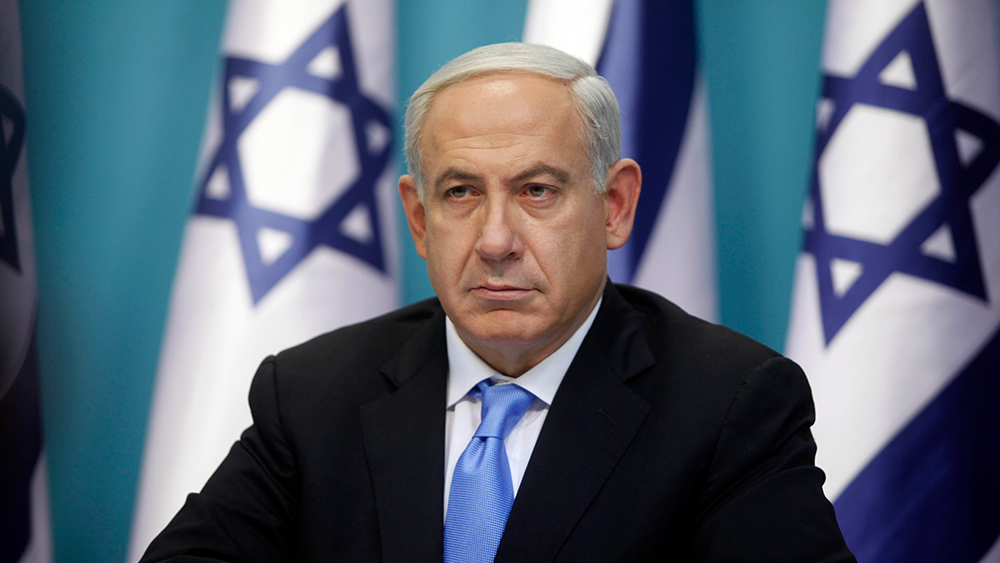
- Former Prime Ministers Naftali Bennett (right-wing) and Yair Lapid (centrist) announced they are merging their parties to create a new alliance called "Together" for the next Israeli election, expected later this year. Bennett will lead the new group.
- This is the second time these two have teamed up to challenge Prime Minister Benjamin Netanyahu. Their previous partnership briefly ended his long rule in 2021, but their government collapsed quickly due to internal disagreements.
- In response, Netanyahu mocked the merger by posting an old photo of Bennett and Lapid with an Arab party leader, highlighting that their last alliance was short-lived and unstable.
- Recent polls suggest the election will be tight. While Netanyahu’s Likud party might win slightly more seats, the new Bennett-Lapid alliance is predicted to be able to form a majority government with other small parties, potentially pushing Netanyahu out of power.
- Bennett and Lapid are focusing on mandatory military service for ultra-religious communities (which currently get exemptions) and criticizing Netanyahu for failing to turn military wins into long-term security victories against Iran, Hezbollah and Hamas.
In a dramatic political development that could reshape Israel's political landscape, two of Prime Minister Benjamin Netanyahu's most formidable rivals announced on April 26 that they are joining forces for the country's next election, expected later this year.
Former Prime Ministers Naftali Bennett, a right-wing leader, and Yair Lapid, a centrist figure who heads the liberal-leaning Yesh Atid party, declared the merger of their respective parties: Bennett 2026 and There is a Future. The new political alliance will be called "Together," with Bennett serving as its leader.
The announcement marks the second time that these two political figures have teamed up to challenge Netanyahu's dominance. In 2021, their partnership successfully ended Netanyahu's 12-year consecutive tenure as prime minister.
However, their coalition government survived barely 18 months before collapsing due to deep divisions over major issues, including the Israeli-Palestinian conflict.
That historic coalition had included, for the first time in Israel's history, a party drawn from the country's Arab minority: the United Arab List.
The current alliance appears to take a different approach, with Bennett ruling out future coalitions with Arab parties and rejecting any territorial concessions to enemies, an apparent reference to Palestinian statehood aspirations.
Netanyahu responds with sarcasm
Netanyahu, Israel's longest-serving prime minister who returned to power after winning the November 2022 election and forming the most right-wing government in the country's history, responded quickly to the merger announcement. In a social media post, he shared a 2021 photograph showing Bennett and Lapid alongside Mansour Abbas, the head of the United Arab List, with a caption suggesting their previous alliance was short-lived and unstable.
The prime minister's response reflects his characteristic political survival instincts.
Despite facing significant challenges, Netanyahu has shown remarkable resilience throughout his decades-long career, having first served in the 1990s before becoming a polarizing figure both at home and abroad.
Changing political fortunes
The timing of the alliance appears strategically calculated.
Hamas's 2023 attack on southern Israel plunged the region into turmoil and left Netanyahu's security credentials damaged. Multiple polls conducted since then have predicted he will lose the next election, which must be held by the end of October.
An April survey by Israeli media found Bennett's combined ticket securing 21 of the Knesset's 120 seats, compared to 25 for Netanyahu's Likud party. While Lapid's party currently holds 24 seats, the poll showed it dropping to just seven.
However, the survey indicated that Bennett and Lapid's likely coalition, including several smaller factions, would command at least 60 seats, which is enough for a majority, while Netanyahu's coalition of right-wing and religious parties would hold only 50 seats.
These numbers align with other recent polls from academic institutions and Israeli media, though the political landscape remains fluid and could shift before election day.
Key issues driving the campaign
Both Bennett and Lapid have made military conscription a central campaign issue.
Netanyahu's ultra-religious political allies have sought exemptions for their communities, which have low employment rates and receive significant state benefits. This has become increasingly pressing as the military warns of being overstretched, with the past two years exacting the highest military death toll in decades.
Lapid, a former television news anchor and author, speaks for Israel's secular middle class, which has grown frustrated with what it sees as an unfair tax and military service burden.
Meanwhile, Bennett, a former army commando turned technology millionaire, brings military credibility to the partnership.
The two have also criticized Netanyahu for failing to translate military gains into strategic victories against Iran and the groups it supports in Lebanon and Gaza: Hezbollah and Hamas. Bennett's statement at the joint news conference captured the alliance's ambition: after three decades, "it is time to part with Netanyahu and open a new chapter for Israel."
Whether voters agree remains to be seen, but the merger of these two experienced political rivals presents the strongest challenge yet to Netanyahu's continued leadership.
Watch this clip as the Health Ranger Mike Adams talks about how Israel miscalculated and is sowing its own destruction.
This video is from the Health Ranger Report channel on Brighteon.com.
Sources include:











Please contact us for more information.