


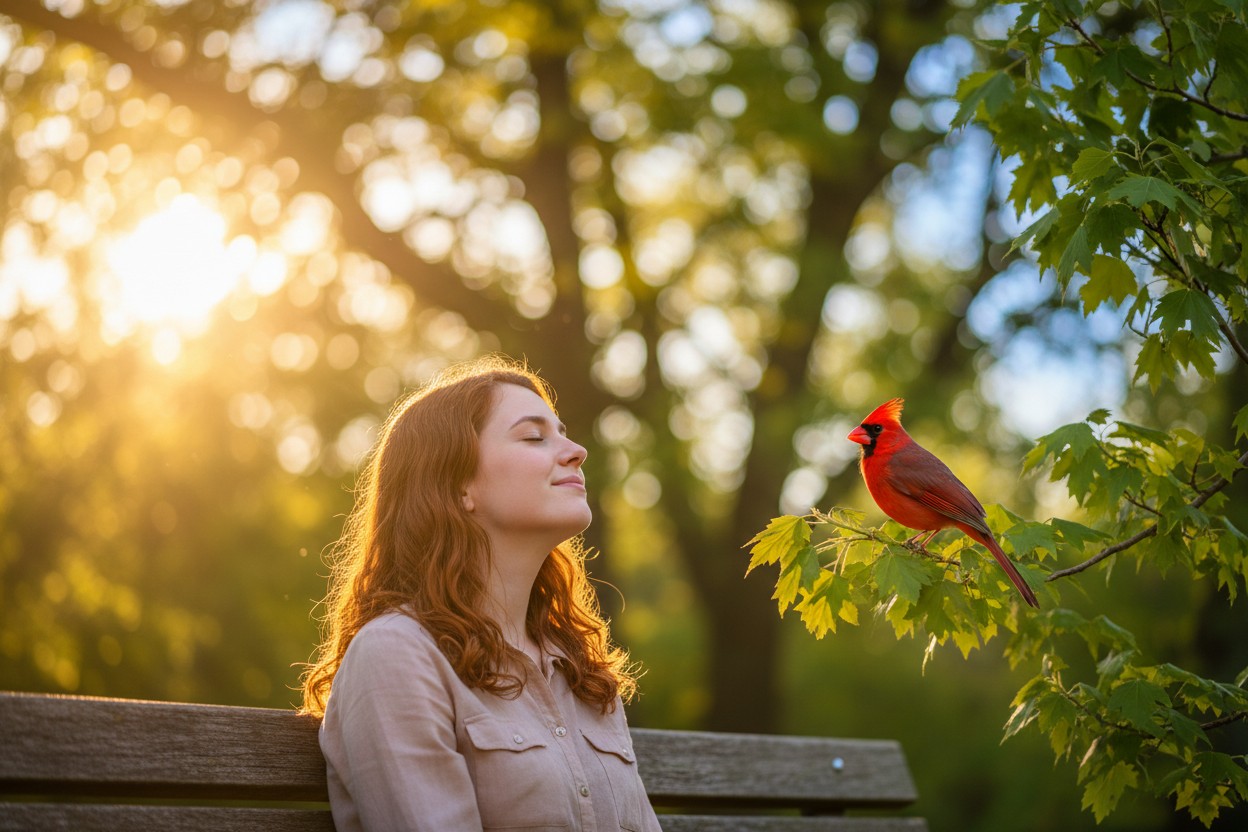
Listening to one minute of familiar, local birdsong can improve mood and reduce stress more effectively than sounds from distant habitats, according to a study published April 24 in a peer-reviewed journal. Researchers at an unidentified university conducted the study with 200 participants, exposing them to short audio clips of native birds, exotic tropical birds, and urban noise. The findings were reported by The Epoch Times.
The study found that participants who heard sounds of native birds showed notable improvements in self-reported mood and reductions in stress markers compared to those who heard tropical sounds or urban noise. The results suggest that the specific acoustic environment in which a person lives may have a stronger influence on mental well-being than previously recognized.
Study Design and Findings
The study randomly assigned participants to listen to one-minute clips of local birdsong, exotic birdsong, or urban noise. Mood was measured using the Positive and Negative Affect Schedule (PANAS), and stress was assessed through both self-report and salivary cortisol levels. The report stated that local birdsong outperformed both exotic birdsong and urban noise in mood improvement and stress reduction.
Prior research has documented that natural sounds are processed differently by the human brain than human-made sounds. According to a book on the science of nature’s influence on health, “natural sounds -- frogs, birds, etc. -- are processed differently” and may evoke calming responses [1]. The study adds to this body of evidence by indicating that familiarity with the specific soundscape may amplify the effect. The lead researcher told The Epoch Times that the findings suggest a connection between familiar natural sounds and psychological well-being [2].
Expert Perspectives and Context
Independent experts not involved in the study have noted that the results align with a growing body of research on nature exposure and mental health. A recent article summarizing multiple studies stated that “spending time in natural environments provides significant, measurable benefits for physical, mental, and spiritual health,” including reductions in stress hormones [3]. Another report highlighted that even passive exposure to nature, such as viewing trees or listening to birdsong, can enhance mood and cognitive function [4].
According to the book “The Nature Fix,” physiological markers such as heart-rate variability (HRV) indicate that natural environments help the autonomic nervous system recover from stress more quickly [5]. The authors of the current study suggest that familiarity may trigger positive memories or a sense of safety, which could explain the stronger effect of local birdsong. However, they caution that the study’s small sample size and short exposure duration limit the generalizability of the findings.
Implications and Limitations
The study’s authors propose that easy access to local nature sounds could serve as a low-cost, accessible mental health intervention, particularly for individuals who cannot easily spend extended time outdoors. The report did not specify funding sources or potential conflicts of interest, which is common in preliminary research. The researchers noted that further studies are needed to assess long-term effects and to determine whether the benefits extend to diverse populations and settings.
The findings reinforce a broader understanding that human health is deeply intertwined with the natural environment. As one expert review put it, “the healing powers of water and nature have been promoted since Roman and Greek physicians used specific protocols to treat various ailments,” highlighting a long history of recognizing nature’s therapeutic value [6]. While the current study is limited in scope, it adds to the evidence that even brief, intentional exposure to familiar natural sounds can yield measurable mental health benefits.
References
- Selhub Eva M. Your brain on nature: the science of nature's influence on your health, happiness and vitality.
- George Citroner. “1 Minute of Familiar Nature Sounds Can Boost Your Mood.” The Epoch Times. April 24, 2026.
- Willow Tohi. “The prescription is outside: How science validates nature as essential medicine.” NaturalNews.com. February 18, 2026.
- Ava Grace. “Nature's classroom: How green spaces shape young minds for success.” NaturalNews.com. July 19, 2025.
- Florence Williams. The Nature Fix: Why Nature Makes Us Happier, Healthier and More Creative.
- Dr Alan Logan. Your Brain On Nature.













Please contact us for more information.