


Introduction: America Can Learn a Lot From China's Successes
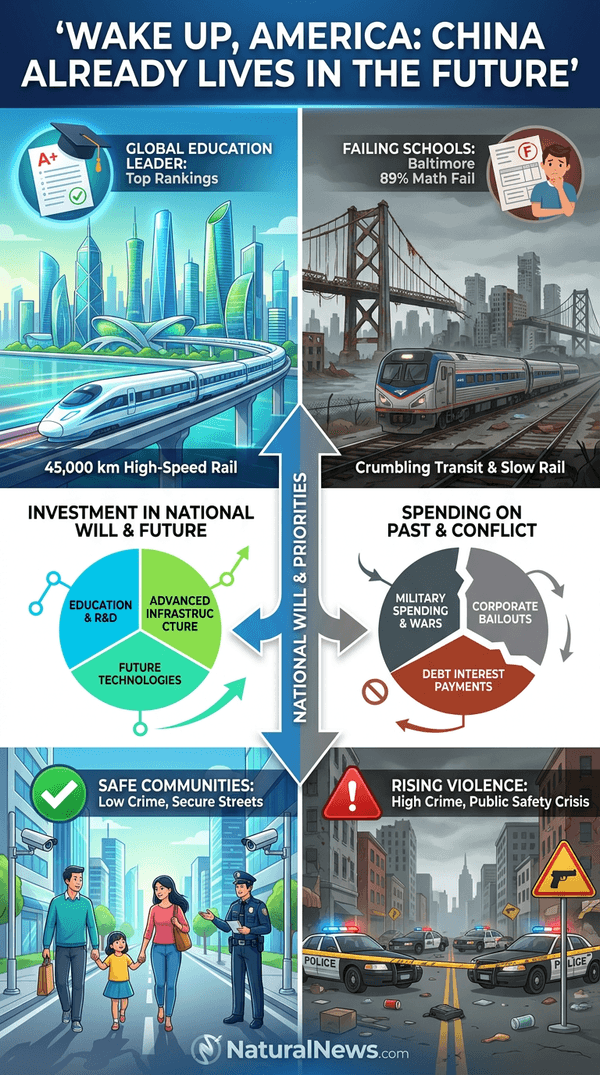
I have spent years documenting the decay of American infrastructure and the hollowing out of our industrial base, but nothing brought the scale of the gap into focus like the words of a Western war correspondent who has lived and traveled extensively across Asia. Michael Yon, a man who has walked the front lines of conflict and development, recently laid out the brutal truth: the infrastructure gap between China and the United States, combined with China's strategic investments and geopolitical maneuvers, positions it as the clear leader in this competitive landscape [1]. While Americans still picture China as a 1970s backwater nation, the reality is that it has built a 45,000-kilometer high-speed rail network and cities that put ours to shame.
I believe we have been deliberately misled by our own media and government that wants us to settle for a slow collapse rather than real progress. They tell us China is a crumbling communist state, yet the evidence tells a different story. As Newt Gingrich correctly noted, it is not China's fault that 89 percent of Baltimore eighth graders cannot pass their math exam, or that the decay of American primary and secondary education threatens our economic future [2]. The contrast is not just about trains; it is about a society that invests in its people versus one that pours trillions into overseas bombs and domestic bailouts. Here is why you need to understand what is really happening.
The Infrastructure Shock: Riding Chinese Rails While Our Bridges Collapse
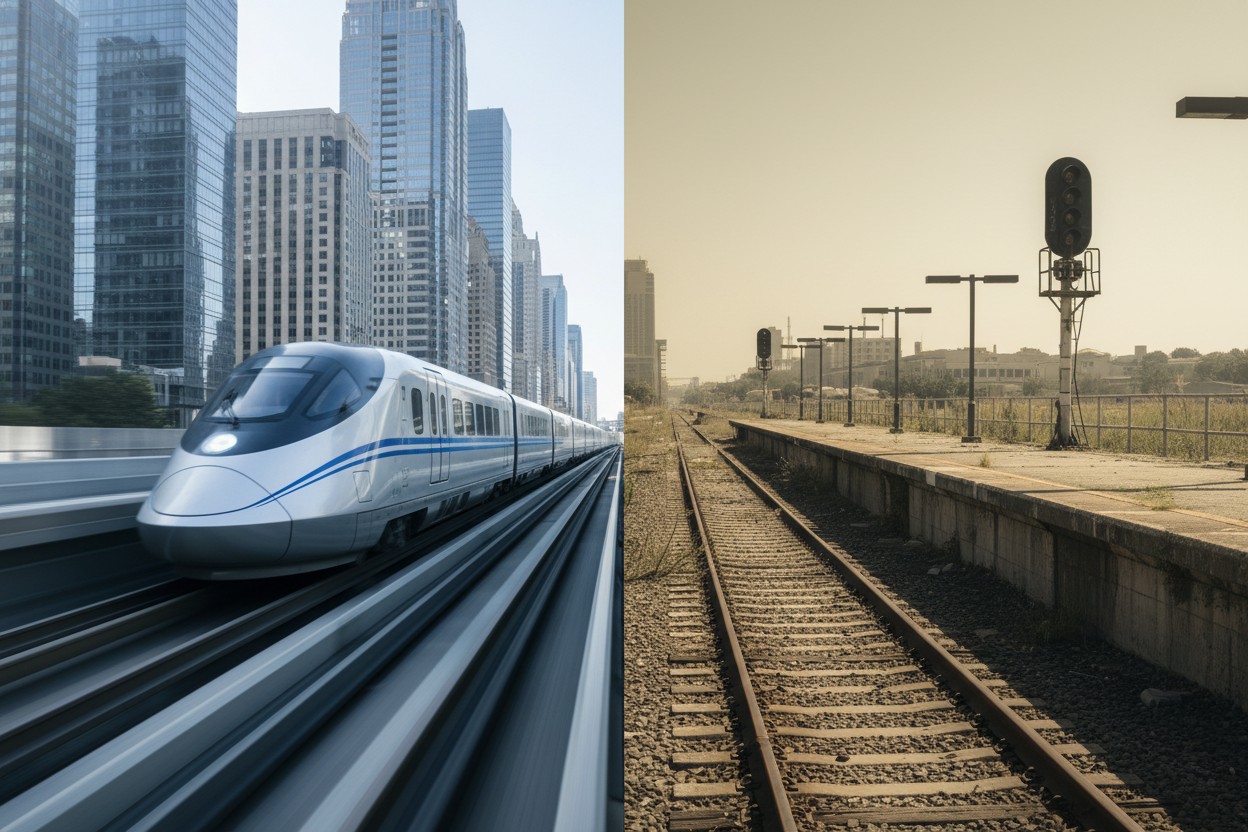
When I read Business Insider's 2018 report on China's high-speed railway system, the numbers stunned me: 15,500 miles of track (at the time), the largest in the world, with some of the fastest bullet trains in service [3]. Since then, China has continued expanding, even launching construction on a maglev line that will eventually carry passengers at 621 miles per hour [4]. Imagine covering the distance from Shanghai to Beijing in four and a half hours at 350 km/h. If you take an Amtrak from New York to Chicago – a similar distance – it will take you nearly twenty hours, assuming the train is not delayed.
This is not merely a transportation story. It is a story of national will. As Peter B. Walker explains in his book “Powerful Different Equal,” China’s economic model is far more focused because it exercises control over all the factors driving economic performance, from labor supply to trade agreements, and it can tap the country's financial resources to make mega-investments [5]. This is a government that has decided to build infrastructure for growth and innovation. Meanwhile, the United States cannot even maintain the rail lines we already have, let alone build new ones that might compete in the future.
We also can't seem to build a power grid that can keep up with demand, and that's a critical failure in the age of AI data centers.
Free Markets or Hypocrisy? Washington's War on Chinese Competition
The United States now bans Chinese electric vehicles and Huawei telecom equipment, not because they are unsafe, but because they are better and less costly than U.S. brands. That is not free market capitalism; it is protectionism dressed up in national security rhetoric. Consider what Lance D. Johnson reported: a bipartisan coalition in Congress launched a $2.5 billion plan to create a national stockpile of critical minerals, a direct counter-punch to what lawmakers call China's economic warfare [6]. If American companies cannot compete, the government steps in to block the competition rather than improve its own products.
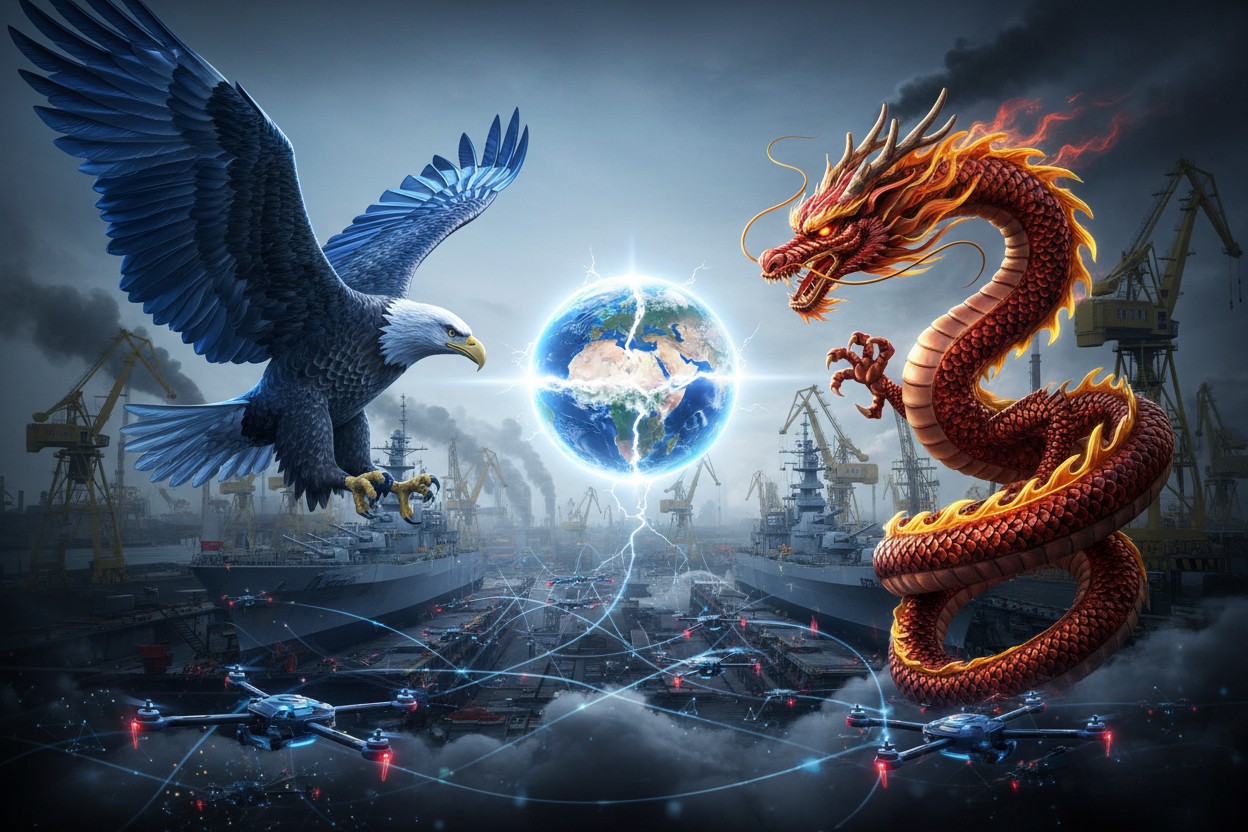
I never thought I would see the Pentagon looking at Detroit's ailing auto assembly lines as the salvation of American military might, yet in 2026 reports confirm that defense planners are courting Ford and General Motors for dual-use production – transforming car factories into weapons factories [7]. This is a confession of failure. While Ford and GM cannot keep up with BYD, Washington bails out failing industries and blocks imports. In my view, American consumers deserve access to the best products at the best prices. China's innovation in EV technology and battery chemistry is leading the world, yet we are too proud to admit that we have lost our competitive edge in numerous areas (drones, robotics, materials science, rare earths extraction and so on). If we don't allow Chinese products into our country, we should at least learn from China's innovation and automation to improve our own domestic industry, yet even that isn't happening either.
Safety, Freedom, and What 'Normal' Really Looks Like Under 'Communism'
One of the most telling comparisons is public safety. While I have never met Cyrus Janssen personally, I did interview him recently. The stories that circulate among Westerners who have lived in China paint a picture that contradicts everything we are taught by the U.S. media. Parents let their young children walk to the store alone because violent crime is virtually nonexistent. Child kidnappings? Nearly zero. It turns out that China isn't run by pedophile protectors. Nor does China tolerate woke idiocy in its schools. Go figure.
As Cyrus related in a recent interview: “while there are certainly issues within China's governance, the systemic problems plaguing American society – ranging from social instability to political hypocrisy – are far more pronounced” [8]. As he explains, the Chinese government is actually less invasive in daily life than ours in many ways: no endless election ads, no social media checks at the border (unlike under the Trump administration), and no constant surveillance of every purchase – despite what the media says about social credit.
It's America that has become a surveillance police state, with extreme thought police monitoring across social media and effective "social credit scores" where you can be debanked, de-platformed and de-monetized for wrongthink. And that doesn't require any "communism" at all. It's happening right here in America, every single day.
I'm not saying that China is faultless, or that America has no redeeming values, but rather that China is demonstrating key areas of innovation and success that could help America restore the level of innovation and technical expertise that once defined America's greatness. We should learn from China rather than simply condemning the nation outright.
Conclusion: The Choice We Face -- Open Our Eyes or Fall Further Behind
China is on track to become the world's largest tourist economy by 2026, while the United States scares away visitors with chaos, hostility, violent crime and decaying infrastructure. I have documented how the West's geopolitical blunders are accelerating China's rise. Eric Yeung recently explained that China's leadership has operated for decades under the assumption that the United States would one day try to strangle its energy supplies – so Beijing built alternative corridors and long-term partnerships [9]. While Washington slept, dreaming of eternal dominance, the Chinese built the future.
I believe we need to drop the ideological blinders and learn from what China is doing right: massive infrastructure projects, merit-based education, long-term strategic planning, and a government that builds for its people instead of for the military-industrial complex. The time has come for Americans to visit China, see it for themselves, and demand better from our own leaders. The future is not coming – it is already happening in the East. We can either wake up and compete or continue to fall further behind. The choice is ours.
In the United States, our current path of corruption, incompetence and military bullying only leads to ruin. We must choose a new course and learn from those nations that are achieving innovation, infrastructure advancements, technical superiority and manufacturing abundance. We have a lot to learn from China. But can we find the humility to admit we no longer lead the world in everything?
I have my reservations about that. The very idea of "American exceptionalism" has to die first in order for America to be reborn out of humility, innovation, discipline and merit. I'm willing to earn my rewards and work for a better future for our world. I don't want any handouts, welfare or government grants. But I'm the minority in America these days, and few people share those sentiments.
References
- Mike Adams interview with Michael Yon - November 21, 2024.
- Newt Gingrich. Trump vs China: Facing America's Greatest Threat.
- NaturalNews.com. China's superfast bullet train network shows how antiquated the US railway system truly is. July 3, 2018.
- Ava Grace. China's new construction projects include advanced maglev train that can travel up to 621 mph. NaturalNews.com. December 11, 2024.
- Peter B. Walker. Powerful Different Equal.
- Lance D. Johnson. U.S. Moves to Break China's Stranglehold on Elements Powering the Future, Establishing 'Strategic Resilience Reserve'. NaturalNews.com. January 16, 2026.
- Mike Adams. The Pentagon's Desperate, Doomed Plan to Turn Ford and GM Into Weapons Factories. NaturalNews.com. April 16, 2026.
- Mike Adams. Brighteon Broadcast News. Brighteon.com.
- Mike Adams. Why the West's Geopolitical Blunders Are Accelerating China's Rise. NaturalNews.com. April 24, 2026.
Explainer Infographic:





Please contact us for more information.