


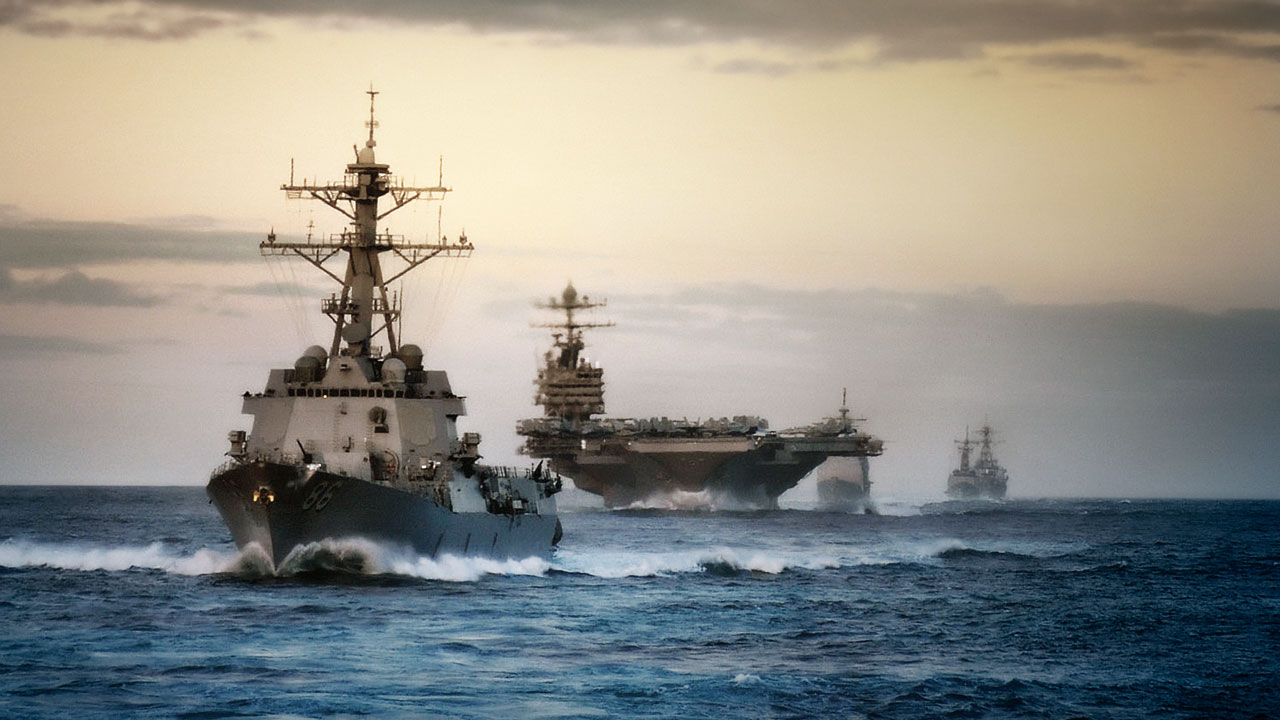
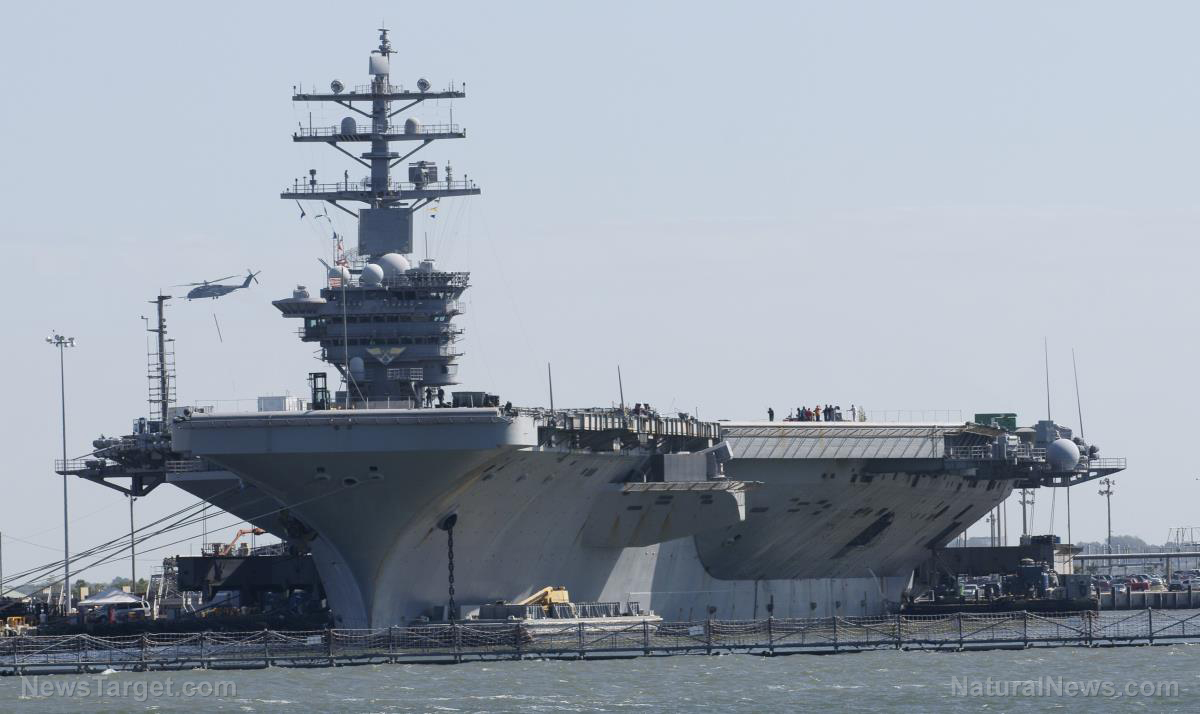
The world's most advanced aircraft carrier is limping home to Virginia not victorious, but battered. The USS Gerald R. Ford endured a 30-hour laundry room fire that sickened 200 sailors, forced 600 crew members into damaged quarters, and pushed the vessel past every sane operational limit with a record 309-day deployment. But beneath the headlines about plumbing failures and crew fatigue lies a far more troubling story that the Pentagon refuses to address.
The Ford's withdrawal from the Middle East comes at a critical moment when the United States and Israel have launched strikes on Iran, initiated a blockade of Iranian ports in the Strait of Hormuz, and engaged in ceasefire talks that appear to be going nowhere. The official narrative suggests a routine rotation. The evidence points to something far more alarming. From what we're being told, the U.S. Navy's most advanced warship is breaking down not from enemy fire but from the unsustainable demands maintaining a naval presence that the Department of War refuses to acknowledge is faltering.
Key points:
- The USS Gerald R. Ford suffered a 30-hour laundry room fire on March 12 that injured 200 sailors from smoke exposure.
- The carrier's 309-day deployment is the longest for any modern American aircraft carrier since the Vietnam War.
- The Ford is returning to Virginia for extensive repairs in mid-May 2026 with no replacement carrier announced.
- The United States and Israel launched strikes on Iran on February 28 causing civilian casualties.
- A two-week ceasefire announced April 7 was extended after inconclusive talks in Islamabad.
- The U.S. Navy began blockading Iranian ports on April 13 in the Strait of Hormuz.
- Two carriers remain in the Arabian Sea but the fleet is operating beyond sustainable limits.
A fire that exposed more than faulty wiring
The March 12 fire in the primary laundry section of the USS Gerald R. Ford burned for 30 hours: thirty hours of fire aboard a nuclear-powered aircraft carrier carrying thousands of personnel and millions of gallons of jet fuel. The Navy reported that over 600 sailors were affected and roughly 200 required medical attention for smoke exposure. Sailors who survived that ordeal then faced sleeping on floors because their living quarters had been damaged.
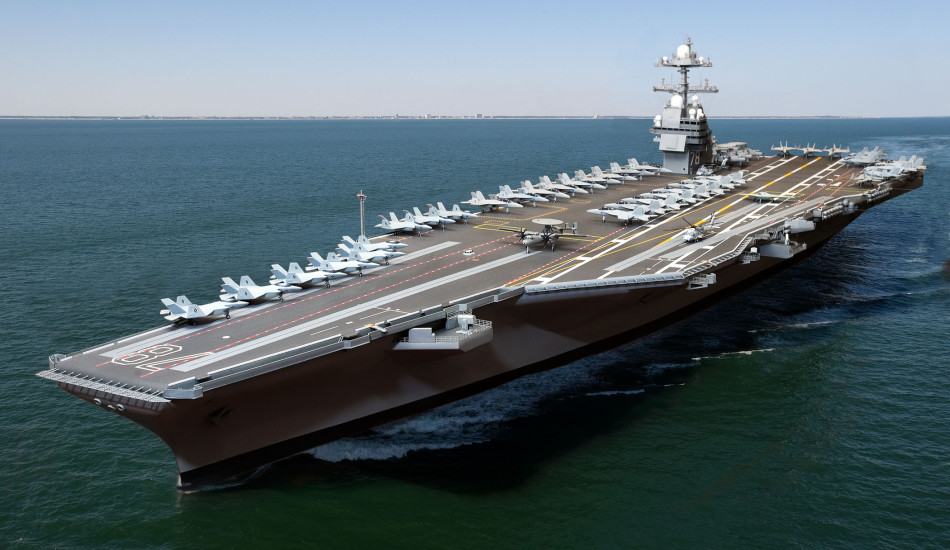
The Ford is the lead ship of the Gerald R. Ford class of aircraft carriers commissioned on July 22, 2017. It measures 1,106 feet long and 256 feet wide with a full-load displacement of over 100,000 tons. It carries over 4,500 personnel and more than 75 aircraft. This is the vessel the Pentagon claims represents the future of American naval power. Yet a laundry room fire brought it to its knees.
The Washington Post reported that the Ford is expected back in Virginia around mid-May for extensive repairs. The Navy Office of Information refused to discuss future operations citing operational security. A Pentagon spokesperson simply stated they do not comment on ship movements.
Three carriers and a burned out laundry room
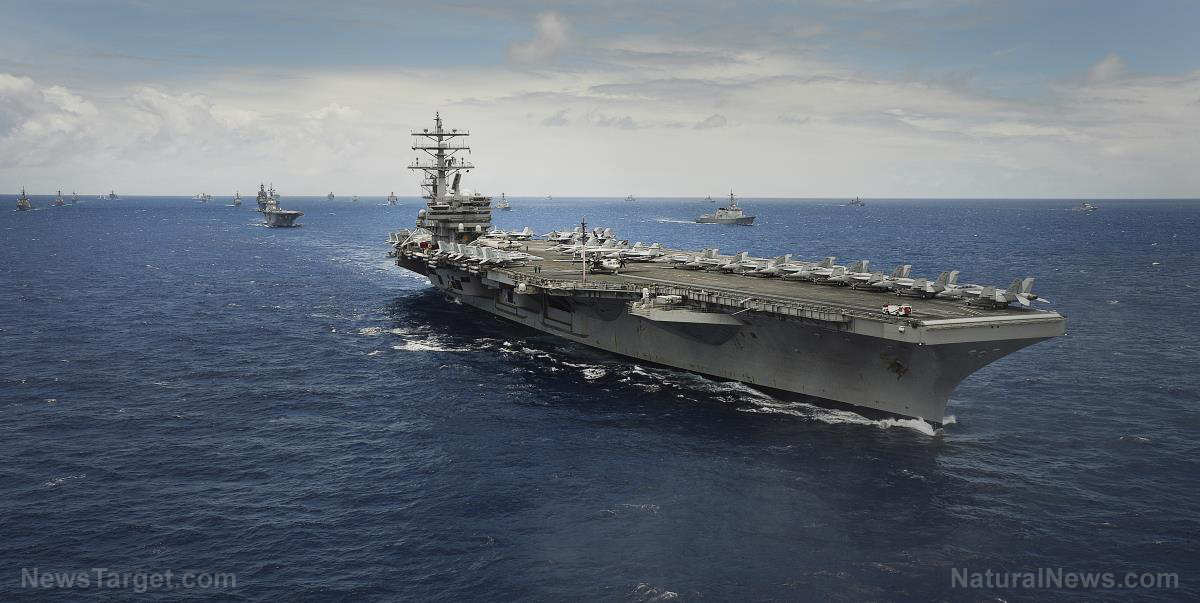
At the height of the buildup, three U.S. aircraft carriers were operating in or near the Middle East. That level of naval presence has not been seen in decades. The Pentagon presented this as a signal of deterrence. What it actually signaled was a military machine operating beyond its sustainable limits.
Carrier deployments typically last about six to seven months. The Ford's 309-day deployment stretches far beyond normal operating cycles and compresses the maintenance and training timelines that follow each deployment. Longer deployments delay critical maintenance, reduce training windows for future missions, and increase fatigue among sailors.
The Ford's departure leaves two carriers in the Arabian Sea to enforce the blockade of Iranian ports. The question nobody in Washington wants to answer is whether those carriers can sustain operations without the same mechanical failures and crew fatigue that plagued the Ford.
The USS George H.W. Bush has arrived in the region as part of the large U.S. naval presence. But the Ford's role in the buildup and its potential departure underscores how central carrier strike groups have been to U.S. strategy both as a source of combat power and as a signal of deterrence.
The blockade that nobody asked about
While the media focuses on the Ford's mechanical problems, the strategic situation in the Middle East has escalated dramatically. On February 28, the United States and Israel launched strikes on targets in Iran causing damage and civilian casualties. On April 7, Washington and Tehran announced a two-week ceasefire. Subsequent talks in Islamabad ended inconclusively. President Trump extended the cessation of hostilities to give Iran time to come up with a unified proposal.
Then came April 13. The U.S. Navy began blockading maritime traffic entering and exiting Iranian ports on both sides of the Strait of Hormuz. Washington maintains that non-Iranian vessels are free to sail the strait as long as they do not pay a toll to Tehran. This is a blockade by any reasonable definition.
The Strait of Hormuz is one of the most strategically important waterways in the world. Approximately 20 percent of the world's petroleum passes through these narrow waters. Blockading Iranian ports effectively means the United States is attempting to choke off Iran's economy while claiming the moral high ground on drug trafficking.
The persistent bloviating by the Department of War portends an underlying struggle. The United States has fallen into the trap of forever war before in Iraq, Afghanistan, and other Middle Eastern countries the nation sought to overtake. Day by day, the pattern is repeating itself with Iran.
Sources include:




Please contact us for more information.