
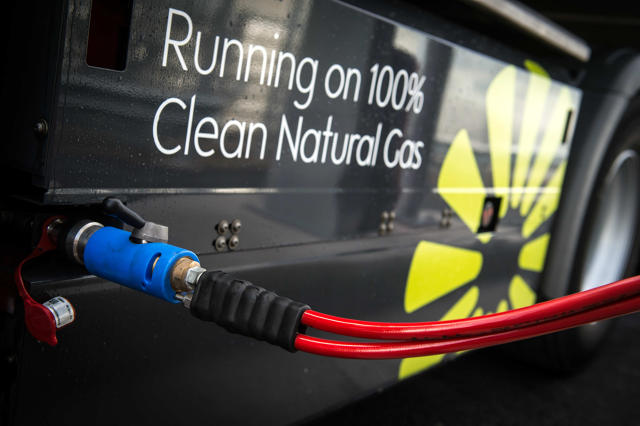
- A domestic boom in natural gas and renewable energy has insulated the U.S. economy from severe price shocks caused by a 2026 Middle East conflict that disrupted global energy supplies, including a major LNG export halt.
- The shale revolution made the U.S. the top natural gas producer and LNG exporter, while a massive expansion of wind and solar power provides low-cost electricity. Together, they stabilize the grid and have helped keep U.S. energy costs lower than they would otherwise be.
- Ideological opposition in both parties is hindering further gains; some Republicans oppose renewable energy projects, while some Democrats block new natural gas infrastructure, stalling critical permitting reforms for energy projects.
- A surge in electricity demand from AI data centers and renewed Middle East conflict (which has spiked gasoline prices) are straining the energy system, highlighting the need for policy that supports alternatives like electric vehicles.
- To maintain long-term energy security and affordability, the U.S. must pass permitting reforms to build more infrastructure. Failure to do so risks higher domestic prices and squanders a strategic advantage.
In a world where conflict in the Middle East has historically sent economic shockwaves across the globe, American households and businesses are finding an unexpected buffer: a domestic energy boom built on natural gas and renewable power. As President Donald Trump and Israeli Prime Minister Benjamin Netanyahu prosecute a war against Iran in early 2026, a significant portion of global energy exports has been disrupted. Yet, the United States, fortified by 15 years of strategic production increases, is weathering the storm with remarkable stability, exposing a critical political failure to fully capitalize on this advantage for long-term consumer relief.
The unseen shield against global chaos
The immediate trigger for the current global energy scare is the effective closure of the Strait of Hormuz, a vital maritime chokepoint and the decision by Qatar, the world's second-largest exporter of liquefied natural gas (LNG), to halt production. This has removed roughly one-fifth of global LNG supply—gas super-cooled into liquid form for ocean transport—from the market overnight. In Europe and Asia, prices have skyrocketed. In the U.S., the impact on natural gas prices has been muted, a testament to the nation's production dominance.
This insulation is no accident. It is the direct result of the shale gas revolution, a drilling boom that utilized hydraulic fracturing or fracking, to unlock vast underground reserves. Since 2011, the U.S. has been the world's top natural gas producer. Since 2022, it has also been the largest LNG exporter. This dual role creates a protective moat: domestic needs are met first by a massive homegrown supply, with excess capacity available for export.
A renewable surge adds to the buffer
While natural gas forms the bedrock of this energy security, its partner in stabilizing the grid has been a historic expansion of wind, solar and battery storage. Over the past decade, U.S. wind power output has tripled and solar generation has increased more than tenfold. These renewable sources provide low-cost, clean electricity. Crucially, they work in tandem with modern natural gas plants, which can power up in minutes to back up renewable energy when the sun isn't shining or the wind isn't blowing.
This synergy has delivered tangible benefits. Without the combined doubling of gas production and the renewable surge since 2010, analysts contend U.S. consumers would be facing far steeper electricity bills today. This domestic abundance has also become a geopolitical tool, allowing the U.S. to displace Russia as Europe's primary gas supplier—a strategic win achieved across both the Trump and Biden administrations.
The political irony undermining progress
The bitter irony of this success story is that the very synergy protecting America is being undermined by ideological purists in both major political parties. The Trump administration and its allies have consistently and irrationally demonized renewable energy, rolling back incentives and even blocking completed projects from operating, thereby denying consumers access to cheaper power.
Conversely, a faction within the Democratic Party remains reflexively opposed to new natural gas infrastructure, including pipelines needed to transport affordable gas to high-cost regions like the Northeast. This bipartisan intransigence has stalled critical permitting reforms in Congress. These reforms would streamline the approval process for both energy pipelines and the high-voltage transmission lines needed to move renewable power from where it's generated to where it's needed.
Mounting pressures demand action
The need for compromise has never been more urgent. Two simultaneous forces are straining the system: an unprecedented surge in electricity demand from artificial intelligence data centers and the economic volatility sparked by renewed military conflict in the Middle East. The war's impact is already stark in the oil market, a globally traded commodity where U.S. consumers are not insulated. Gasoline prices have jumped over 12% in a week, directly hitting household budgets.
This contrast highlights a policy shortcoming. The administration's aversion to electric vehicles leaves consumers with fewer alternatives to escape high pump prices. EVs, charged on a grid increasingly powered by domestic gas and renewables, could offer a shield, but policy currently discourages their adoption.
A crossroads for affordability and security
The present moment reveals a nation at an energy crossroads. The existing fortress of gas and renewables is providing a vital, temporary buffer. However, the moat is not impenetrable. Experts warn that if LNG exports rise sharply in response to the global crisis, domestic gas and electricity prices will inevitably climb as supply tightens. The long-term solution is not to halt progress but to accelerate it.
"The need for long-term energy security arises from the urgency to ensure a stable, resilient and affordable supply of energy for national economies and defense," said BrightU.AI's Enoch. "It is critical to reduce dependence on volatile global markets and geopolitical rivals for key resources, particularly minerals essential for modern and clean energy technologies. A comprehensive strategy is required to mitigate supply chain vulnerabilities and secure the materials needed for the ongoing energy transition."
Passing permitting reforms to build more infrastructure would unlock a new era of energy abundance, driving down costs further and solidifying U.S. economic and foreign policy flexibility. Failure to act is a choice to victimize American consumers, who are now tracking energy affordability more closely than ever. Any lawmaker who blocks this pragmatic path risks paying the price at the ballot box, as the nation's hard-won energy security hangs in the balance. The tools for enduring prosperity and stability are at hand, awaiting only the political will to use them.
Watch and learn about renewable energy and grid instability.
This video is from the Brighteon Highlights channel on Brighteon.com.
Sources include:










Please contact us for more information.