
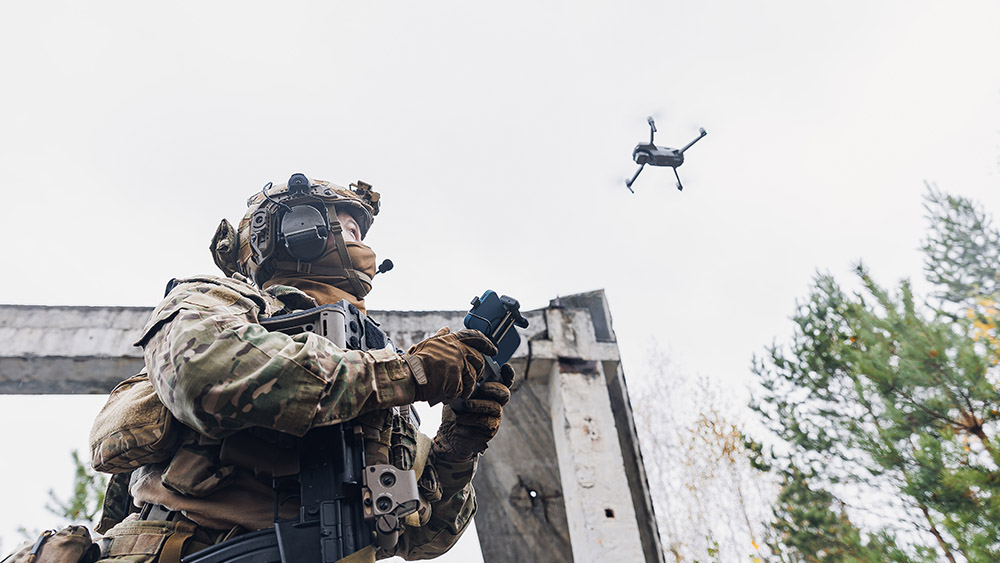
- Australia significantly increases its defense investment to $7 billion for counter-drone technology.
- It funds a laser weapon capable of burning through steel to target drones.
- Interceptor drones are also being developed for aerial combat against threats.
- The move addresses the unsustainable cost of using expensive missiles on cheap drones.
- Experts warn no perfect defense exists as drones can exploit weather and technology.
At a time when cheap drones are rewriting the rules of modern warfare, Australia is making a massive financial wager on its own survival. The federal government has just announced it is more than doubling its investment in counter-drone technologies, committing a staggering $7 billion over the next decade as part of its 2026 Defence Integrated Investment Program. This urgent push, fueled by hard lessons from battlefields in Ukraine and the Middle East, includes the first two contracts for homegrown systems: a laser that can burn through steel and an interceptor drone designed for aerial combat.
The scale of the funding increase is dramatic. Australia has significantly increased its counter-drone funding under the 2026 Integrated Investment Program, with up to $7 billion committed over the next decade. "The government’s record investment in defence through the 2026 Integrated Investment Program includes record investment in drone and counter-drone capabilities, ensuring Australia can respond to threats to [its] security," said Minister for Defence Industry Pat Conroy.
Initial bets on laser and kinetic kill
The first moves in this multi-billion dollar strategy are two initial contracts awarded to Australian companies. AIM Defence received $21.3 million to further develop its "Fractl" high-powered laser system. The portable laser is designed to track small, fast-moving objects – as small as a 10-cent piece traveling over 100 kilometers per hour – and is powerful enough to burn through steel, targeting both individual drones and entire swarms.
The second contract, worth $10.4 million, went to SYPAQ Systems to develop the "Corvo Strike," an interceptor drone. This platform is intended to track, target, and destroy larger drones now commonly seen in global conflicts. SYPAQ has prior experience in this disruptive field, having previously supplied low-cost cardboard drones to Ukrainian forces, which were used in successful attacks on Russian airfields.
The government’s urgency stems from observing other nations struggle with an asymmetric dilemma. Defence Minister Conroy highlighted the unsustainable economics of current defenses. "You don't want to be in a position long term — and this is common sense — to have to fire $3 million missiles to take out a $100,000 drone," he said. He noted the new systems being funded are "in the tens of thousands of dollars," aiming for a cost-effective solution.
No perfect defense exists
Despite the enormous financial commitment, experts caution that there is still no foolproof method to stop determined drone attacks. Jamey Jacob, an aerospace engineer and director of the Counter-UAS Centre of Excellence at Oklahoma State University, points to operations like "Operation Spiderweb" in Ukraine, where over 100 "kamikaze" drones struck deep in Russian territory. He says that event demonstrates "there is little stopping something like this from happening [elsewhere]."
Technological limitations abound. Jamming signals may not work if a drone is operating in a pre-programmed "run silent" mode. Disrupting GPS can confuse a drone but also cripples navigation for friendly systems, and drones can alternatively navigate using terrain-following cameras. Directed energy weapons like lasers also have significant weaknesses.
The Modern War Institute at West Point warns that "directed energy (such as lasers) is no panacea." It notes that lasers often require several seconds on target to work, and their effectiveness can be drastically reduced by rain, smoke, or fog. "To exploit these weaknesses, attackers might deploy drones during rainy or foggy weather, relying on the higher environmental hardiness of their drones," the institute stated.
Australia’s spending spree is a clear admission that the playing field has fundamentally changed. The era of relying solely on multi-million dollar missiles or traditional air defense to stop cheap, mass-produced drones is over. While the $7 billion investment is a powerful statement of intent, it is a race against adaptive adversaries who are already working on their next move. The ultimate test won't be in a budget document, but in whether a laser beam can find a tiny, fast-moving target in the rain, or if an interceptor drone can reach its quarry before it's too late.
Sources for this article include:








Please contact us for more information.