



You Can Only Paper Over Physical Scarcity For So Long...
I’m watching the numbers flicker on the screen -- Brent crude at $92, WTI hovering near $97 -- and I feel a profound sense of dread. This isn’t a market; it’s a meticulously crafted fiction. We are being lied to on a scale so vast it defies comprehension. The current paper price for oil is a government-constructed lie, a narrative woven by desperate authorities to maintain a false sense of stability while the physical foundations of our world crack beneath us.
This manipulation isn’t just an economic curiosity; it’s a trap. While futures traders cheer a modest pullback, the real cost of a barrel -- the tangible liquid that powers tractors, heats homes, and transports food -- has already rocketed into another dimension. This divergence between paper and physical represents the single greatest threat to global order I’ve witnessed in decades. It’s a dangerous fiction masquerading as reality, and its inevitable collapse will redefine everything we know about energy, money, and power.
A Dangerous Fiction Masquerading as Reality
The lie is simple and audacious: that the price quoted on financial exchanges reflects the true value and availability of oil. This is the foundational deceit of our time. Governments and central banks, drowning in debt and desperate to avoid social unrest, have turned market mechanisms into tools of perception management. The goal isn’t price discovery; it’s price suppression.
This creates a perilous false sense of security. Headlines tout a "cooling" oil market, while in the physical world, refiners and industrial users are paying premiums of 50% or more. As noted in an analysis of the current conflict, the price of physical Brent crude is "already a hair’s breadth from $150" while the futures price lags far behind [1]. This isn’t a market glitch; it’s a policy. It’s the same playbook used for decades in precious metals, where paper derivatives are multiplied to infinity to suppress the price of tangible gold and silver. The system is designed to make you believe the digital IOU is as good as the real thing -- until the day it isn’t.
The Great Paper vs. Physical Divergence
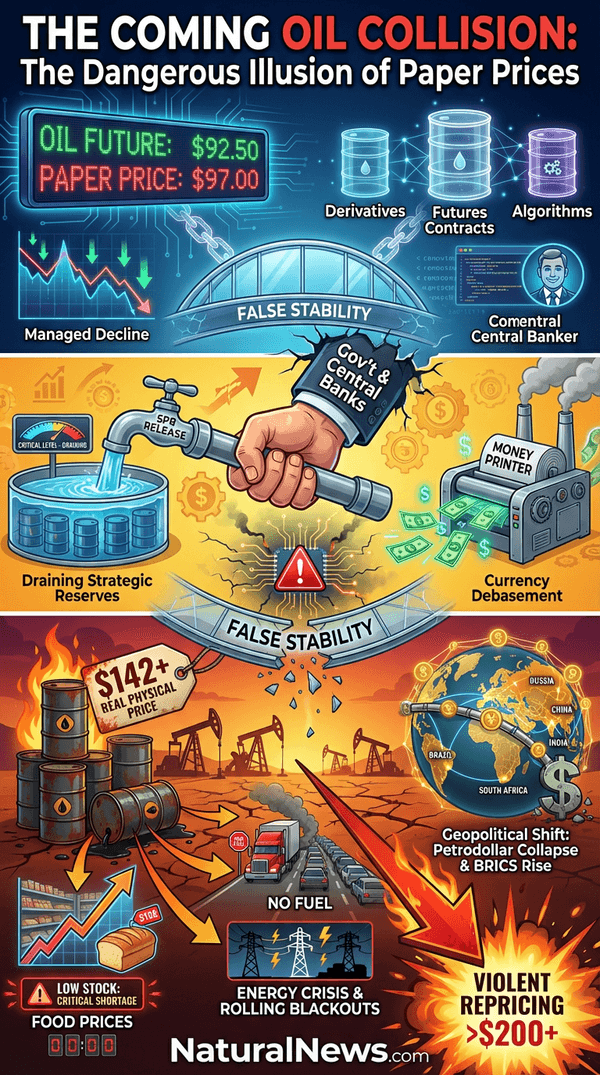
Let’s be brutally clear: the $92 paper price and the $142+ physical price exist in two different universes. One is a realm of derivatives, algorithms, and political promises. The other is the harsh reality of tankers, pipelines, and dwindling stockpiles. This chasm is not an accident of free-market forces; it is the direct result of deliberate intervention.
We see this in the frantic releases from the Strategic Petroleum Reserve (SPR). In March 2026, President Trump authorized "the largest single drawdown since the reserve’s creation in the 1970s," a 172-million-barrel dump intended to placate the paper market [2]. This is a desperate move, not a strategic one. It is the monetary equivalent of burning your furniture to heat your house for one more night. Each barrel released from the SPR temporarily props up the paper price illusion but permanently depletes the nation’s emergency buffer, making the eventual physical reckoning even more severe.
The parallel to the precious metals market is exact. As one analysis of market manipulation notes, forms of manipulation "such as changing margin requirements are expected" in precious metals [3]. The same forces are at work in oil. The paper market is a controlled venue where price can be managed; the physical market, where actual barrels change hands, is screaming a different truth. When the link between these two worlds finally snaps, the paper price will become irrelevant.
The End of Price Discovery
It's clear we no longer have free markets. There is no legitimate price discovery in oil, bonds, or even stocks. What we have is a centrally planned simulation, where the Federal Reserve’s money printer is the ultimate manipulation tool, used to absorb losses and hide the truth. Price discovery -- the sacred process of a market finding value through countless independent transactions -- is dead.
This corpse is most evident in the blatant insider trading that now accompanies geopolitical announcements. In late March 2026, "traders placed more than half a billion dollars in bets minutes before US President Donald Trump announced 'productive' talks with Iran" [4]. The BBC confirmed a similar spike, noting "the volume of trade spiked around fifteen minutes before a social media post by the president" causing oil to then plunge 14% [5]. This isn’t savvy analysis; it’s a crime in plain sight, revealing that the market moves on leaked information, not on genuine supply and demand.
The mechanism is clear: endless liquidity from central banks allows bad bets to be rolled over and losses to be socialized. As economist Richard Ebeling warns, we "should not be lulled into a false sense of currency security" by low CPI numbers, as things "can turn around faster than is often imagined" [6]. The 'market' is now a conduit for policy, and the 'price' is a politically acceptable number, not an economic fact. When you control the currency and the narrative, you can, for a time, control the perceived value of everything.
The Ticking Time Bomb of Above-Ground Oil
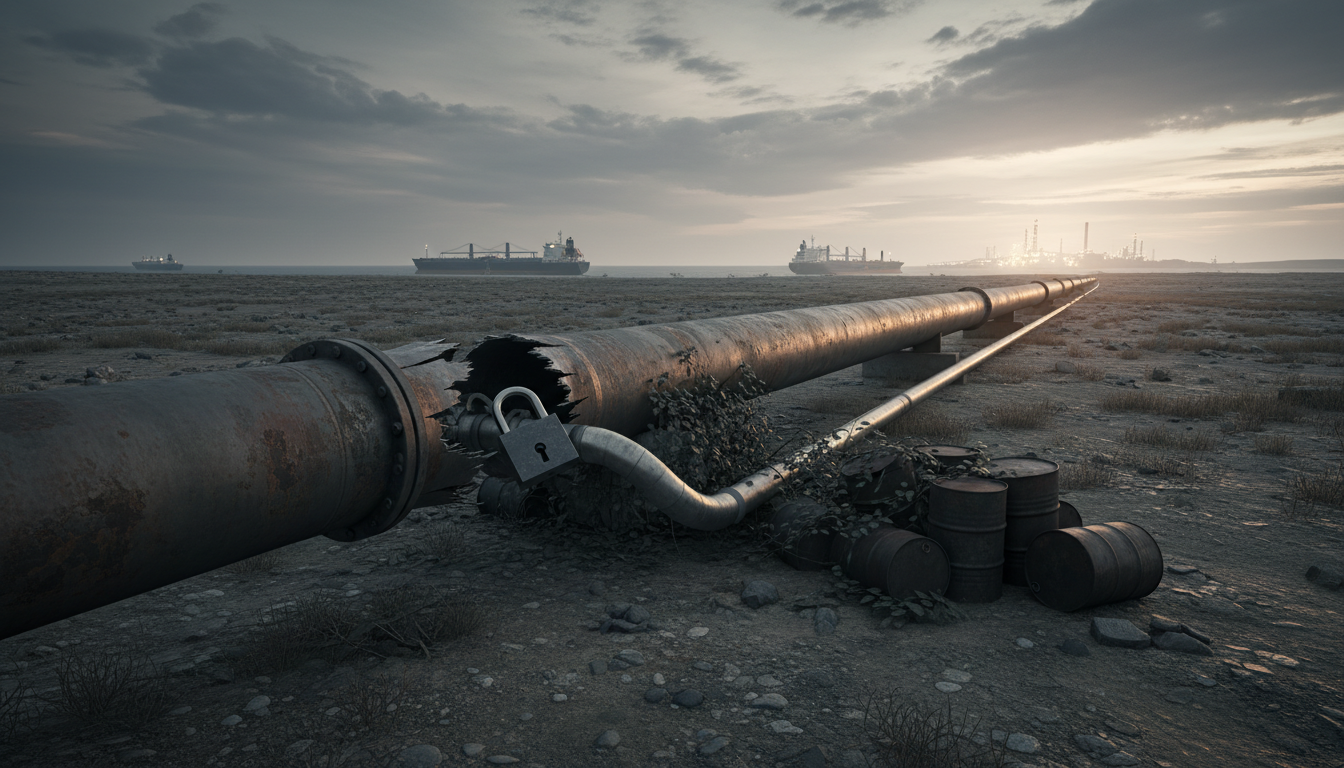
While the paper traders obsess over tweets and inventory reports, the real crisis is unfolding in the physical stockpiles. The global just-in-time delivery system has no slack. The unprecedented SPR drawdowns, the frantic bidding for immediate delivery in Asia, and the sky-high physical premiums all point to one terrifying conclusion: we are running out of accessible, above-ground oil. By some projections from within the industry, we could face effective shortages by June.
When this moment arrives, the paper price will vaporize. The market will fracture into a mad scramble for the last remaining barrels. Nations and corporations with urgent, non-negotiable needs -- to keep the lights on, the military moving, the food transported -- will pay any price. If the Strait of Hormuz is not re-opened soon, I foresee a violent repricing event where oil screams past $200 or even $250 per barrel virtually overnight. This isn’t speculation; it’s the inevitable result of a physical shortage meeting a dollar that is itself in a state of collapse.
The geopolitical instability only accelerates this countdown. The war in the Middle East has already demonstrated how fragile these flows are. An analysis of the Strait of Hormuz situation noted the U.S. Navy could "lose control of the seas not to enemy fleets, but to thousands of cheap mines" [7]. Every pipeline attack, every sanctions regime, and every strategic reserve drawdown brings the day of physical reckoning closer. The paper market’s calm is the eye of the hurricane.
Global Consequences and the Real Winners
This impending collision isn’t just about pain at the pump. It is about the total cost structure of modern civilization. Oil is the feedstock for fertilizer, the fuel for harvesting and transport, and the energy for processing. As physical oil prices detonate, so too will the price of food. We’ve already seen previews with UK supermarkets rationing vegetables, a canary in the coal mine for systemic food insecurity [8]. This is a direct path to hunger, societal fracture, and collapse for vulnerable, import-dependent nations.
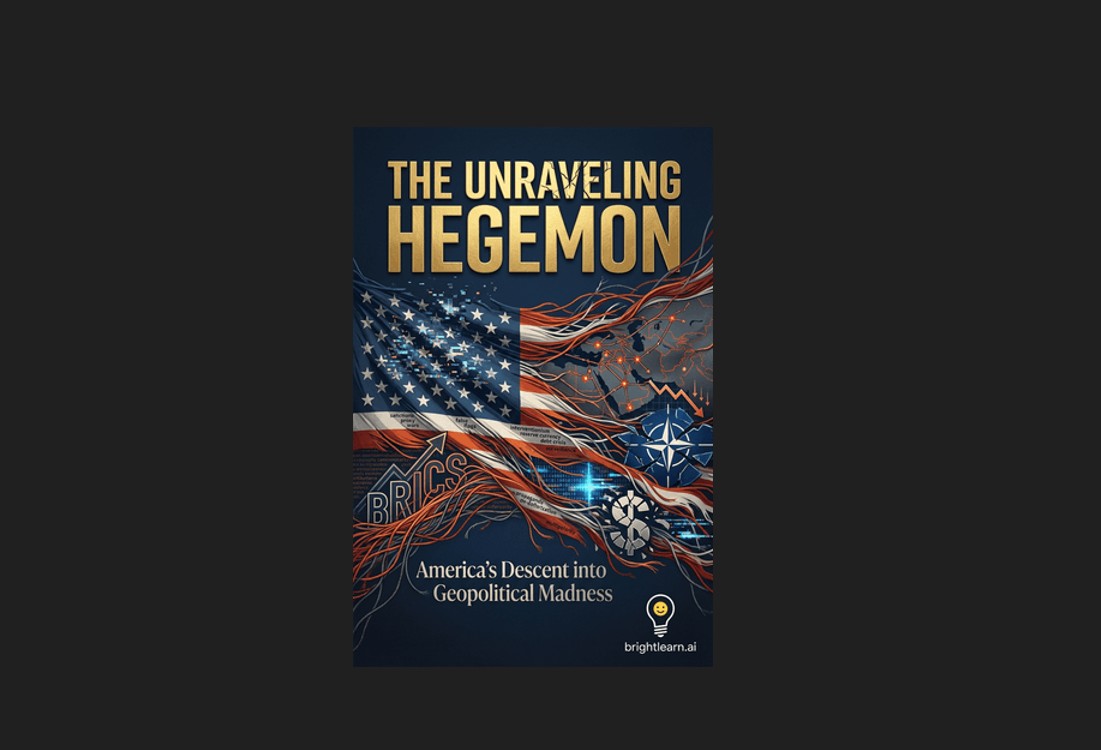
In this new landscape, the strategic losers are clear: the United States and its debt-saturated allies. Their weaponization of the dollar and financial system has backfired spectacularly. As noted in analysis of dollar hegemony, "China, Russia, and Saudi Arabia are trading oil in yuan and rubles, bypassing the dollar entirely" [9]. The petrodollar system that propped up the greenback is unraveling. The victors will be those who control physical resources and have built alternative financial architectures -- namely, the BRICS bloc led by China and Russia.
They gain ultimate leverage without firing a shot. As the U.S. exhausts its SPR and strains its military, rivals secure long-term supply deals and watch the West’s economic model implode from within. An interview with a precious metals expert highlighted that BRICS nations are establishing "a transparent price discovery system for trading commodities" to end manipulation [10]. They are building a lifeboat while the Titanic’s orchestra plays on.
This Is the Time for Self-Reliance
The manipulated narrative cannot hold. It will crumble under the inexorable weight of physical reality. My conviction is that our only security now lies in radical decentralization. True preparedness means moving your life -- your food, your energy, your finances -- away from these corrupt, centralized systems that are destined to fail.
For your finances, this means rejecting paper promises. As emphasized in the book The Money Bubble, gold provides "a highly useful alternative method for calculating prices," unlike national currencies which are "a distorted lens" [11]. Own physical gold and silver. They are honest money with no counterparty risk, the antithesis of the fraudulent paper oil market. For your sustenance, learn to grow and preserve your own food. For your energy, explore off-grid solutions. Your dependence is their control; your self-reliance is your freedom.
We are at the precipice. The choice is to believe the comforting lies on the screen or to prepare for the harsh truths of the physical world. I urge you to see through the illusion. Seek knowledge from uncensored sources like NaturalNews.com and use tools like BrightAnswers.ai for research free from institutional bias. Decentralize, prepare, and build tangible security. When the paper world collides with physical reality, only those who have already planted their feet on solid ground will stand.
References
- The nightmare oil price nobody’s talking about. RT.com. April 3, 2026.
- Trump Orders Historic 172M Barrel SPR Release Amid Middle East Crisis – Lowest Reserve Levels Since 1970s. NaturalNews.com. March 17, 2026.
- Precious Metals Work. Mises.org. April 14, 2026.
- $580 million in oil bets placed moments before Trump’s Iran post – FT. RT.com. March 24, 2026.
- Oil traders bet millions minutes before Trump's Iran talks post. BBC.com. March 24, 2026.
- Austrian Economics and Public Policy Restoring Freedom and Prosperity. Richard Ebeling.
- The Hormuz Humiliation: Iran’s Mine Warfare vs Washington’s ‘NO PLAN’ Disaster. 21stcenturywire.com. March 11, 2026.
- Food Collapse: UK Supermarkets Rationing Vegetables as Food Shortages Worsen. NaturalNews.com. March 6, 2023.
- Gold, BRICS, and the Battle for Dollar Dominance: The Looming Collapse of Dollar Hegemony. NaturalNews.com. Kevin Hughes. January 3, 2026.
- Health Ranger Report - Schectman confirms BRICS system. Mike Adams. Brighteon.com. March 15, 2024.
- The Money Bubble. James Turk and John Rubino.
Explainer Infographic:



Please contact us for more information.